
The end of a tape measure moves because of a clever design feature that allows for accurate inside and outside measurements. This slight movement of the hook is called “play” or “hook wiggle.”
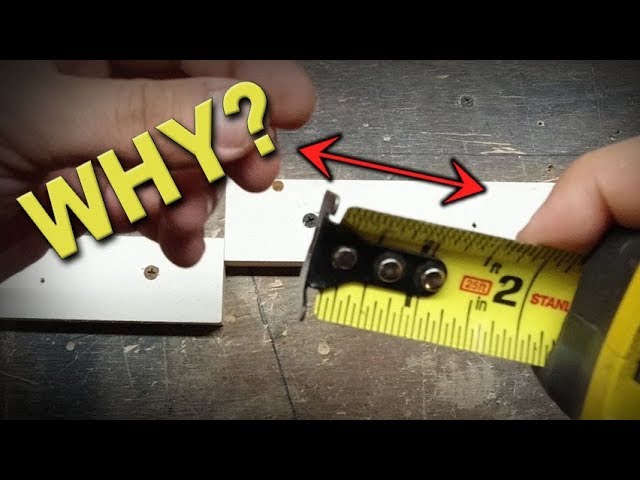
Image Source: i.ytimg.com
Fathoming the Flexible Tape Measure: More Than Just a Straight Line
A tape measure, that ubiquitous tool found in toolboxes, workshops, and even kitchen drawers, seems like a simple device. You pull it out, extend it, read the numbers, and wind it back up. But have you ever noticed that the very end, the metal hook you use to grab onto edges, has a little bit of give? It wiggles. It slides. It doesn’t feel rigidly attached to the start of the measurement. This isn’t a flaw; it’s a deliberate engineering choice. This seemingly minor movement is crucial for achieving accurate measurements, especially when measuring the inside dimensions of objects. Let’s dive deep into the world of tape measures to understand precisely why this vital component has its own distinct personality.
Deciphering the Tape Measure Hook Wiggle
The primary reason the end of a tape measure moves is to account for the thickness of the hook itself. When you hook the tape measure onto the edge of a surface, the hook’s own thickness adds to the length you’re measuring if you don’t account for it. The “tape measure play” is designed to compensate for this.
Inside vs. Outside Measurements: The Crucial Distinction
-
Outside Measurements (Pulling Away): When you pull a tape measure away from an object, you typically hook the end onto an edge. The hook sits on the outside of the object. In this scenario, the tape measure’s zero mark is effectively at the very tip of the hook. The slight play in the hook doesn’t significantly alter the measurement because you’re measuring from the point where the hook begins to touch the surface. The hook is essentially acting as the starting point of your measurement.
-
Inside Measurements (Pushing In): This is where the hook’s movement becomes critically important. Imagine measuring the internal width of a doorway or a window frame. You’d push the end of the tape measure against one inside surface and extend the tape to the opposite inside surface. If the hook were rigidly fixed, the measurement you’d read would be the internal dimension plus the thickness of the hook. However, the design of the tape measure accounts for this. When you push the tape measure inward, the hook will slide back slightly, effectively retracting by the thickness of the metal hook. This movement ensures that the zero mark on the tape measure is precisely at the point where the tape first touches the surface you’re pushing against. Without this “loose tape end” allowing for this slight retraction, every inside measurement would be off by the thickness of the hook.
How Tape Measures Work: A Symphony of Engineering
At its core, a tape measure is a simple yet ingenious mechanical device. It consists of:
- The Tape: A long, flexible strip, usually made of steel or fiberglass, marked with precise increments (inches, feet, centimeters, meters). The flexibility of the tape allows it to conform to shapes and reach distances beyond rigid rulers.
- The Hook: A small, typically metal, attachment at the end of the tape. Its primary function is to grip surfaces for external measurements and to provide a pushing point for internal measurements.
- The Case: A housing, usually made of plastic or metal, that protects the tape and contains the retraction mechanism.
- The Retraction Mechanism: A spring-loaded system that allows the tape to be smoothly pulled out and automatically retracted back into the case. This is what makes tape measures so convenient.
The magic happens in the interplay between the hook and the zero mark. The hook is not just a passive grabber; it’s an active participant in ensuring measuring tape accuracy.
The Science Behind the “Loose Tape End”
The reason for the tape measure hook wiggle isn’t about making it feel flimsy; it’s about providing a consistent and reliable zero point for all measurements. This is a key aspect of “how tape measures work” effectively.
Compensating for Hook Thickness: A Closer Look
Let’s consider the hook itself. It has a certain thickness. When you are performing an outside measurement and hook the tape onto an edge, the measurement starts from the absolute tip of that hook. The play doesn’t affect this because the hook is the starting point.
However, when you perform an inside measurement, you place the hook against one surface and extend the tape to the opposite surface. The length you measure on the tape is the distance between the end of the tape inside the case and the point where you are pushing. The design ensures that as you push the tape inward, the hook retracts. This retraction effectively means that the zero mark on the tape is positioned at the surface you are pushing against.
Consider a tape measure with a hook that is 1/16th of an inch thick.
- Outside Measurement: You hook it onto a piece of wood. The measurement starts at the very tip of the hook.
- Inside Measurement: You push the hook against an inside wall. As you push, the hook retracts. The tape inside the case moves outward, and the hook slides back. This ensures that the zero mark is precisely at the wall you are pushing against, not at the original position of the hook. The “tape measure slippage” you might perceive is actually the hook moving to accommodate the measurement.
This mechanism prevents “measurement errors” that would otherwise occur by adding the hook’s thickness to every inside measurement.
The Importance of Tape Measure Accuracy
In many professions and DIY projects, “measuring tape accuracy” is paramount. Whether you’re a carpenter framing a house, a seamstress creating a garment, or a homeowner installing shelves, precise measurements are the foundation of a successful outcome.
Factors Influencing Measuring Tape Accuracy
While the hook’s play is a designed feature, other factors can also influence the overall accuracy of your tape measure:
- Wear and Tear: Over time, the hook can become bent or damaged, affecting its ability to grip and its precise starting point. The tape itself can also stretch or become frayed.
- Environmental Conditions: Extreme temperatures can cause the metal tape to expand or contract slightly, leading to minor inaccuracies. Humidity can also affect some tape materials.
- User Error: Misreading the tape, not holding the tape straight, or allowing the tape to bend during measurement are common sources of error. The “why tape measure slides” question can also relate to how it’s being held or if the hook is properly engaged.
- Quality of the Tape Measure: Not all tape measures are created equal. Higher-quality tape measures often have more robust retraction mechanisms, clearer markings, and more durable hooks, contributing to better overall “measuring tape accuracy.”
Investigating the “Loose Tape End” Phenomenon
The “loose tape end” is the characteristic wiggle or slight movement of the hook. This is not a defect but a critical design element. It allows the tape measure to be versatile for both inside and outside measurements without requiring manual adjustments or calculations for hook thickness.
When Play Becomes a Problem
While the intended play is beneficial, excessive “tape measure hook wiggle” can sometimes indicate a problem. If the hook feels excessively loose, or if it detaches easily from surfaces, it might be damaged or worn. This could lead to inaccurate readings and affect your “measuring tape accuracy.”
Table 1: Common Tape Measure Issues and Potential Causes
| Issue | Potential Cause(s) | Impact on Accuracy |
|---|---|---|
| Hook Wiggles Excessively | Worn rivets or connection points; damaged hook | Can lead to inconsistent readings, especially outside. |
| Tape Won’t Retract | Spring mechanism failure; debris in the case | Impractical to use, potential for tape damage. |
| Hook Detaches Easily | Bent hook; weakened spring in the hook assembly | Makes outside measurements unreliable. |
| Markings are Faded | Wear and tear; poor print quality | Difficult to read measurements accurately. |
| Tape is Bent/Kinked | Rough handling; impact damage | Can cause bowing, affecting straight-line measurements. |
The Mechanics of Tape Measure Retraction
The “tape measure retraction” system is an essential part of its usability. A powerful spring coiled within the case is responsible for pulling the tape back into the housing.
How the Spring Mechanism Works
- Extension: As you pull the tape out, you are winding a spring.
- Retraction: When you release the lock or button, the spring unwinds, pulling the tape back into the case. Most tape measures have a button or lever that can be pressed to lock the tape in place, preventing accidental retraction. Some also have a secondary brake that allows for finer control of the extension.
The efficiency and smoothness of this “tape measure retraction” are also factors in maintaining overall usability and preventing potential “measurement errors.” A jerky retraction can cause the tape to snap back, potentially damaging the hook or the tape itself.
Addressing “Why Tape Measure Slides”
When you ask “why tape measure slides,” it can refer to a few different scenarios:
- The Hook Sliding: As we’ve discussed, the hook is designed to slide back for inside measurements. This is intentional.
- The Tape Sliding Off a Surface: If the hook isn’t properly engaged or if the surface is smooth or angled, the tape can slide off. This is not a design feature but a consequence of poor grip.
- The Tape Bending or Sagging: If you extend the tape too far without support, it will bend or sag, making accurate readings impossible. This is a limitation of the “flexible tape measure” material and design.
To avoid the tape sliding off a surface, ensure the hook is firmly seated on the edge. For longer measurements where the tape might sag, many professional tape measures have a stiffening ribbon that allows them to extend a certain distance horizontally without support (this is called “stand-out”).
Maximizing Measuring Tape Accuracy: Best Practices
To ensure you get the most accurate measurements possible from your tape measure:
- Inspect Regularly: Check the hook for damage and ensure the tape isn’t kinked or frayed.
- Use Proper Technique: For outside measurements, hook the tape firmly. For inside measurements, push the end against the surface and read the measurement where the tape touches the surface.
- Keep it Clean: Dust and debris can interfere with the retraction mechanism and the smooth operation of the hook.
- Lock the Tape: Use the lock mechanism when you need to hold a measurement steady, especially for longer distances or when transferring measurements.
- Avoid Overextending: Be aware of the tape’s stand-out capability. For longer unsupported distances, you’ll need a helper or a different measuring tool.
- Choose the Right Tool: For very precise or long-distance measurements, consider specialized tools like laser distance measurers or steel rules.
The Ingenuity of the Movable Hook
The seemingly simple movable hook on a tape measure is a testament to clever engineering designed to enhance usability and accuracy. It addresses the inherent challenge of starting a measurement at different points – either at the very tip of a hook or at the surface being pushed against. This design eliminates the need for mental calculations or separate adjustments, making the process of measuring faster and less prone to user error. The “tape measure play” is not a sign of a cheap or poorly made tool, but rather a feature that, when used correctly, contributes significantly to reliable “measuring tape accuracy.”
Frequently Asked Questions (FAQ)
Q1: Is the movement of the tape measure hook a sign that my tape measure is broken?
No, not typically. The slight play or wiggle in the hook is a deliberate design feature that allows the tape measure to accurately measure both outside and inside dimensions.
Q2: Why does the hook seem to move back when I push it against something?
This movement is intentional. When you push the tape measure into an opening (an inside measurement), the hook retracts by its own thickness. This ensures that the zero mark on the tape measure is actually at the surface you are pushing against, preventing an error that would otherwise add the hook’s thickness to your measurement.
Q3: Can the movement of the hook cause measurement errors?
The movement is designed to prevent measurement errors. However, if the hook is severely damaged, bent, or if the connection between the hook and the tape is excessively loose (beyond the normal play), then it could lead to inaccurate readings.
Q4: What is the term for the slight movement of the tape measure hook?
This movement is often referred to as “tape measure play” or “hook wiggle.”
Q5: How do I get the most accurate measurements with my tape measure?
Ensure the hook is properly engaged on the edge for outside measurements. For inside measurements, push the hook firmly against the surface. Keep the tape straight and taut, and use the lock feature to hold the measurement. Regularly inspect your tape measure for wear and tear.
Q6: Why does my tape measure sometimes slide off a surface?
The tape measure might slide if the hook is not securely positioned on the edge, if the surface is smooth or angled, or if the tape is being pulled at an awkward angle. Ensuring a firm grip with the hook is key.
Q7: What happens if the tape measure tape stretches?
If a tape measure tape stretches, it will no longer provide accurate measurements. This is more common with older or lower-quality tape measures and is a reason to replace a worn-out tape measure.