
So, you’re curious about Warhammer 40,000? What is Warhammer 40k? It’s a tabletop miniatures wargame where players command armies of futuristic soldiers, aliens, and demons in epic battles across a grim and dark galaxy. Can I get into it without spending a fortune? Yes, you absolutely can, and this guide will show you how. Who is this guide for? It’s for anyone looking to start their journey into the thrilling hobby of Warhammer 40,000.
Getting into Warhammer 40k can seem a bit daunting at first. The universe is vast, the lore is deep, and the hobby itself involves collecting, building, and painting miniatures. But don’t let that scare you! This Warhammer 40k beginner guide is designed to break down all the essential steps, making your entry into this amazing hobby smooth and enjoyable. We’ll cover everything from choosing your first army to playing your first Warhammer 40k game.
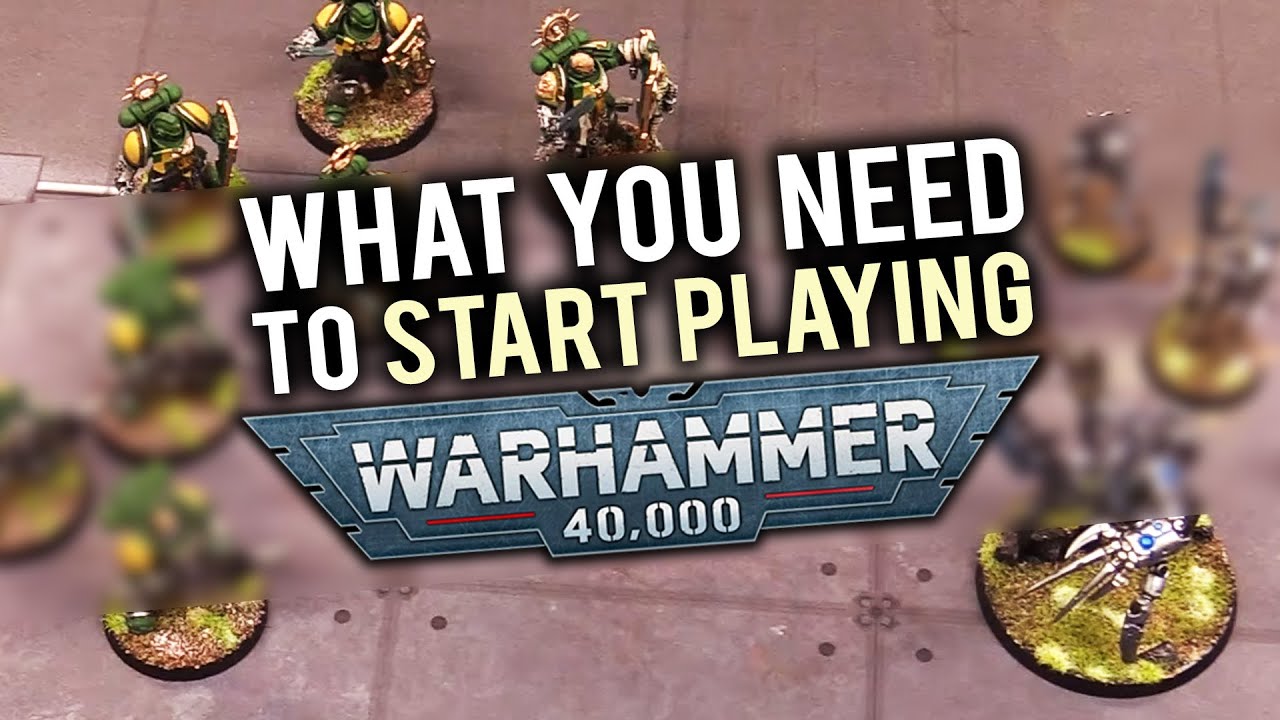
Image Source: i.ytimg.com
Embracing the Warhammer 40k Hobby Basics
Warhammer 40,000 is more than just a game; it’s a hobby. This means there are several different avenues you can explore and enjoy. You can be a collector, a builder, a painter, a strategist, or a bit of everything!
Collecting Your First Forces
The core of Warhammer 40,000 is commanding armies of miniatures. These Warhammer 40k miniatures are the heart of the game. They represent your soldiers, vehicles, and heroes on the battlefield.
Exploring the Factions
The Warhammer 40,000 universe is populated by a multitude of distinct factions, each with their own unique lore, playstyle, and aesthetic. Choosing your first army is a big decision, but also a very exciting one. Here’s a brief look at some of the most popular choices:
- Space Marines: The poster boys of Warhammer 40,000. They are genetically engineered super-soldiers, humanity’s finest defenders against the myriad threats of the galaxy. They are known for their resilience, versatility, and iconic power armor. If you like heroic knights in power armor, Space Marines are a great start.
- Orks: Green-skinned, brutish aliens who live for war. Orks are characterized by their ramshackle technology, love for close combat, and sheer numbers. If you enjoy overwhelming your opponent with waves of aggressive fighters and a chaotic, fun playstyle, Orks are for you.
- Necrons: Ancient, robotic undead from a bygone era. The Necrons are a technologically advanced race with a penchant for resurrection and overwhelming firepower. They are stoic and terrifying, often rebuilding themselves after being destroyed. If you like durable armies with potent shooting, consider Necrons.
- Tyranids: A terrifying alien hive-mind species that devours entire worlds. Tyranids are all about overwhelming opponents with swarms of monstrous creatures and ravenous close-combat units. They offer a unique “us vs. them” feel.
- Astra Militarum (Imperial Guard): The vast, ordinary human soldiers of the Imperium. While not as individually powerful as Space Marines, they make up for it with sheer numbers, artillery, and tanks. They are the backbone of the Imperium’s war effort. If you enjoy massed infantry and powerful tanks, the Imperial Guard might be your choice.
- Chaos Space Marines: Traitorous Space Marines who have fallen to the worship of dark gods. They are often more brutal and savage than their loyalist counterparts, wielding daemonic powers and forbidden technologies.
When choosing your first army, consider:
* Aesthetics: Which army looks coolest to you?
* Lore: Which faction’s story resonates with you the most?
* Playstyle: Do you prefer close combat, shooting, psychic powers, or a mix?
Don’t be afraid to look up army overviews online or ask experienced players for their opinions.
Warhammer 40k Starter Sets: The Perfect Entry Point
To ease players into building a Warhammer 40k army, Games Workshop offers Warhammer 40k starter sets. These boxes are fantastic for beginners as they typically include:
- Two small, balanced armies: Often featuring two opposing factions, allowing you to jump straight into playing.
- Core rulebook: Essential for learning how to play.
- Dice and measuring tools: All the necessary accessories.
- Assembly instructions: Clear guides on how to put your miniatures together.
These starter sets are designed to be cost-effective and provide a complete introduction to the hobby. They are an excellent way to get your feet wet without a massive initial investment.
The Art of Assembly and Painting
Once you have your miniatures, the next step is to assemble and paint them. This is where your creativity truly shines.
Building Your Warhammer 40k Miniatures
Most Warhammer 40k miniatures come on plastic sprues. You’ll need a few basic tools:
- Hobby Knife/Sprue Clippers: For carefully removing pieces from the sprues.
- Plastic Glue: Specifically designed for Warhammer miniatures.
- Hobby Files/Sandpaper: For smoothing down any mold lines or rough edges.
Assembly is generally straightforward, with parts designed to fit together. Follow the instructions provided in your starter set or on the model’s box.
Warhammer 40k Painting Tutorial: Bringing Your Army to Life
Painting your miniatures is a deeply rewarding aspect of the hobby. It’s how you give your army its unique character and visual identity. Even simple painting techniques can make your army look fantastic.
Here’s a simplified overview of a Warhammer 40k painting tutorial:
-
Preparation:
- Clean the miniatures: Wash them with soapy water to remove any mold release agent.
- Assemble (partially): Sometimes it’s easier to paint some parts before fully assembling the model.
- Prime: Apply a primer spray. This gives the paint something to adhere to and ensures an even base coat. Black, white, or grey primers are common choices.
-
Base Coats:
- Apply the main colors to different parts of the miniature. Thin your paints with water so they go on smoothly. Multiple thin coats are better than one thick one.
-
Washes:
- Apply a “wash” (a very thin, dark paint). Washes flow into the recesses of the model, creating shadows and definition.
-
Layering/Highlighting:
- Apply lighter shades of your base colors to the raised areas of the model. This brings out the details and makes the miniature pop.
-
Details:
- Paint smaller details like eyes, weapons, and pouches.
-
Basing:
- Decorate the base of your miniature to match its environment. This can be done with textured paints, sand, static grass, or small model rocks.
-
Varnishing:
- Apply a varnish (matte or gloss) to protect your paint job. A matte varnish is typically used for a non-shiny finish.
Don’t aim for perfection on your first try! The goal is to learn and have fun. Many excellent Warhammer 40k painting tutorial videos are available online, covering every technique imaginable.
Deciphering the Warhammer 40k Rules Explained
At its core, Warhammer 40,000 is a game of strategy and dice rolls. The Warhammer 40k rules explained simply involve moving your units, shooting at your opponent, and engaging in close combat.
The Basics of Gameplay
A game of Warhammer 40,000 is played in turns. Each turn, you’ll typically perform the following phases:
- Command Phase: Some abilities and stratagems are used here.
- Movement Phase: Move your units across the battlefield.
- Psychic Phase: Your psychic units can attempt to cast spells.
- Shooting Phase: Units with ranged weapons fire at enemy units.
- Charge Phase: Units attempt to move into close combat with enemy units.
- Fight Phase: Units engaged in close combat attack each other.
- Morale Phase: Units that have suffered casualties may have to test their courage.
Dice Rolls and Combat Resolution
The outcome of most actions in Warhammer 40,000 is determined by rolling dice.
- To Hit: When shooting or fighting, you roll a die (usually a D6 – a six-sided die). If your roll meets or exceeds the “Ballistic Skill” (for shooting) or “Weapon Skill” (for close combat) of your unit, you “hit” the target.
- To Wound: If you hit, you then roll another die to see if you wound the target. This depends on the strengths of your weapon and the toughness of your opponent’s unit.
- Saving Throws: If you wound the target, they roll a die to see if their armor can save them.
- Damage: If the save fails, the target takes damage.
Core Concepts to Grasp
- Army Building: You build your army using points. Each unit and upgrade has a point cost, and you have a total point limit for your games. This ensures balanced matches.
- Objective Control: Many games involve capturing and holding “objectives” on the battlefield to score victory points.
- Stratagems: These are special tactical commands you can use by spending “Command Points” earned during the game. They can drastically change the flow of battle.
The Warhammer 40k rules explained in full detail are in the main rulebook, but for your first Warhammer 40k game, focus on these core concepts.
Your First Warhammer 40k Game
Playing your first Warhammer 40k game is an exciting milestone! Here’s what you can expect and how to prepare.
Finding a Place to Play
- Local Game Stores (LGS): Most LGS have dedicated tables for wargaming and often host beginner-friendly events. This is the best place to meet other players.
- Gaming Clubs: Many cities have gaming clubs where enthusiasts gather to play.
- Friends: If you have friends who play, that’s a great way to start!
Preparing for Your First Game
- Have a Small Army: Use the miniatures from a starter set or a small combat patrol box. Aim for around 500 points.
- Know Your Army’s Basics: Familiarize yourself with the abilities and weapons of your chosen units.
- Bring Your Rulebook: Or have it easily accessible on a tablet or phone.
- Bring Dice and Measuring Tools: Essential for gameplay.
- Be Open to Learning: Don’t be afraid to ask questions. Most players are happy to help newcomers.
The Flow of a Game
Your first Warhammer 40k game will likely be against someone experienced who can guide you through the process. They’ll help you set up the battlefield, deploy your forces, and navigate the turn structure. Focus on enjoying the experience and learning the core mechanics.
Delving Deeper: Warhammer 40k Lore Overview
The galaxy of Warhammer 40,000 is a rich tapestry of history, conflict, and grim darkness. A basic Warhammer 40k lore overview can help you appreciate the setting and understand the motivations of the factions.
The Grim Darkness of the Far Future
- The Imperium of Man: A vast, tyrannical, and decaying human empire stretching across a million worlds. It is ruled by the God-Emperor of Mankind, who sits in a state of perpetual agony on the Golden Throne. The Imperium is constantly at war with alien races, heretics, and daemons.
- Xenos: Various alien species that inhabit the galaxy, including the insectoid Tyranids, the ancient Necrons, the warlike Orks, the technologically advanced T’au, and the enigmatic Eldar.
- Chaos: A force of corruption and mutation driven by the malevolent Chaos Gods. Those who worship Chaos are twisted into horrific forms and wield forbidden powers.
The universe is a place of constant warfare, where humanity struggles for survival against overwhelming odds. There is no peace, only war.
Building a Warhammer 40k Army: Expanding Your Forces
As you get more comfortable, you’ll want to start building a Warhammer 40k army that reflects your chosen faction and playstyle.
Understanding Force Organisation Charts
The game uses “Force Organisation Charts” to help you build balanced armies. These charts dictate how many “Battleline” units, “HQ” units, “Elites,” “Fast Attack,” and “Heavy Support” units you can take within your point limit.
Choosing Units for Your Army
When expanding, consider units that complement your existing force. If you have a lot of shooting units, you might want to add some close-combat specialists for defense or to assault enemy positions. Think about:
- Synergy: How do your units work together?
- Role: Does this unit fill a specific role on the battlefield (e.g., anti-infantry, anti-tank, objective control)?
- Points Efficiency: Does this unit provide good value for its points cost?
Frequently Asked Questions (FAQ)
Q1: How much does Warhammer 40k cost to start?
A1: You can start playing for around $100-$150 USD by purchasing a starter set. Beyond that, the cost is entirely up to how much you want to expand your army and collection.
Q2: Do I need to paint my miniatures?
A2: No, you don’t have to paint them, but it’s a huge part of the hobby and makes the game much more visually appealing. Most players do paint their miniatures to some degree.
Q3: How long does a game of Warhammer 40k usually take?
A3: A typical game at 1000-2000 points can take anywhere from 2 to 4 hours, depending on the number of players, armies, and how quickly you make decisions.
Q4: Can I play with just one army?
A4: Yes, you can dedicate yourself to collecting and playing a single faction. Many players do this, becoming experts in their chosen army’s strengths and weaknesses.
Q5: Are there easier ways to learn the rules?
A5: Absolutely! Many Warhammer 40k starter sets include simplified rules for beginners. Online tutorials and playing with experienced players are also excellent ways to learn.
Q6: What if I don’t have anyone to play with?
A6: Local game stores and gaming clubs are fantastic places to meet other players. Online communities and forums are also great resources for finding people to play with.
Conclusion: Your Galactic Journey Begins
Starting Warhammer 40,000 is an adventure that offers a deep, engaging hobby experience. From building a Warhammer 40k army with your own hands to painting Warhammer 40k miniatures and commanding them on the tabletop, there’s something for everyone. Use this Warhammer 40k beginner guide as your roadmap, dive into the Warhammer 40k lore overview, learn the Warhammer 40k rules explained, and most importantly, have fun on your first Warhammer 40k game. The galaxy awaits your command!