
Can you add a circuit breaker yourself? Yes, if you have the necessary knowledge of electrical work and follow strict safety guidelines, you can add a circuit breaker. However, for most homeowners, hiring a qualified electrician is the safest and easiest route to ensure the job is done correctly and to code. This guide will walk you through the process and considerations involved in adding a circuit breaker, whether you plan to tackle it yourself or understand what an electrician will do.
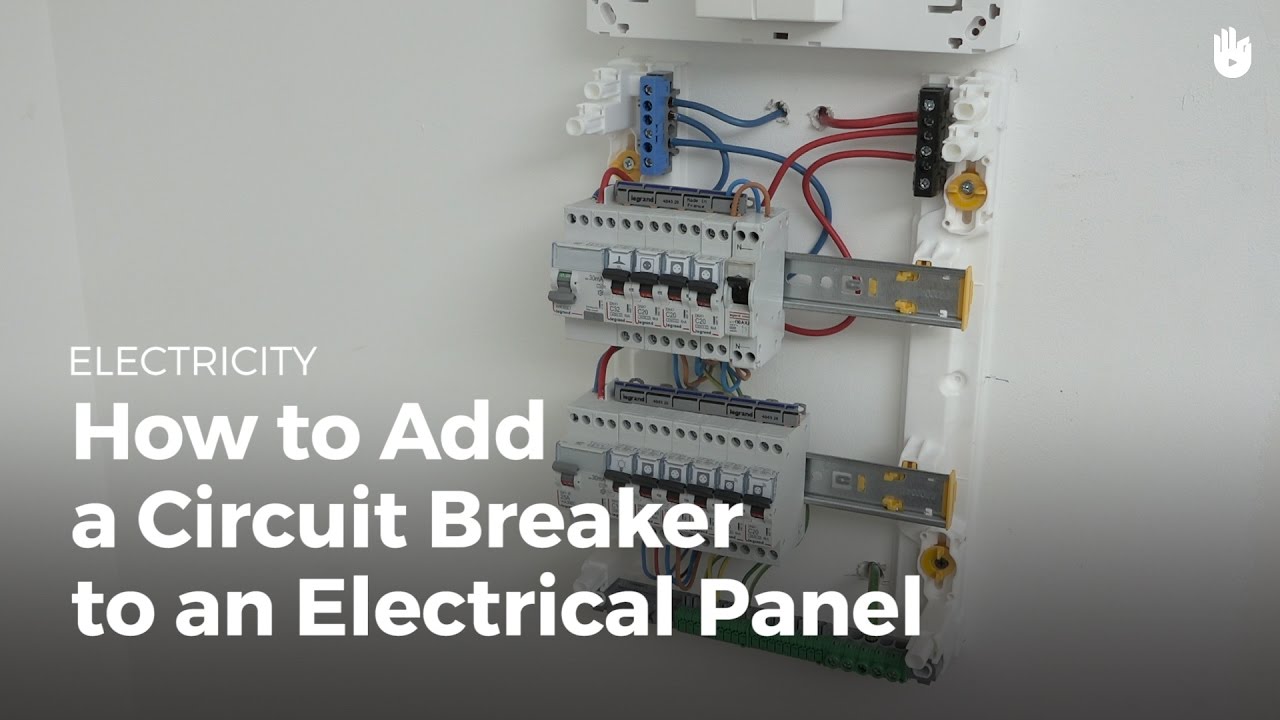
Image Source: i.ytimg.com
Why You Might Need to Add a Circuit Breaker
Modern homes are filled with electrical devices, from refrigerators and microwaves to computers and smart home gadgets. Each of these draws power, and if you overload an existing circuit, you’ll likely experience tripped breakers or, worse, fire hazards. Adding a new circuit breaker can alleviate these issues and improve your home’s electrical capacity and safety.
Common Scenarios for New Circuit Breaker Installation:
- Adding High-Power Appliances: New appliances like electric vehicle chargers, hot tubs, or powerful kitchen appliances often require dedicated circuits.
- Renovations and Additions: When you remodel or add extra rooms, you’ll likely need new circuits to power the new lighting and outlets.
- Overloaded Existing Circuits: If you find yourself constantly resetting a particular circuit breaker, it’s a sign that the circuit is carrying too much load.
- Creating Dedicated Circuits: To prevent disruptions, you might want to wire a circuit breaker for sensitive electronics or specific appliances, ensuring they have a stable power supply.
Understanding Circuit Breaker Types
Before you can add a circuit breaker, it’s important to know the different types available and their functions. The most common type found in residential settings is the thermal-magnetic circuit breaker. These breakers use both heat (thermal) and magnetism (magnetic) to detect and interrupt overcurrents.
Key Circuit Breaker Types:
- Standard Single-Pole Breaker: This is the most common type, used for standard 120-volt circuits that power most lights and outlets. They take up one slot in your electrical panel.
- Double-Pole Breaker: These are used for 240-volt appliances like electric dryers, ovens, or central air conditioners. They connect to two adjacent slots in the panel and have a single handle or two handles tied together to ensure both poles are switched off simultaneously.
- GFCI (Ground Fault Circuit Interrupter) Breakers: These are designed to protect people from electric shock, especially in areas prone to moisture like bathrooms, kitchens, garages, and outdoor outlets. They detect imbalances in the current flow to the ground and trip quickly.
- AFCI (Arc Fault Circuit Interrupter) Breakers: These are designed to detect dangerous electrical arcs that can cause fires. They are often required by code for circuits in bedrooms and living areas.
- Dual-Function Breakers: These combine GFCI and AFCI protection in a single breaker, offering comprehensive safety for a circuit.
Preparing for New Circuit Breaker Installation
Safety is paramount when working with electricity. Always prioritize circuit breaker safety. If you are not comfortable or experienced with electrical work, it is highly recommended to hire a licensed electrician for any new circuit breaker installation. Improper installation can lead to electrical fires, shocks, and damage to your appliances.
Essential Preparations:
-
Assess Your Electrical Panel’s Capacity:
- Your main electrical panel has a maximum amperage rating (e.g., 100 amps, 200 amps). You need to ensure your panel has enough spare capacity to handle the new circuit.
- To do this, you’ll need to know the total amperage of all existing circuits. This information is often found on the breaker labels or the panel itself.
- A common rule of thumb is that a new 15-amp or 20-amp circuit will add a relatively small load, but for larger appliances, a load calculation is essential. An electrician can perform this calculation.
- If your panel is at or near its maximum capacity, you might need an electrical box upgrade to a larger panel or even a sub-panel.
-
Determine the Circuit’s Purpose and Load:
- What will this new circuit power? For example, a few lights and outlets will require less amperage than a powerful electric oven.
- Calculate the total wattage of the devices that will be on the circuit. Divide the wattage by the voltage (usually 120V or 240V) to get the amperage.
- Example: A microwave that uses 1200 watts on a 120-volt circuit draws 10 amps (1200W / 120V = 10A). You would typically use a 15-amp or 20-amp breaker for such a circuit, allowing for some headroom.
-
Identify the Location for the New Circuit:
- Where do you need the new outlets or lights? This will determine where the new wiring will run from the panel.
-
Gather Necessary Tools and Materials:
- New Circuit Breaker: Ensure it matches the amperage and type (single-pole, double-pole, GFCI, AFCI) required for your circuit and is compatible with your panel brand.
- Electrical Wire: The gauge (thickness) of the wire must be appropriate for the breaker’s amperage. For example, 14-gauge wire is typically used for 15-amp circuits, and 12-gauge wire for 20-amp circuits.
- Wire Strippers/Cutters: For preparing the wires.
- Screwdrivers: Phillips and flathead, insulated handles are crucial.
- Voltage Tester (Non-Contact): To confirm power is off.
- Needle-Nose Pliers: For bending wire ends.
- Fish Tape (if running wire through walls): To help pull wires.
- Wire Connectors (Wire Nuts): For joining wires.
- Circuit Breaker Panel Cover: For a clean finish.
- Safety Glasses: To protect your eyes.
- Gloves: Insulated gloves are a good idea.
- Work Light: To illuminate your work area.
The Process of Adding a Circuit Breaker
Adding a circuit breaker involves modifying your home electrical panel. This is a critical step that requires absolute attention to circuit breaker safety.
Step-by-Step Guide to Wiring a Circuit Breaker:
Disclaimer: This guide is for informational purposes only. Electrical work is dangerous. If you are not a qualified electrician, hire one.
1. Turn Off Power to the Panel:
- Locate your main electrical panel.
- Find the main breaker (usually the largest breaker at the top or side) and switch it to the “OFF” position.
- Use a voltage tester on the main lugs inside the panel to confirm that all power is indeed off. Never skip this step.
2. Open the Electrical Panel:
- Carefully remove the cover of your electrical panel. This usually involves unscrewing it.
3. Identify a Slot for the New Breaker:
- Look for an empty slot in your panel. Standard single-pole breakers require one slot, while double-pole breakers require two adjacent slots.
- Ensure the brand of the new breaker is compatible with your panel. Using incompatible breakers can be dangerous.
4. Install the New Circuit Breaker:
- For single-pole breakers: Hook the breaker’s mounting tab onto the panel’s busbar (the metal strip where breakers connect). Press down firmly until it snaps into place.
- For double-pole breakers: Align the breaker with the two adjacent slots. Hook the tabs onto the busbar and press down to secure both poles.
- Ensure the breaker is seated firmly and is properly aligned.
5. Wire the New Circuit:
- Run the Wire: Carefully run the electrical cable from your desired location (e.g., where the new outlet will be) to the electrical panel. Follow electrical codes for routing wires, avoiding sharp bends or potential damage.
- Prepare the Wire: At the panel end, strip about 3/4 inch of the outer sheathing from the cable. Then, strip about 1/2 inch of insulation from the ends of the black (hot), white (neutral), and bare copper (ground) wires.
- Connect the Ground Wire: Connect the bare copper ground wire from your new cable to the grounding busbar in the panel. This is usually a metal bar with screw terminals where all the bare copper wires are connected. Use a screw terminal for this connection.
- Connect the Neutral Wire: Connect the white neutral wire from your new cable to one of the neutral busbars in the panel. This is typically a silver-colored bar with screw terminals.
- Connect the Hot Wire:
- For a single-pole breaker: Connect the black hot wire from your new cable to the screw terminal on the side of the new single-pole breaker.
- For a double-pole breaker: Connect the hot wires from your 240V circuit (usually two black wires) to the two screw terminals on the sides of the double-pole breaker.
- Secure Connections: Ensure all wire connections are tight and secure. Loose connections are a major fire hazard.
6. Replace the Panel Cover:
- Before putting the cover back on, double-check all your connections.
- Reattach the panel cover, making sure the new breaker’s toggle is accessible through the designated opening.
7. Turn On Power and Test:
- Go back to the main breaker and switch it back to the “ON” position.
- Then, flip the new circuit breaker to the “ON” position.
- Test the circuit by plugging in a lamp or a simple appliance to ensure it’s working correctly.
Circuit Breaker Safety: Crucial Considerations
Circuit breaker safety should be your top priority. Working with electricity can be extremely dangerous if you don’t take the proper precautions.
Essential Safety Precautions:
- Always De-Energize: Ensure the main breaker is OFF and verify with a voltage tester before opening the panel or touching any wires or breakers.
- Use Insulated Tools: Always use tools with insulated handles designed for electrical work.
- Wear Safety Gear: Always wear safety glasses and consider wearing insulated gloves.
- Never Work Alone: If possible, have someone else present who can assist or call for help in an emergency.
- Know Your Limits: If you are unsure about any part of the process, stop and call a qualified electrician. The cost of professional help is far less than the potential cost of an accident.
- Check Panel Compatibility: Ensure the new breaker you are installing is designed for your specific electrical panel brand and model.
- Correct Wire Gauge: Using wire that is too thin for the breaker’s amperage rating is a major fire hazard. Always adhere to the National Electrical Code (NEC) or your local building codes.
- Proper Grounding: Ensure the circuit is properly grounded. This is a critical safety feature.
Troubleshooting Common Issues
Even with careful installation, circuit breaker troubleshooting might be necessary.
Common Problems and Solutions:
| Problem | Possible Cause | Solution |
|---|---|---|
| Breaker won’t stay on | Overloaded circuit: Too many appliances are drawing power. | Unplug some devices. If the breaker stays on, you have an overload issue. Consider adding another circuit or redistributing appliances. |
| Short circuit: A hot wire is touching a neutral or ground wire. | Turn off all devices on the circuit. If the breaker stays on, plug in devices one by one to find the faulty one. Check wiring for damage. | |
| Faulty breaker: The breaker itself may be defective. | If the circuit is not overloaded and there’s no short, the breaker might need to be replaced. Ensure you use the correct replacement breaker. | |
| No power to outlets | Breaker is off: The breaker may have tripped, or was accidentally switched off. | Check the breaker in the panel and switch it ON. |
| Loose connection: A wire may have come loose at the breaker, outlet, or junction box. | Turn off power at the main breaker first! Inspect and tighten all connections. | |
| Faulty outlet or device: The outlet or the device plugged into it could be the problem. | Test outlets with a known-good device or voltage tester. | |
| Breaker trips often | Overloaded circuit: Similar to the “won’t stay on” scenario, but this happens intermittently. | Identify which devices are running when the breaker trips and redistribute them to different circuits or add a new circuit for high-demand items. |
| Undersized wiring: The wire gauge might be too small for the load. | This requires professional assessment and likely rewiring. Ensure the wire gauge matches the breaker rating. | |
| Arc Fault (AFCI) or Ground Fault (GFCI) tripping: These breakers are sensitive and can trip for various reasons. | For AFCI, look for damaged wiring or appliances causing arcs. For GFCI, check for moisture or faulty appliances. Consult the breaker’s manual for specific causes. |
When to Call a Professional Electrician
While some DIY circuit breaker projects might seem straightforward, there are many instances where professional help is not just recommended, but essential.
Situations Demanding Professional Expertise:
- Uncertainty about Your Skills: If you have any doubt about your ability to perform the work safely and correctly, do not attempt it.
- Old or Outdated Electrical Panels: Older panels may not have the capacity or safety features of modern ones, and attempting modifications can be hazardous. An electrical box upgrade might be necessary.
- Frequent Tripping Breakers: If you’re experiencing persistent tripping, it could indicate a deeper issue like faulty wiring or an overloaded system that requires expert circuit breaker troubleshooting.
- Adding High-Amperage Circuits: Circuits for large appliances (ovens, dryers, EV chargers) or whole-house generators require careful calculation and installation.
- GFCI or AFCI Installations: These specialized breakers have specific wiring requirements to ensure their protective functions work correctly.
- Building Code Compliance: Electricians are up-to-date on local and national electrical codes, ensuring your installation is safe and legal.
- Performing Electrical Work in Wet Areas: Bathrooms, kitchens, and outdoor areas require special attention due to increased shock hazards.
Frequently Asked Questions (FAQ)
Q1: How much does it cost to add a circuit breaker?
A1: The cost can vary significantly depending on the complexity of the job, your location, and whether you hire an electrician. For a simple addition of a standard breaker and a new outlet, you might pay a few hundred dollars for professional installation. If a panel upgrade or running long wires is involved, the cost will be higher.
Q2: Can I replace a circuit breaker myself?
A2: Yes, you can replace a circuit breaker yourself, provided you turn off the main power to the panel and use the correct replacement breaker compatible with your panel. However, it’s still a task that requires caution and knowledge. If the breaker is tripping repeatedly, there might be an underlying issue that needs professional diagnosis.
Q3: What is the difference between a 15-amp and a 20-amp breaker?
A3: A 15-amp breaker is designed to protect circuits with a maximum continuous load of 12 amps, while a 20-amp breaker protects circuits with a maximum continuous load of 16 amps. You must use the correct wire gauge for each: 14-gauge wire is typically used for 15-amp circuits, and 12-gauge wire for 20-amp circuits.
Q4: Do I need a GFCI breaker for my kitchen outlets?
A4: Yes, electrical codes typically require GFCI protection for outlets in kitchens (within 6 feet of a sink), bathrooms, garages, and outdoor areas to prevent shock hazards.
Q5: What happens if I use a breaker with a higher amperage than the wire is rated for?
A5: This is extremely dangerous. The wire can overheat and melt without the breaker tripping, significantly increasing the risk of an electrical fire. Always match the breaker’s amperage to the wire’s rating and the circuit’s intended load.
In conclusion, while the concept of adding a circuit breaker might seem like a manageable DIY project for some, the inherent dangers of working with electricity cannot be overstated. Prioritizing circuit breaker safety and ensuring a correct new circuit breaker installation means either possessing extensive knowledge and the right safety equipment or, more prudently, entrusting the task to a qualified electrician. They can expertly assess your needs, perform circuit breaker troubleshooting if necessary, and complete the wiring circuit breaker safely and efficiently, potentially preventing future hazards and ensuring your home electrical panel is up to code and capacity.