
A laser tape measure, also known as a laser distance measure, is generally very accurate for its intended use, typically offering an accuracy of ±1/16 inch (±1.5 mm) or better over its specified range. However, its laser distance measure accuracy can vary based on several factors. This article delves into how accurate a laser tape measure is, exploring the nuances of its performance.
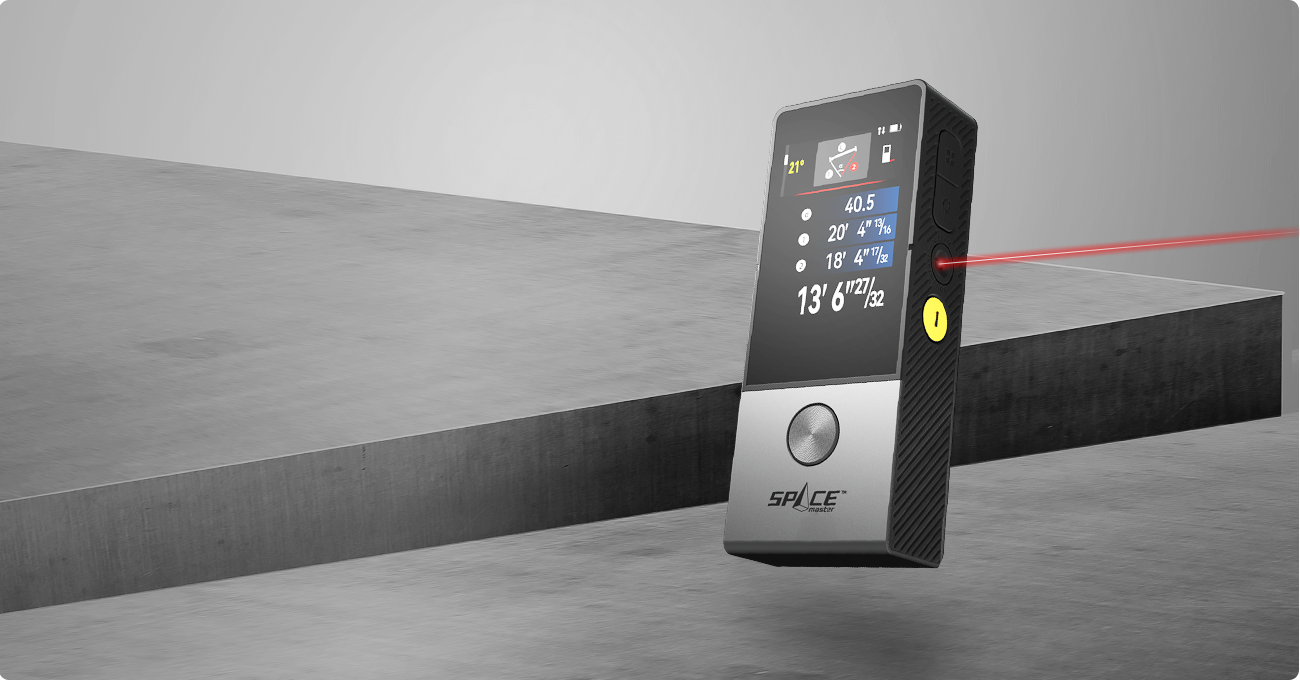
Image Source: img-va.myshopline.com
The Science Behind Laser Measuring Tool Precision
Laser measuring tools work by emitting a beam of laser light to a target. The device then measures the time it takes for the light to travel to the target and reflect back. This time is then used to calculate the distance. This method is often referred to as Time-of-Flight (ToF).
How Laser Tape Measure Precision Works
- Laser Emission: The device emits a short pulse of laser light.
- Reflection: The laser beam travels to the target surface and bounces back.
- Detection: A sensor within the device detects the reflected laser light.
- Time Measurement: The device precisely measures the time elapsed between emission and detection.
- Calculation: Using the speed of light (a constant), the device calculates the distance. The formula is: Distance = (Speed of Light × Time) / 2. The division by two accounts for the round trip of the laser beam.
How Accurate Is A Laser Tape Measure?
The laser tape measure accuracy is a key consideration for users. Most reputable laser tape measures are designed to provide highly precise measurements. Here’s a breakdown of what to expect:
- Typical Accuracy: For most consumer-grade and professional laser distance measures, an accuracy of ±1.5 mm (or ±1/16 inch) is common. Some higher-end models might offer even greater precision, such as ±1 mm.
- Range Dependency: Accuracy can sometimes be affected by the distance being measured. Manufacturers usually specify the accuracy at a certain distance, and this accuracy might slightly decrease at the maximum range of the device.
- Environmental Factors: As we will discuss later, environmental conditions can impact the laser measure reliability.
Comparing Laser Tape Measure Accuracy
When comparing different laser tape measures, look for the manufacturer’s stated accuracy. This is usually found in the product specifications. It’s also helpful to read reviews from other users who have tested the laser tape measure precision in real-world scenarios.
Factors Affecting Laser Tape Measure Accuracy
Several elements can influence the laser distance measure accuracy. It’s crucial to be aware of these to ensure you get the most reliable readings.
Environmental Conditions
- Surface Reflectivity: The nature of the surface you are measuring to plays a significant role. Highly reflective surfaces (like mirrors or white walls) allow the laser to return strongly and quickly, leading to accurate readings. Dull, dark, or textured surfaces can absorb more of the laser light, making it harder for the device to detect the return signal. This can lead to increased laser measure error.
- Light Colors: Generally reflect laser light better.
- Dark Colors: Absorb laser light, potentially reducing accuracy.
- Shiny Surfaces: Can cause multiple reflections, leading to inaccurate readings if not handled correctly.
- Ambient Light: Very bright sunlight or strong direct light can interfere with the laser beam’s return signal. Some devices have features to compensate for this, such as a brighter laser or a better sensor.
- Temperature: Extreme temperatures can affect the electronic components and the laser itself, potentially causing minor deviations.
- Atmospheric Conditions: Fog, dust, or smoke in the air can scatter the laser beam, reducing its effectiveness and potentially impacting accuracy.
Target Issues
- Uneven Surfaces: Measuring to a surface that isn’t flat (like rough concrete or brick) can result in inconsistent readings as the laser beam might reflect off different points.
- Moving Targets: If the target surface is moving, the laser measure reliability will be compromised, as the device cannot get a stable return signal.
- Lack of a Clear Target: If the laser beam is not hitting a solid surface but rather passing through a gap or onto a distant, indistinct object, the measurement will be unreliable.
Device-Specific Factors
- Laser Quality: The quality and type of laser diode used in the device affect beam intensity and focus, which in turn impacts accuracy.
- Sensor Sensitivity: The sensitivity of the sensor that detects the returning laser light is critical for picking up faint signals from distant or dark targets.
- Internal Calibration: While most devices are factory-calibrated, internal components can drift over time. This is why knowing how to calibrate laser tape measure devices can be useful for some users.
- Battery Level: While less common, a significantly low battery could potentially affect the performance and accuracy of some electronic devices.
Laser Measure vs. Tape Measure Accuracy
The debate between laser measures and traditional tape measures is common. Here’s a look at laser measure vs. tape measure accuracy:
| Feature | Laser Tape Measure | Traditional Tape Measure |
|---|---|---|
| Accuracy | High, typically ±1.5 mm or better | High, depends on user skill and tape quality |
| Ease of Use | Easy for single-person measurements, especially long distances | Requires two people for long distances or high places |
| Speed | Very fast, especially for long distances | Slower for long distances, faster for short, simple lengths |
| Range | Can measure much longer distances (e.g., 100+ feet) | Limited by tape length (e.g., 25-100 feet) |
| Reach | Measures to any accessible point | Requires physical access to both ends of the measurement |
| Environmental Impact | Affected by reflectivity, light, dust | Generally not affected by these factors |
| Measurement Point | Measures from the device’s reference point to the target | Measures from the hook to the marked length |
Precision in Practice: Laser Measure vs. Tape Measure
For most common household or construction tasks, both tools can provide sufficient accuracy. However, for longer distances, measurements in difficult-to-reach areas, or when a single person needs to take precise measurements, a laser tape measure excels. The laser tape measure precision often surpasses what can be easily achieved with a traditional tape, especially when it comes to reducing user error in holding and reading the tape.
Rangefinder Accuracy Considerations
Many laser tape measures are essentially advanced rangefinders. Therefore, rangefinder accuracy is a closely related concept.
How Rangefinder Accuracy Is Determined
- Target Distance: As mentioned, accuracy can vary with distance. A manufacturer might state accuracy as ±1.5 mm up to 30 meters (approx. 100 feet), and perhaps ±2 mm from 30 to 60 meters (approx. 100 to 200 feet).
- Target Type: The reflectivity of the target is crucial for rangefinder accuracy. A bright white target will yield better accuracy than a dark, matte surface at the same distance.
- Beam Divergence: The laser beam naturally spreads out over distance. The wider the beam at the target, the more likely it is to pick up reflections from surrounding areas or to be less focused, potentially impacting laser measure reliability.
Laser Measure Reliability: What to Expect
The laser measure reliability is generally high, making them a trusted tool for many professions.
Ensuring Reliable Measurements
- Read the Manual: Always consult the user manual for specific instructions on operation and best practices.
- Test Regularly: Periodically test your laser measure against a known, accurate measurement (e.g., a calibrated ruler or a trusted tape measure) to ensure consistent performance.
- Use Appropriate Targets: For critical measurements, use a target card or a piece of white paper if the surface is difficult.
- Maintain the Device: Keep the laser lens clean and free from dust or debris.
When Laser Measure Reliability Might Be Questioned
- Poorly Defined Edges: If you are measuring to a very fuzzy or indistinct edge, the laser might not have a clear point to lock onto.
- Glass Surfaces: Laser beams can pass through glass, leading to measurements of what’s behind the glass rather than the glass itself. Some advanced devices have specific modes for this, but generally, it’s a point of caution.
- Highly Angled Surfaces: If the surface is at a very sharp angle to the laser beam, the reflected signal might be weak or directed away from the sensor.
How to Calibrate Laser Tape Measure
While most laser tape measures are factory-calibrated and designed to maintain their accuracy, some situations might warrant a check or recalibration. However, most consumer-grade devices do not have a user-accessible calibration function.
Checking Laser Measure Accuracy
The most practical approach for users is to check laser tape measure accuracy against a known standard.
- Find a Known Distance: Measure a precisely known distance, such as the length of a large, flat object (like a sturdy table or a wall that you know is a specific length). Use a high-quality, calibrated traditional tape measure for this.
- Measure with Laser: Use your laser tape measure to measure this same distance.
- Compare Readings: Compare the reading from the laser tape measure to the known distance. If the difference is within the manufacturer’s specified accuracy tolerance (e.g., ±1.5 mm), the device is likely functioning correctly.
- Check Multiple Distances: Repeat this process at different distances within the device’s range to get a broader picture of its performance.
When to Consider Professional Calibration
- Significant Discrepancies: If you consistently find that your laser tape measure is off by more than its stated tolerance, even when used correctly.
- Frequent Use in Demanding Environments: For professionals who rely heavily on their tools in harsh conditions, periodic professional calibration might be part of their maintenance routine.
- After a Drop or Impact: If the device has been dropped or subjected to a significant impact, its internal calibration could be affected.
If you suspect your device needs calibration and it doesn’t have a user-accessible feature, you may need to contact the manufacturer for service or professional calibration.
Understanding Laser Measure Error
Laser measure error can stem from various sources, as we’ve discussed. Identifying the source of the error is the first step to correcting it.
Common Sources of Laser Measure Error
- User Error: Not holding the device steady, not aiming at the intended target, or not using the correct reference point.
- Environmental Interference: Bright light, dust, or poor surface reflectivity.
- Target Issues: Moving surfaces, very dark or transparent materials.
- Device Malfunction or Drift: Although less common, internal component issues can occur.
Minimizing Laser Measure Error
- Stabilize the Device: Use a tripod or place the device on a steady surface for more accurate measurements, especially over longer distances.
- Aim Precisely: Ensure the laser dot is clearly on your intended measurement point.
- Use a Target Card: For difficult surfaces or bright conditions, a target card provides a consistent, reflective surface.
- Measure in Appropriate Conditions: Avoid direct, harsh sunlight or extremely dusty environments if possible.
Laser Measuring Tool Precision: Beyond Simple Distance
Modern laser measuring tools often include features that enhance their laser measuring tool precision and utility:
- Area and Volume Calculations: Many devices can automatically calculate the area of a room or the volume of a space, reducing the need for manual calculations and potential errors.
- Pythagorean Theorem Function: This allows you to measure heights or lengths indirectly by measuring two other sides of a right-angled triangle. This feature is incredibly useful for measuring the height of a building or the diagonal length of a room.
- Continuous Measurement Mode: This allows the device to track moving objects or to quickly scan a length by moving the device along it.
- Data Storage and Recall: Some models can store measurements, making it easier to keep track of multiple readings.
- Bluetooth Connectivity: Newer models can often connect to smartphones or tablets, allowing you to transfer measurements directly into apps for planning or documentation.
These advanced features, when used correctly, contribute to overall laser tape measure precision by automating complex calculations and reducing the likelihood of transcription errors.
Conclusion: The Verdict on Laser Tape Measure Accuracy
So, how accurate is a laser tape measure? In general, they are remarkably accurate and reliable tools for a wide range of applications. The typical laser distance measure accuracy of ±1.5 mm is more than sufficient for most DIY projects, home improvements, and many professional trades.
When you prioritize understanding the factors affecting laser tape measure accuracy, such as surface reflectivity and environmental conditions, and learn how to use the tool correctly, you can consistently achieve precise measurements. While traditional tape measures have their place, the laser measure vs. tape measure accuracy comparison often favors the laser for its ease of use, speed, and ability to measure long distances accurately, especially by a single operator. By knowing how to check your device and being aware of potential sources of laser measure error, you can confidently rely on your laser tape measure for precise results. The laser tape measure precision offered by these modern tools makes them invaluable assets for anyone needing quick, accurate, and hassle-free measurements.
Frequently Asked Questions (FAQ)
Q1: Can a laser tape measure measure through walls?
No, a standard laser tape measure cannot measure through walls. The laser beam needs a clear line of sight to a solid target to reflect back. Measuring through walls would require different technologies like radar or ultrasonic sensors, which are not typically found in laser tape measures.
Q2: What is the maximum range for most laser tape measures?
The maximum range varies significantly by model. Consumer-grade models might range from 40 to 100 feet (12 to 30 meters), while professional-grade models can measure up to 300 feet (90 meters) or even more, especially when used with a reflective target.
Q3: Is a laser tape measure accurate enough for professional construction?
Yes, for most professional construction tasks, the laser tape measure accuracy is well within acceptable tolerances. Trades like carpentry, drywall installation, painting, and general contracting often rely on the precision of these tools. For extremely critical measurements where tolerances are in fractions of a millimeter, specialized surveying equipment might be necessary, but for most everyday tasks, laser measures are sufficient.
Q4: Why is my laser tape measure giving different readings?
This could be due to several factors affecting laser tape measure accuracy:
- Target Surface: Measuring to different surfaces (e.g., a dark wall versus a white ceiling) can yield slightly different results due to reflectivity.
- Target Angle: If the target surface is not perpendicular to the laser beam, the reading might be affected.
- Environmental Conditions: Bright light or dust can interfere with the laser.
- Device Stability: If the device is not held steady, especially over longer distances, the readings can vary.
- Measuring to the edge vs. the center: Ensure you are consistently aiming at the same point on the target.
Q5: Can I use a laser tape measure in direct sunlight?
It can be challenging. While some high-end models have brighter lasers, direct sunlight can wash out the laser dot, making it difficult to see the target. It can also interfere with the laser’s return signal. Using a target card or waiting for shade can improve laser measure reliability in bright conditions.
Q6: What is the typical laser measure error?
The typical laser measure error is usually around ±1.5 mm (±1/16 inch) for most devices. This is the margin of error stated by manufacturers, and actual performance can be even better under optimal conditions.