
You stop water hammer in pipes by addressing the root cause: the sudden stoppage or change in water flow, often caused by quick-closing valves. This causes a shockwave that reverberates through your plumbing system. Can you stop it yourself? Yes, with the right knowledge and tools, many homeowners can implement effective water hammer prevention strategies.
Water hammer, also known as hydraulic shock, is that alarming banging or knocking sound you hear in your pipes when a faucet is turned off abruptly, a washing machine stops its cycle, or a dishwasher’s solenoid valve snaps shut. This noise is more than just an annoyance; it’s a symptom of significant pressure surges within your plumbing system. These surges can damage pipes, fittings, valves, and appliances over time, leading to leaks and costly repairs. Fortunately, there are several effective solutions for pipe noise reduction and stopping this disruptive phenomenon.
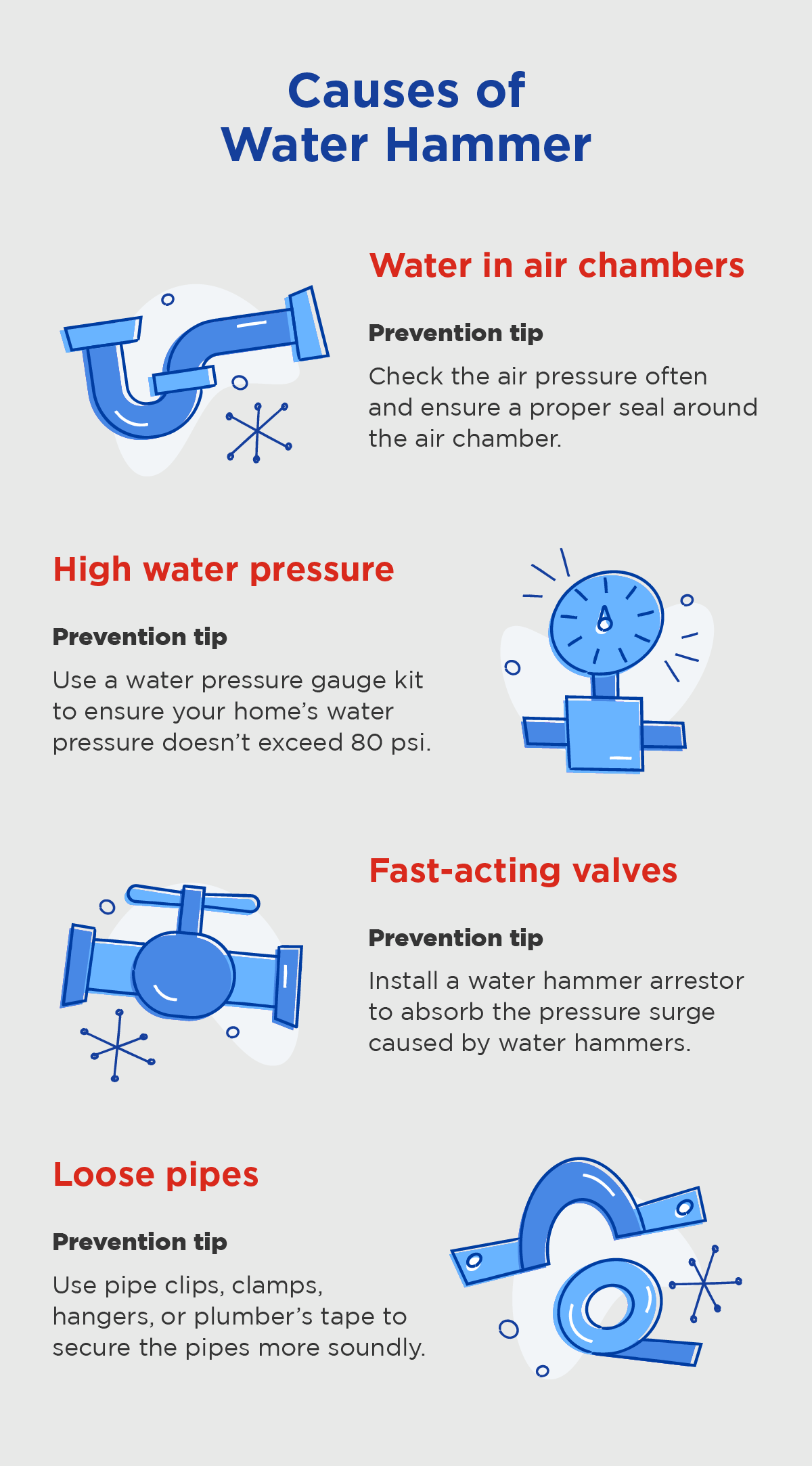
Image Source: www.mrrooter.com
Deciphering the Cause of Water Hammer
At its core, water hammer occurs due to the inertia of moving water. Water flowing through pipes has momentum. When this flow is suddenly halted, the water in front of the stoppage compresses, and the water behind it continues to push forward, creating a high-pressure wave. This wave travels back and forth through the pipes, reflecting off elbows and valves, causing the characteristic hammering sound.
Several factors contribute to the likelihood and severity of water hammer:
- High Water Pressure: Homes with excessively high municipal water pressure are more prone to water hammer.
- Quick-Closing Valves: Solenoid valves found in appliances like washing machines, dishwashers, and ice makers are notorious culprits. Manual faucets, especially ball valves, can also cause it if closed too quickly.
- Long Pipe Runs: The longer the distance water travels, the more momentum it can build up, leading to more forceful shockwaves.
- Loose Pipes: Pipes that are not securely fastened to walls or joists can vibrate and amplify the hammering sound.
- Air in the System: While sometimes air chambers are installed to absorb shock, if these air chambers become waterlogged, they lose their effectiveness and can even contribute to the problem.
Solutions for Water Hammer: A Comprehensive Guide
Addressing water hammer involves a multi-pronged approach, focusing on reducing the impact of these pressure surges and preventing their occurrence.
1. Installing a Water Hammer Arrestor
A water hammer arrestor is one of the most effective and commonly recommended solutions. These devices are designed to absorb the shockwave created by sudden changes in water flow. There are two main types:
a. Air-Chamber Arrestors
These are often the simplest type to install. They consist of a sealed chamber containing compressed air. When a shockwave occurs, the water is forced into the chamber, compressing the air. This compressed air acts like a cushion, absorbing the energy of the shockwave and preventing it from traveling further into the pipes.
Installation: Traditionally, air-chamber arrestors were installed by simply leaving an open vertical pipe, creating an air pocket. However, this air pocket can become waterlogged over time, losing its effectiveness. Modern water hammer arrestors are sealed units, often with a piston or diaphragm that separates the water from the air. These are installed directly onto the plumbing lines, usually near the offending appliance or faucet.
Pros:
* Effective at absorbing shock.
* Relatively simple to install.
* Available in various sizes.
Cons:
* Can become waterlogged if not designed with a piston or diaphragm.
* Requires proper placement near the source of the hammer.
b. Spring-Loaded or Piston Arrestors
These are more advanced versions of air-chamber arrestors. They use a spring-loaded piston or a diaphragm within a sealed chamber. When a pressure surge hits, the piston or diaphragm moves, compressing the spring or trapped air, and absorbing the shock.
Installation: Similar to air-chamber arrestors, these are typically installed directly onto the plumbing lines. They are often considered more reliable as they are less prone to waterlogging.
Pros:
* Highly effective and durable.
* Less susceptible to waterlogging.
* Can be more compact.
Cons:
* Can be slightly more expensive than basic air chambers.
* May require specialized tools for installation.
2. Installing a Surge Suppressor
A surge suppressor is another term often used interchangeably with water hammer arrestor, especially in the context of plumbing. These devices function on the same principle: to absorb sudden pressure spikes. They are specifically designed to dissipate the kinetic energy of the water column when flow is abruptly stopped.
Types of Surge Suppressors:
* Piston-Type: These utilize a movable piston within a cylinder, often with a spring or compressed gas to provide resistance.
* Diaphragm-Type: These employ a flexible diaphragm that separates the water from a chamber of air or gas.
Placement is Key: The effectiveness of a surge suppressor hinges on its proximity to the valve that causes the water hammer. For appliances like washing machines or dishwashers, installing a suppressor on the hot and cold water lines directly behind the appliance is ideal. For a faucet, it would be installed on the supply line to that faucet.
3. Adjusting Water Pressure
If your home’s water pressure is consistently high, it’s a primary contributor to water hammer. Installing a pressure reducing valve (PRV) can significantly mitigate the issue.
a. Pressure Reducing Valves (PRVs)
A PRV is installed on the main water supply line as it enters your home. It reduces the incoming water pressure to a safe and consistent level, typically between 40 and 60 psi.
How it Works: The PRV has a spring-loaded diaphragm. When water flows through, the diaphragm adjusts to maintain a set outlet pressure, regardless of fluctuations in the inlet pressure.
Installation: This is typically a job for a qualified plumber, as it involves cutting into the main water line.
Pros:
* Addresses the root cause of high pressure.
* Protects all plumbing fixtures and appliances.
* Provides consistent water pressure.
Cons:
* Requires professional installation.
* If it fails, water pressure can revert to high levels or drop to zero.
* May require periodic adjustment or replacement.
Checking Water Pressure: You can check your home’s water pressure using a simple water pressure gauge that screws onto an outdoor faucet or washing machine hookup.
4. Securing Loose Pipes
Loose pipes can rattle and amplify the sound of water hammer, even if the pressure surges themselves are not extreme. Properly securing your pipes can make a significant difference in pipe noise reduction.
a. Pipe Clamps and Straps
Use cushioned pipe clamps or straps to firmly attach pipes to joists or walls. Ensure the clamps are not overtightened, which could restrict water flow or cause damage. The cushioning helps absorb vibrations.
Installation:
1. Identify the sections of pipe that are loose or vibrating.
2. Purchase appropriate pipe clamps or straps, ensuring they match the diameter of your pipes.
3. Install the clamps at regular intervals along the pipe runs, particularly near bends or valves.
Pros:
* Simple and inexpensive solution.
* Directly addresses vibration amplification.
* Can be a DIY project.
Cons:
* Doesn’t stop the actual pressure surge, only reduces the audible effect.
* Requires access to the pipe runs.
5. Installing Anti-Shock Valves or Plumbing Shock Absorbers
While often used interchangeably with water hammer arrestors, some manufacturers market specific products as anti-shock valves or plumbing shock absorbers. These are essentially specialized devices designed to dampen hydraulic shock.
Types and Mechanisms:
* Diaphragm-Type Shock Absorbers: Similar to arrestors, these use a flexible diaphragm to absorb pressure spikes.
* Spring-Loaded Dampeners: These incorporate springs to absorb the impact.
* Specialized Valve Designs: In some cases, the valve itself might be designed with slower closing mechanisms or internal damping features.
Considerations: When selecting a plumbing shock absorber, ensure it is rated for the water pressure and flow rate in your home. The installation location should be as close as possible to the valve causing the hammer.
6. Improving Air Chambers (for older systems)
If your system has older, open-ended air chambers that have become waterlogged, you can sometimes restore their function.
Procedure:
1. Turn off the main water supply to your house.
2. Open the lowest faucet in your home and the highest faucet.
3. Go to the air chamber (typically a vertical pipe with an air pocket at the top).
4. Open the drain valve at the bottom of the air chamber or disconnect the pipe to allow the water to drain out.
5. Once drained, close the drain valve or reconnect the pipe.
6. Close all faucets.
7. Slowly turn the main water supply back on.
8. Once the system is full of water, open the lowest faucet until all air is purged, then close it. Repeat for the highest faucet.
Note: This is a temporary fix for older systems. Modern sealed arrestors are a more reliable long-term solution.
7. Using Pneumatic Hammer Arrestors
A pneumatic hammer arrestor is essentially a type of water hammer arrestor that relies on compressed air. The term “pneumatic” emphasizes the use of air pressure to create the shock-absorbing effect. These are often synonymous with the sealed air-chamber or piston-type arrestors mentioned earlier. The key is the sealed air component that acts as the cushion.
8. Checking Solenoid Valves in Appliances
For appliances like washing machines and dishwashers, the solenoid valves are frequent culprits. These electrically operated valves open and close rapidly. If they are malfunctioning or if the water pressure is high, they can cause significant water hammer.
Solutions:
* Install a water hammer arrestor directly on the appliance’s supply line. This is the most common and effective solution.
* Consider replacing older appliances with models that have slower-closing valves. Some newer appliances are designed with this in mind.
* Ensure the appliance’s water inlet hoses are not kinked, as this can also create restrictions leading to pressure surges.
9. Slowing Down Valve Closure
For manual faucets that cause water hammer, the simplest solution is to simply close them more slowly. However, this isn’t always practical, especially if the issue is with automated valves.
a. Anti-Shock Valves on Fixtures
Some specialized fixtures might come with or allow for the installation of anti-shock valves directly at the faucet or valve body. These are designed to regulate the speed of valve closure.
10. Pipe Vibration Dampeners
While not directly stopping the water hammer itself, pipe vibration dampeners can help reduce the noise associated with it. These are typically rubber or foam sleeves placed around pipes or insulation materials wrapped around them to absorb sound and vibration.
Application: These are more for pipe noise reduction than for preventing the damaging pressure surges. They can be useful in conjunction with other water hammer solutions.
Diagnosing the Source of Water Hammer
Before implementing solutions, it’s crucial to identify where the water hammer is originating.
Common Sources:
* Washing Machines: The solenoid valves that control water fill.
* Dishwashers: Similar solenoid valves.
* Ice Makers: Fast-acting valves.
* Faucets: Especially those with single-lever or ball-type valves that can be shut off quickly.
* Toilets: The fill valve can sometimes cause a minor hammer.
* Sprinkler Systems: Quick-closing valves in automatic systems.
Troubleshooting Steps:
1. Listen: Try to pinpoint which appliance or faucet is making the noise when it operates.
2. Isolate: Turn off the water supply to individual appliances one by one to see if the hammering stops.
3. Check Pressure: Measure your home’s water pressure. If it’s above 60-70 psi, consider a PRV.
Choosing the Right Solution
The best approach to stop water hammer often involves a combination of methods.
| Problem Symptom | Primary Cause | Recommended Solution(s) |
|---|---|---|
| Loud banging when faucets shut off | Quick manual valve closure, high pressure | Install water hammer arrestor on fixture, adjust water pressure |
| Hammering from appliances | Fast solenoid valves, high pressure | Install appliance-specific water hammer arrestors/surge suppressors |
| General pipe rattling | Loose pipes, moderate pressure surges | Secure loose pipes, consider vibration dampeners |
| Consistent, severe hammering | High water pressure, multiple contributing factors | Install a Pressure Reducing Valve (PRV) on the main line |
Maintenance and Prevention
Once you’ve implemented solutions, regular checks can ensure they remain effective:
- Inspect Arrestors: Periodically check that your water hammer arrestors or surge suppressors are functioning correctly. Listen for any recurring noises.
- Monitor Water Pressure: If you installed a PRV, ensure it’s still functioning properly and maintaining the desired pressure.
- Secure Pipes: Re-check pipe securing straps and clamps for any signs of loosening.
Frequently Asked Questions (FAQ)
Q1: Can water hammer damage my pipes?
A1: Yes, persistent water hammer can cause significant stress on your plumbing system. It can lead to leaks at pipe joints, damage to valve seats, and can even cause pipes to burst over time.
Q2: How much does it cost to fix water hammer?
A2: The cost can vary widely. Installing a simple water hammer arrestor might cost $20-$50 for the part, plus installation time if you hire a plumber. Installing a PRV can range from $100-$300 or more, depending on the complexity of the installation. Securing pipes is generally the least expensive option.
Q3: Can I use a pipe clamp as a water hammer arrestor?
A3: No, a standard pipe clamp is used to secure pipes and prevent them from moving. A pipe shock arrestor (or water hammer arrestor) is a specialized device with a mechanism (like compressed air or a spring) to absorb pressure surges.
Q4: How do I know if my air chambers are waterlogged?
A4: If you have older, open-ended air chambers and you hear water hammer, they are likely waterlogged. You might also hear gurgling sounds when you first turn on the water after a period of no usage.
Q5: Are pneumatic hammer arrestors the same as water hammer arrestors?
A5: Generally, yes. The term “pneumatic hammer arrestor” specifically highlights the use of compressed air as the shock-absorbing medium, which is a common feature in many effective water hammer arrestors.
Q6: Can I install a water hammer arrestor myself?
A6: For most common arrestors, especially those designed for washing machines or faucets, yes, it’s a manageable DIY project if you have basic plumbing skills and tools. Always turn off the main water supply before starting any work.
By understanding the causes of water hammer and implementing the appropriate solutions, you can eliminate those jarring noises and protect your plumbing system from potential damage, ensuring a quieter and more reliable home.