
A band saw works by using a continuous loop of toothed metal, called a blade, that moves around two or more wheels. This blade cuts through various materials like wood, metal, and plastic with a smooth, continuous motion.
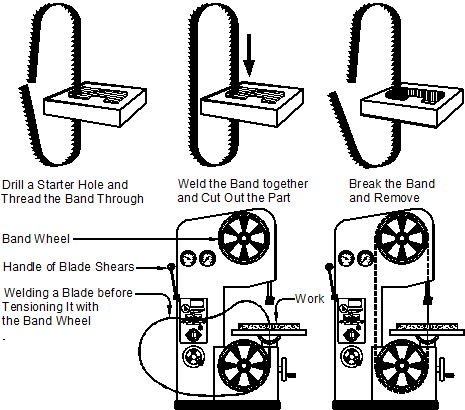
Image Source: www.metalartspress.com
Deciphering the Band Saw Mechanics
At its core, a band saw is a marvel of mechanical engineering designed for efficient and precise cutting. It’s a tool that transforms raw material into crafted pieces through a relentless, yet controlled, cutting action. Let’s dive deep into the intricate band saw mechanics that make this possible.
The Heart of the Operation: The Band Saw Blade
The most crucial component of any band saw is its blade. This is not just any saw blade; it’s a specialized, continuous loop of hardened steel or other alloys, with teeth along one edge. The design and material of the blade are critical for determining the type of material it can cut and the quality of the cut.
How a Band Saw Blade Works
The blade’s continuous motion is its defining characteristic. Unlike a circular saw where the blade rotates, a band saw blade moves in a single direction. The teeth on the blade act like a series of miniature chisels. As the blade passes through the material, these teeth scoop out small chips, creating the kerf – the gap left by the saw cut.
Blade Types and Their Functions:
- Standard Tooth: These are the most common, with evenly spaced teeth. Good for general-purpose cutting of wood.
- Hook Tooth: These blades have teeth with a more aggressive, angled hook shape. They excel at cutting softer woods and plastics quickly.
- Skip Tooth: These blades have larger spaces between teeth. This helps prevent clogging when cutting softer materials or materials that produce a lot of chips.
- Carbide-Tipped: For cutting hard materials like hardwoods, metals, and ceramics, blades with carbide tips on the teeth are used. These tips are much harder and more durable than standard steel.
The spacing, shape, and set (the sideways bending of the teeth) of the teeth all play a significant role in the cutting efficiency and the finish of the cut. For instance, fine-toothed blades are for smooth finishes, while coarse-toothed blades are for faster, rougher cuts.
The Driving Force: The Band Saw Motor Function
Every band saw needs a power source to drive its blade. This is where the motor comes in. The band saw motor function is to provide the rotational energy that the band saw then converts into the linear motion of the blade.
Band Saw Motor Types and Power
- Electric Motors: The vast majority of band saws are powered by electric motors. These can range from small, fractional horsepower motors in benchtop models to powerful multi-horsepower motors in industrial machines.
- Horsepower: The horsepower of the motor dictates the saw’s ability to cut through dense materials and maintain a consistent speed under load. Higher horsepower means more power for tougher jobs.
- Speed (RPM): While the motor itself spins at a high RPM, this rotation is transferred and modified by the band saw’s drive system to move the blade at the appropriate speed.
The motor’s efficiency and power are directly linked to the overall performance of the band saw. A motor that is too weak will bog down and stall when cutting thicker or harder materials.
Guiding the Way: The Band Saw Wheel Operation
The band saw blade doesn’t just float in the air; it’s guided and driven by a system of wheels. The band saw wheel operation is crucial for maintaining the blade’s tension, speed, and tracking.
The Upper and Lower Wheels
A typical band saw has two main wheels: an upper wheel and a lower wheel.
- Lower Wheel (Drive Wheel): This wheel is directly connected to the motor, usually via a belt and pulley system. As the motor spins, the lower wheel spins, pulling the blade along. The face of this wheel is often crowned (slightly convex) to help center the blade.
- Upper Wheel (Idler Wheel): This wheel is not directly powered by the motor. Its primary role is to guide the blade and absorb the tension required to keep the blade taut. This wheel can often be adjusted to control the blade’s tracking.
The speed at which these wheels turn determines the speed of the blade. Many band saws have variable speed controls, allowing users to select the optimal blade speed for different materials. For example, metal cutting typically requires a slower blade speed than wood cutting.
Wheel Material and Design:
The wheels are usually made of metal, often cast iron, and are typically covered with a rubber tire. This tire provides grip for the blade, absorbs vibration, and helps to protect the blade from damage. The crown on the drive wheel ensures that if the blade drifts slightly, it will naturally be guided back towards the center of the wheel.
Maintaining the Edge: Band Saw Tensioning
Proper blade tension is vital for accurate and safe cutting. Band saw tensioning ensures the blade remains straight and stable as it cuts.
The Importance of Tension
If a blade is too loose, it can wander off course, leading to inaccurate cuts and potentially snapping. If it’s too tight, it can put excessive stress on the blade, the wheels, and the saw’s frame, again increasing the risk of breakage.
How Tension is Applied
The tension is typically adjusted using a knob or lever connected to the upper wheel assembly. This mechanism allows the user to move the upper wheel slightly up or down, increasing or decreasing the distance between the two wheels. This change in distance tightens or loosens the blade.
Tension Indicators:
Many band saws have a built-in tension indicator, often a gauge or a scale, that helps the operator set the correct tension for the specific blade being used. Manufacturers usually provide recommended tension settings for their blades.
Keeping the Blade True: Band Saw Guides
To prevent the blade from deflecting sideways during the cutting process, band saws employ a system of guides. These band saw guides are critical for maintaining the blade’s stability and ensuring a straight cut.
Types of Band Saw Guides
- Block Guides: These are the simplest type, consisting of fixed blocks (often made of steel, bronze, or a composite material) that support the blade on its sides and back. They are positioned close to the workpiece.
- Roller Guides: These guides use bearings or rollers that contact the sides and sometimes the back of the blade. They offer very low friction and excellent support, allowing the blade to track more freely while still preventing sideways movement.
- Combination Guides: Many modern band saws use a combination of blocks and rollers for optimal support and minimal friction.
The guides are typically adjustable, allowing them to be positioned precisely against the blade without binding it. Proper adjustment of the guides ensures the blade is supported effectively at the point of cutting, minimizing deflection and improving cut quality.
The Cutting Action: How the Blade Interacts with Material
The band saw cutting action is a continuous process of material removal. As the toothed blade moves through the material, each tooth performs a small cutting stroke.
The Kerf and Chip Formation
- Kerf: The width of the cut made by the blade is called the kerf. The kerf is determined by the thickness of the blade and the set of its teeth.
- Chip Formation: As the teeth slice into the material, they shear off small pieces, forming chips. The shape and size of these chips depend on the material being cut and the blade’s tooth configuration. For instance, softwoods produce larger chips, while metals produce smaller, finer chips.
The continuous motion of the blade allows for efficient material removal and can produce very clean cuts, especially when paired with the correct blade and appropriate speed.
Powering the Process: The Band Saw Power Source
The band saw power source is what initiates and sustains the entire operation. While electric motors are most common, other power sources exist for specific applications.
Common Power Sources
- Electricity: As mentioned, this is the most prevalent power source. It can be supplied by a standard wall outlet for smaller saws or by more robust electrical connections for larger industrial models.
- Gasoline Engines: Some portable or larger industrial band saws used in remote locations or specific industries might be powered by gasoline engines.
- Pneumatic Power: In some specialized industrial settings, band saws can be powered by compressed air.
The choice of power source is usually dictated by the size of the band saw, its intended use, and the availability of power at the worksite.
Essential Band Saw Components
Beyond the primary elements, several other band saw components are crucial for its operation, safety, and versatility.
Key Components of a Band Saw:
- Frame/Body: This is the main structure of the band saw that supports all other components. It needs to be rigid and strong to withstand the forces generated during cutting.
- Table: The workpiece rests on the table, which is usually adjustable to allow for angled cuts (bevels). The table also typically has a slot or guide for a miter gauge.
- Blade Guard: A critical safety feature, the blade guard encloses the parts of the blade that are not actively cutting.
- Dust Collection Port: Most band saws have a port for connecting a vacuum or dust collection system to remove sawdust and debris, improving visibility and air quality.
- On/Off Switch and Controls: These are the user interface elements for operating the saw, including speed controls and emergency stop buttons.
- Fence and Miter Gauge: These accessories are used for guiding the workpiece and making repetitive straight or angled cuts.
Safety First: Band Saw Safety Features
Working with any cutting tool carries inherent risks, and band saws are no exception. Modern band saws are equipped with numerous band saw safety features to protect the operator.
Critical Safety Elements
- Blade Guarding: Comprehensive guarding of the blade, covering the upper and lower wheels and the portion of the blade between the guides and the table. Some guards are adjustable to accommodate different workpiece thicknesses.
- Blade Lock: A mechanism to prevent the blade from accidentally moving when the saw is off.
- Emergency Stop Button: A prominent, easily accessible button that immediately shuts off the motor in case of an emergency.
- On/Off Switch Location: Designed to prevent accidental activation.
- Tool-Free Blade Change: Many modern saws feature mechanisms that allow for easier and safer blade changes without the need for additional tools.
- Kickback Prevention: While kickback is less common with band saws than with some other saws, proper blade tensioning and guide adjustment help minimize the risk.
Best Practices for Safe Operation:
- Always wear safety glasses.
- Ensure the blade guards are in place and adjusted correctly.
- Never reach under the blade guard while the saw is running.
- Maintain proper blade tension and alignment.
- Keep the work area clean and free of debris.
- Use the appropriate blade for the material being cut.
- Never force the material through the blade; let the blade do the work.
- Turn off and unplug the saw before making any adjustments or blade changes.
Assembling and Maintaining Your Band Saw
A band saw, like any sophisticated tool, requires proper assembly and regular maintenance to perform optimally and safely.
Initial Setup and Blade Installation
When you first acquire a band saw, or after transporting it, the initial setup is crucial. This typically involves:
- Securing the Saw: Ensuring the band saw is placed on a stable, level surface or securely bolted down.
- Installing the Blade: This is a critical step.
- Ensure the saw is unplugged.
- Release the blade tension.
- Feed the blade into the saw frame, ensuring the teeth are pointing downwards on the cutting side (towards the table).
- Thread the blade around the upper and lower wheels.
- Gradually apply tension using the tensioning mechanism until the indicator shows the correct setting for your blade.
- Check the blade tracking by gently rotating the upper wheel by hand. The blade should be centered on the crown of the wheels. Adjust the upper wheel’s lateral position if needed.
- Engage the saw briefly to settle the blade. Re-check tension and tracking.
Routine Maintenance for Peak Performance
Consistent maintenance ensures your band saw operates efficiently and prolongs its lifespan.
Key Maintenance Tasks:
- Blade Cleaning: Remove pitch and debris from the blade teeth using a brush or blade cleaner after each use, especially when cutting resinous woods.
- Wheel Tire Inspection: Periodically check the rubber tires on the wheels for wear, cracks, or embedded debris. Clean them gently with a damp cloth or a mild solvent if necessary.
- Guide Adjustment and Cleaning: Ensure the blade guides are clean and properly adjusted. Dust and debris can impede their function. Check for wear on block guides or roller bearings.
- Lubrication: Some band saws may have specific lubrication points for bearings or the motor, as per the manufacturer’s manual.
- Motor and Belt Check: Inspect the drive belt for wear or damage and ensure it is properly tensioned. Keep the motor vents clear of dust.
- General Cleaning: Keep the entire saw clean, including the table and the interior of the frame, to prevent dust buildup.
Troubleshooting Common Band Saw Issues
Even with diligent maintenance, you might encounter issues. Knowing how to troubleshoot can save time and prevent further damage.
Common Problems and Solutions:
| Problem | Possible Cause | Solution |
|---|---|---|
| Blade Drifts Off Course | Incorrect blade tension; Improper guide adjustment; Worn tires on wheels; Warped blade. | Re-tension blade; Adjust guides to support blade properly; Inspect and clean wheel tires; Replace blade. |
| Blade Breaks Frequently | Blade tension too high; Blade tension too low; Incorrect blade for material; Worn blade guides. | Reduce tension; Increase tension; Use correct blade type and pitch; Adjust or replace guides. |
| Rough Cut Quality | Dull blade; Incorrect blade speed; Improper guide setting; Excessive feed pressure. | Replace blade; Adjust blade speed for material; Ensure guides are close but not binding; Reduce feed pressure. |
| Saw Vibrates Excessively | Unbalanced blade; Loose parts; Saw not properly secured; Damaged wheel. | Check blade for damage or weld issues; Tighten all fasteners; Secure the saw to a stable surface; Inspect wheel. |
| Motor Overheats | Blocked motor vents; Overloading the saw; Worn motor bearings. | Clean motor vents; Reduce feed rate or cut through less material at once; Service or replace motor. |
Frequently Asked Questions (FAQ)
Q1: What is the most important factor for a good band saw cut?
The most important factors are using the correct blade for the material, proper blade tension, accurate blade tracking, and appropriately set blade guides.
Q2: Can I cut metal with a standard wood band saw?
You can, but it’s not ideal. Wood band saws typically spin blades too fast for most metals, leading to rapid dulling of the blade and potential overheating. Metal-cutting band saws use slower blade speeds and specialized blades. If you must cut metal on a wood band saw, use a slow speed setting (if available), a metal-cutting blade, and a lubricant.
Q3: How often should I change my band saw blade?
This depends heavily on the material you’re cutting and how much you use the saw. For general woodworking, a blade might last for months. For tougher materials or heavy use, it could be weeks or even days. A dull blade will be noticeable by the need to force the material or a degradation in cut quality.
Q4: What is the difference between a band saw and a scroll saw?
A band saw uses a continuous loop blade for cutting larger pieces and curves, while a scroll saw uses a thin, reciprocating blade that moves up and down, designed for intricate cutting of fine details and sharp corners.
Q5: How do I know if my band saw blade is tracking correctly?
When the saw is running and the blade is properly tensioned, it should be centered on the back edge of the wheel tires. You can test this by slightly nudging the upper wheel’s lateral adjustment. If the blade moves towards the front edge of the tire, it needs adjustment.
By comprehending these fundamental principles and diligent maintenance practices, you can effectively utilize your band saw for a wide range of cutting tasks, ensuring both precision and safety.