
A circuit breaker box, also known as an electrical panel or breaker panel, is the central hub of your home’s electrical system. It acts as a safety device, protecting your home’s wiring and your appliances from electrical damage. When an electrical circuit is overloaded or experiences a short circuit, the circuit breaker “trips,” shutting off the flow of electricity to that specific circuit, preventing fires and damage. Can you live without a circuit breaker box? No, your home needs a circuit breaker box to safely receive and distribute electricity from the power grid.
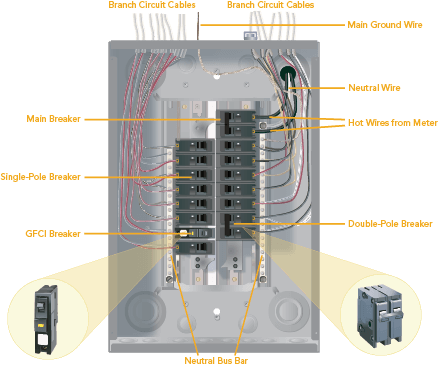
Image Source: cdn.squareone.ca
The Core of Home Electrical Safety
Your home’s electrical system is a complex network of wires, outlets, and switches. All of this electricity flows from the utility company to your house, entering through a main service line. This line then connects to your circuit breaker panel, which is typically located in a basement, garage, or utility closet. Think of the circuit breaker panel as the brain and nervous system of your home’s electricity. It manages the flow of power, ensuring that each part of your house receives the correct amount of electricity safely.
What is a Circuit Breaker Box?
At its heart, a circuit breaker box is a safety mechanism designed to prevent electrical hazards. It houses numerous individual circuit breakers, each dedicated to a specific circuit in your home. These circuits power everything from your lights and outlets in a bedroom to your refrigerator and washing machine.
The Evolution from Fuse Boxes
Before circuit breakers became standard, homes relied on fuse box comparison and fuses. A fuse is a small, cylindrical device with a metal filament inside. When too much electricity flows through the fuse, the filament melts, breaking the circuit and stopping the flow of electricity. While effective, fuses were a one-time-use item; once a fuse blew, it had to be replaced. This could be inconvenient and sometimes costly.
Circuit breakers offer a significant advantage. Instead of melting, a circuit breaker uses an internal mechanism (often an electromagnet or a bimetallic strip) to detect an electrical fault. When a fault occurs, this mechanism causes the breaker to “trip,” flipping a switch to the “off” position and interrupting the flow of electricity. The great news is that a tripped circuit breaker can simply be reset by flipping the switch back to the “on” position, making them much more convenient and reusable than fuses.
Key Electrical Box Functions
The electrical box functions go beyond simply housing the breakers. It’s responsible for several crucial tasks:
- Power Distribution: It divides the incoming electricity into smaller, manageable circuits, sending power to different areas and appliances in your home.
- Overload Protection: This is a primary role. When a circuit draws more electrical current than it’s designed to handle, it’s considered an overload. This can happen if you plug too many appliances into one circuit or if an appliance malfunctions.
- Short Circuit Tripping: A short circuit is a more serious fault where electricity takes an unintended, low-resistance path, often due to damaged wiring. This can cause sparks and fires.
- Electrical Safety Devices: As a whole, the circuit breaker panel is one of the most important electrical safety devices in your home.
- Control and Access: It provides a central point for you to control power to different parts of your home. You can manually shut off power to specific circuits for maintenance or in emergencies.
Deciphering the Components of a Circuit Breaker Box
To truly grasp how a circuit breaker box works, let’s break down its main components:
The Main Breaker: The Gatekeeper of Power
The main breaker operation is paramount to your entire home’s electrical safety. This is the largest breaker in the panel, typically located at the top. It controls all the electricity entering your home from the utility company. When you flip the main breaker off, it cuts power to every single circuit in the panel. This is the ultimate on/off switch for your home’s electricity, and it’s essential for emergencies or when performing significant electrical work.
The main breaker is rated for the total amperage capacity of your home’s electrical service (e.g., 100 amps, 150 amps, or 200 amps). It acts as the first line of defense against a massive overload of your entire home wiring system.
Individual Circuit Breakers: Guardians of Each Circuit
Each smaller switch within the panel is an individual circuit breaker. These are designed to protect specific circuits. Each breaker is rated for a certain amperage (e.g., 15 amps for lighting and general outlets, 20 amps for kitchen appliances, 30 amps or higher for dedicated circuits like air conditioners or electric dryers).
When an electrical fault occurs on a specific circuit, only the breaker for that circuit will trip, leaving power flowing to all other circuits in your home. This is a key difference when considering a fuse box comparison; a blown fuse might have been for one circuit, but the inconvenience of replacing it was more universal.
Busbars: The Power Highways
Inside the panel, you’ll find metal bars called busbars. These are the conductive pathways that carry electricity from the main breaker operation to the individual circuit breakers. Think of them as highways where electricity travels. The incoming power from the utility is connected to the main breaker, which then distributes it to the busbars. From the busbars, the electricity flows to the terminals of each individual circuit breaker.
Wiring and Terminals
Each circuit breaker has a terminal where the wires for a specific circuit are connected. These wires carry electricity to the outlets, lights, and appliances in that part of your house. The busbars provide the electricity to these terminals.
The Enclosure: A Protective Shell
The entire assembly is housed in a metal enclosure, typically made of steel. This enclosure serves several vital purposes:
- Safety: It prevents accidental contact with live electrical components, protecting people from electric shock.
- Protection: It shields the internal components from dust, moisture, and physical damage.
- Organization: It keeps all the wiring and breakers neatly organized in one central location.
How Circuit Breakers Provide Circuit Protection
The primary function of a circuit breaker is circuit protection. It achieves this through two main mechanisms: thermal tripping and magnetic tripping.
Thermal Tripping: Guarding Against Overloads
Many common circuit breakers use a bimetallic strip for thermal protection. This strip is made of two different metals bonded together. These metals expand at different rates when heated.
- Normal Operation: When electricity flows through the circuit at a normal rate, the bimetallic strip doesn’t get hot enough to bend significantly.
- Overload: If the current increases beyond the breaker’s rating (an overload), the bimetallic strip heats up. As it heats, the metal with the higher expansion rate causes the strip to bend.
- Tripping: If the overload persists, the bent bimetallic strip eventually pushes a mechanism that trips the breaker, opening the circuit and stopping the flow of electricity. This process is relatively slow, allowing for temporary surges without tripping.
This thermal mechanism is excellent for preventing damage from sustained overcurrents that could gradually heat up and damage wiring.
Magnetic Tripping: Reacting to Sudden Surges
For rapid fault conditions like short circuits, circuit breakers employ magnetic tripping. This involves an electromagnet.
- Normal Operation: Under normal current flow, the magnetic field generated by the electromagnet is too weak to trigger the tripping mechanism.
- Short Circuit: During a short circuit, the electrical current surges dramatically and instantaneously. This creates a very strong magnetic field around the electromagnet.
- Tripping: This powerful magnetic field instantly pulls a lever or plunger, which trips the breaker much faster than the thermal mechanism. This quick reaction is crucial for preventing fires and severe damage during short circuits.
The Role of Amperage Rating
Every circuit breaker has an amperage (amp) rating printed on it, such as 15A, 20A, or 30A. This rating indicates the maximum amount of electrical current the breaker can safely allow to flow through before it trips.
- Lower Ampere Ratings (e.g., 15A): Typically used for circuits powering lights and standard outlets in bedrooms, living rooms, and hallways.
- Higher Ampere Ratings (e.g., 20A): Often used for kitchens, bathrooms, garages, and laundry rooms where appliances might draw more power.
- Even Higher Ampere Ratings (e.g., 30A, 50A, 60A): Reserved for high-power appliances like electric ranges, water heaters, air conditioners, and electric vehicle charging stations, which require dedicated circuits.
Choosing the correct amperage rating for each circuit is vital for effective circuit protection. Using a breaker with too high an amperage rating for a circuit can negate its protective qualities, as it might allow damaging overcurrents to pass before tripping.
Understanding Power Distribution
The power distribution within your home is intelligently managed by the circuit breaker panel.
Branch Circuits
The electricity entering your home is a single, high-amperage feed. The circuit breaker panel divides this into multiple “branch circuits.” Each branch circuit serves a specific area or a group of outlets and lights.
- Lighting Circuits: Typically 15-amp breakers powering lights in various rooms.
- General-Purpose Outlet Circuits: Usually 15-amp or 20-amp breakers supplying power to standard wall outlets.
- Dedicated Appliance Circuits: Breakers with higher amperage ratings (e.g., 20A, 30A) for specific appliances like refrigerators, microwaves, dishwashers, washing machines, or dryers. These ensure that the appliance receives sufficient, stable power without affecting other circuits.
Load Balancing
A well-designed home wiring system will distribute the electrical load evenly across the available circuits. This means that the circuits powering the heaviest loads (like ovens or HVAC systems) are not all on the same side of the panel. Proper load balancing helps prevent the main breaker operation from tripping due to a disproportionate draw on one section of the panel. Electricians aim to balance the electrical load between the two main busbars in the panel.
Types of Circuit Breakers
While the basic principle is the same, there are different types of circuit breakers designed for specific purposes:
- Standard Single-Pole Breakers: These are the most common and protect 120-volt circuits (e.g., lighting, standard outlets). They have two prongs and take up one slot in the panel.
- Double-Pole Breakers: These protect 240-volt circuits, such as those powering electric dryers, ranges, or central air conditioners. They have four prongs and take up two slots in the panel, connecting to both busbars simultaneously to provide a complete 240-volt path.
- GFCI (Ground Fault Circuit Interrupter) Breakers: These are designed for areas where electricity and water might come into contact, such as bathrooms, kitchens, garages, and outdoor outlets. They detect small imbalances in current flow that might indicate electricity is flowing through a person (a ground fault) and trip the circuit very quickly to prevent electrocution.
- AFCI (Arc Fault Circuit Interrupter) Breakers: These breakers are designed to detect dangerous electrical arcs that can occur in faulty wiring or damaged cords. These arcs can generate intense heat and are a common cause of electrical fires. AFCIs trip the circuit when they sense an arc fault, providing an additional layer of fire prevention.
Maintaining Your Circuit Breaker Box
Regular maintenance of your circuit breaker panel is crucial for ensuring its continued effectiveness as an electrical safety device.
What to Look For
- Tripped Breakers: If a breaker trips, investigate the cause before resetting it. Avoid repeatedly resetting a breaker without identifying why it tripped, as this could indicate a persistent problem.
- Warm Breakers or Panel: A breaker or the panel itself feeling warm to the touch can indicate an overload or a loose connection, both of which are fire hazards.
- Signs of Corrosion or Damage: Inspect the panel for any signs of rust, corrosion, or physical damage to the enclosure or breakers.
- Outdated Breakers: If your home still has old, outdated fuse-style breakers or breakers that are frequently tripping, it might be time to consider an upgrade.
When to Call a Professional
- Frequent Tripping: If breakers trip repeatedly, it’s essential to have a qualified electrician diagnose the issue. It could be a faulty appliance, an overloaded circuit, or a problem with the wiring itself.
- Sparks or Smells: If you see sparks coming from the panel or smell burning plastic or ozone, turn off the main breaker operation immediately and call an electrician.
- Upgrading Your Electrical Service: If you’re adding new, high-demand appliances or renovating your home, you may need to upgrade your panel to handle the increased electrical load.
- Any Uncertainty: If you’re ever unsure about the condition of your circuit breaker box or how to address a problem, it’s always best to consult a licensed electrician. Tampering with electrical panels can be extremely dangerous.
Frequently Asked Questions (FAQ)
Q1: How often should I test my circuit breakers?
A1: It’s a good practice to test your circuit breakers every few months, or at least once a year. You can test them by simply flipping them off and then back on. For GFCI outlets or breakers, use the “test” button to ensure they are functioning correctly.
Q2: Can I replace a circuit breaker myself?
A2: While some minor electrical tasks can be DIY projects, replacing a circuit breaker is generally not recommended for individuals without electrical experience. It involves working directly with the main power supply and requires a thorough understanding of electrical safety and panel wiring. If a breaker needs replacement, it’s best to hire a qualified electrician.
Q3: What does it mean if my lights flicker?
A3: Flickering lights can be a sign of several issues, including a loose bulb, a loose connection in the light fixture, a loose connection within the circuit breaker panel, or an overloaded circuit. If it’s persistent or affects multiple lights, it’s wise to have an electrician inspect your home wiring system.
Q4: What is the difference between an overload and a short circuit tripping?
A4: An overload occurs when a circuit draws more power than it’s rated for over a period, causing gradual heating. A short circuit is a sudden, massive surge of power due to a fault, which the breaker’s magnetic mechanism detects and reacts to much faster. Both result in the breaker tripping to prevent damage or fire.
Q5: My main breaker keeps tripping. What should I do?
A5: If your main breaker operation is tripping frequently, this indicates a severe problem with your home’s overall electrical usage or system. It suggests that your entire house is drawing more power than the main service can safely handle. Immediately turn off all major appliances and anything drawing significant power, and call a qualified electrician. Do not attempt to reset the main breaker repeatedly without professional diagnosis.
In conclusion, the circuit breaker panel is a vital component of modern living, ensuring the safe and efficient operation of your home wiring system. It’s a sophisticated system of electrical safety devices that protect against the dangers of overload protection and short circuit tripping, facilitating proper power distribution. By understanding its functions and maintaining it appropriately, you contribute significantly to the safety and longevity of your home.