
A SawStop works by using a unique safety system that detects when a person’s flesh comes into contact with the spinning saw blade and immediately stops the blade. Can you prevent accidents with a SawStop? Yes, the SawStop safety system is specifically designed to drastically reduce the severity of injuries from accidental contact with the saw blade.
The heart of the SawStop’s revolutionary safety lies in its innovative flesh-detecting technology. This isn’t just a fancy name; it’s a sophisticated system that actively monitors the saw blade for the presence of conductive material, like human flesh. When the spinning blade makes contact with anything conductive, a rapid and powerful brake mechanism is activated. This isn’t a slow-down; it’s an instantaneous stop, designed to minimize the potential for injury.
The core of this safety feature is the blade arrestor. Imagine a small, yet incredibly strong, piece of technology that is always ready. This blade arrestor is positioned just below the tabletop, ready to engage. When the electronic detection system senses contact with flesh, it triggers a signal. This signal causes a spring-loaded aluminum brake cartridge to eject into the spinning blade’s teeth. This action effectively and rapidly stops the blade. It’s a marvel of engineering that prioritizes user safety above all else.
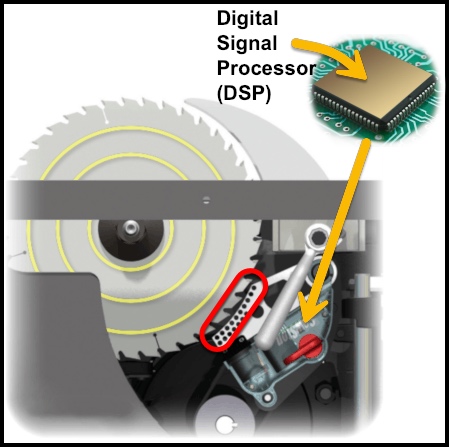
Image Source: thenewbiewoodworker.com
Deciphering the Electronic Detection
The electronic detection employed by SawStop is what makes its safety system so effective. It’s a far cry from simply relying on a manual safety switch or hoping for the best. Instead, SawStop utilizes a continuous monitoring system that checks the conductivity of whatever is passing through the blade path.
Here’s a simplified breakdown of how it operates:
- Continuous Monitoring: A signal is sent through the saw blade. This signal is designed to be safe for wood, but it reacts instantly to the higher conductivity of human skin.
- Detecting Contact: When your finger, hand, or any other part of your body touches the spinning blade, it completes an electrical circuit. This surge in conductivity is immediately recognized by the system.
- Signal to the Brake: The electronic detection system sends an instant signal to the brake mechanism. This is an incredibly fast process, happening in milliseconds.
This cutting power interruption is the crucial step that prevents severe injuries. Unlike traditional saws where a spinning blade can continue to cause damage for several seconds, the SawStop brings the blade to a halt almost instantly. This rapid stop is key to preventing or significantly reducing the severity of kickback and direct contact injuries.
The Brake Mechanism: Instantaneous Safety
The brake mechanism is the physical component that makes the SawStop’s safety system a reality. It’s a testament to thoughtful design and precise engineering. When the electronic detection system identifies a threat, it’s this mechanism that performs the critical action of stopping the blade.
The components of the brake mechanism include:
- Aluminum Brake Cartridge: This is the primary stopping component. Made from a specially designed aluminum alloy, it’s engineered to be strong enough to engage with the blade teeth without shattering.
- Spring-Loaded Ejection System: The cartridge is held under spring tension. When triggered, this spring forcefully ejects the cartridge into the path of the spinning blade.
- Tooth Engagement: The cartridge is designed with features that effectively catch and halt the saw blade’s teeth. This engagement creates significant friction and quickly brings the blade to a standstill.
The speed at which this brake mechanism engages is astonishing. It’s designed to stop a fully spinning blade in less than a thousandth of a second. This speed is paramount for safety, as it means the blade stops before it can cause significant damage.
SawStop Safety System: Beyond the Blade
While the flesh-detecting technology and brake mechanism are the core of the SawStop safety system, the overall design incorporates other elements to enhance user protection.
Kickback Prevention
A significant danger in woodworking is kickback prevention. This occurs when a piece of wood being cut gets caught between the blade and the fence or throat plate, forcing the wood violently back towards the operator. SawStop’s system plays a role in mitigating kickback risks. If kickback occurs and the wood contacts the blade in a way that the sensor detects, the blade will stop, potentially preventing the wood from being thrown back with full force.
Safety Switch and Emergency Stop
Every SawStop machine also features a traditional safety switch. This allows for manual power control. More importantly, most SawStop models also include a prominent emergency stop button. This button provides a direct and immediate way to cut power to the saw in any emergency situation, not just those detected by the flesh-detection system. This dual-layer approach to safety ensures operators have multiple ways to halt the machine quickly.
Dust Collection Integration
While not directly a safety feature in the sense of stopping the blade, the thoughtful dust collection integration on SawStop saws contributes to a safer working environment. Efficient dust collection removes airborne particles, improving visibility around the blade and reducing the inhalation of harmful wood dust. A clearer workspace is inherently a safer workspace.
How the SawStop Protects You: A Detailed Look
Let’s delve deeper into the specific scenarios where the SawStop’s innovative design shines.
Accidental Contact Scenarios
Imagine you are working with a piece of wood, and your hand slips. In a conventional table saw, this could lead to a catastrophic injury. In a SawStop, however, the following happens in rapid succession:
- Contact Detected: Your skin touches the spinning blade.
- Circuit Completed: The electronic sensors register the conductivity change.
- Signal Sent: A signal is instantly sent to the brake cartridge.
- Brake Engaged: The spring-loaded mechanism ejects the aluminum cartridge, and it violently engages with the spinning blade teeth.
- Blade Stopped: The blade comes to a halt in milliseconds.
The result is that instead of a deep laceration, you might experience a minor nick or even no injury at all, as the brake can sometimes stop the blade before it penetrates the skin deeply.
Kickback Mitigation
Kickback is a common cause of serious table saw injuries. It can happen for various reasons, such as:
- Blade binding: The wood gets pinched in the cut.
- Improper feed rate: Pushing the wood too fast or too slow.
- Using a dull or damaged blade: This can lead to less clean cuts and increased binding.
- Not using a splitter or riving knife: These devices help keep the kerf open.
If kickback occurs and the wood, or any part of the operator, contacts the blade, the SawStop’s flesh-detecting technology can still activate. While it might not completely prevent the initial kickback event, the rapid stopping of the blade can significantly reduce the potential for the wood to be thrown back with full momentum and cause secondary injuries. The blade arrestor essentially acts as a rapid safety net if kickback leads to operator contact.
Ease of Resetting the Safety System
A crucial aspect of the SawStop safety system is its post-activation reset. After the brake mechanism has been engaged, the system is designed for relatively easy reset.
Here’s a general overview of the reset process:
- Power Off: The saw’s main power is turned off.
- Remove Cartridge: The engaged brake cartridge is removed from the saw.
- Inspect Blade: The saw blade should be inspected for any damage or excessive buildup from the brake engagement. Often, a new blade is recommended for optimal performance and safety.
- Install New Cartridge: A new, un-engaged brake cartridge is installed. SawStop offers different types of cartridges depending on the saw model and blade type (e.g., wood, aluminum, dado).
- Reset System: The saw’s electronics are reset, and power can be restored.
This process ensures that the saw is returned to its fully operational and safe state. It’s a straightforward procedure that emphasizes the system’s readiness for continued use after an event.
Features Enhancing the SawStop Experience
Beyond the core safety, SawStop has integrated features that contribute to the overall user experience and safety.
Table Saw Types and Applications
SawStop offers a range of table saws, each designed for different needs and workshop environments.
| SawStop Model Type | Typical User | Key Features |
|---|---|---|
| Jobsite Pro | Professional Contractors | Portability, robust build, powerful motor, enhanced dust collection |
| Contractor Saw | Serious Hobbyists | Excellent safety features, stable cast iron construction, good dust collection |
| PCS (Professional Cabinet Saw) | Cabinet Makers, Fine Woodworkers | Massive cast iron, incredible precision, premium features, robust dust collection |
| ICS (Industrial Cabinet Saw) | High-Demand Workshops | Highest power, most advanced features, extreme durability, premium dust collection |
Each model leverages the same fundamental SawStop safety system, ensuring that regardless of the specific saw, the commitment to preventing severe injuries remains paramount.
Blade Cartridge Variety
The ability to swap out blade arrestor cartridges is an important consideration. SawStop provides specific cartridges designed to work with different types of blades and materials.
- Standard Wood Cartridges: For general woodworking with standard saw blades.
- Dado Brake Cartridges: Specifically designed to work with dado blade sets. These are engineered to prevent the wider dado blade from engaging the brake in a way that could damage the saw.
- Non-Wood Cartridges: Available for cutting materials like aluminum or plastics, where the conductivity and reaction might differ slightly from wood.
Using the correct cartridge for your application ensures that the flesh-detecting technology functions optimally.
Ease of Maintenance
SawStop saws are also designed with maintenance in mind. Regular cleaning and checks are essential for any piece of machinery, but the SawStop’s design makes accessing components for cleaning and maintenance, including the dust collection integration, relatively straightforward. A clean saw with clear visibility is a safer saw.
Frequently Asked Questions (FAQ)
Q1: How often do I need to replace the SawStop brake cartridge?
A: The brake cartridge does not need regular replacement. It is a consumable part that is only replaced if the brake mechanism has been activated due to contact with flesh or another conductive material. After activation, it’s recommended to replace the cartridge to ensure the SawStop safety system is fully functional.
Q2: Can I disable the SawStop safety feature?
A: No, the core flesh-detecting technology and the brake mechanism are not designed to be permanently disabled. SawStop prioritizes safety, and this feature is integral to the saw’s operation. There are lockout mechanisms for maintenance, but these are temporary and designed to prevent accidental activation during repairs.
Q3: What happens if I cut a metal object with a SawStop?
A: If you cut a metal object that contacts the spinning blade, the electronic detection will likely activate the brake mechanism. This is because metal is highly conductive. SawStop offers specific cartridges for cutting non-wood materials like aluminum, which are designed to be less sensitive to accidental activation from these materials. Always use the appropriate cartridge for your application.
Q4: Does SawStop have an emergency stop button?
A: Yes, all SawStop saws are equipped with a highly visible emergency stop button that allows for immediate shutdown of the saw in any situation. This complements the automatic cutting power interruption provided by the flesh-detection system.
Q5: How does SawStop compare to other table saws in terms of safety?
A: SawStop is widely recognized as offering a superior level of safety compared to conventional table saws due to its active flesh-detecting technology and rapid brake mechanism. While other saws may have safety switches and require proper user technique, SawStop provides an additional, immediate layer of protection against accidental contact.
Q6: Is the SawStop system reliable for kickback prevention?
A: While SawStop’s primary function is to prevent injuries from direct contact with the blade, its rapid stopping capability can also offer some mitigation benefits during kickback prevention events. If kickback causes the operator’s flesh to contact the blade, the system will engage, potentially reducing the severity of secondary injuries. However, SawStop is not a substitute for proper kickback prevention techniques, such as using a splitter and push sticks.
Q7: How does the dust collection integration contribute to safety?
A: Effective dust collection integration improves visibility around the blade by removing sawdust and chips. This clearer view helps the operator maintain better control over the workpiece and reduces the risk of errors that could lead to accidents. Furthermore, it reduces airborne particulate matter, contributing to a healthier workshop environment.
Q8: Can I use a dado blade with my SawStop?
A: Yes, you can use a dado blade with a SawStop, but you must use a specific SawStop Dado blade arrestor cartridge. These cartridges are designed to accommodate the wider kerf and different configurations of dado blades, preventing false activations of the brake mechanism.
Conclusion: A Revolution in Woodworking Safety
The SawStop safety system represents a significant advancement in woodworking safety. By employing advanced flesh-detecting technology and a rapid brake mechanism, it provides an unparalleled level of protection against severe injuries from table saw accidents. The integration of features like a safety switch, emergency stop, and thoughtful dust collection integration further solidifies its position as a leader in workshop safety. Whether you are a seasoned professional or a dedicated hobbyist, a SawStop offers peace of mind, allowing you to focus on your craft with confidence, knowing that a robust safety net is in place, ready to act in an instant to prevent devastating accidents. The cutting power interruption provided by this system is a game-changer, fundamentally altering the risk profile associated with table saw operation. The commitment to kickback prevention through its rapid stopping also adds another layer of safety to an already impressive system.