
What is a scroll saw, and how does it work? A scroll saw is a power tool used for intricate cutting, often in wood, metal, or plastic, and it works by using a reciprocating blade that moves up and down rapidly, allowing for precise curves and detailed patterns. This guide will delve into the scroll saw basics, explaining its parts, operation, and how to achieve fantastic results.
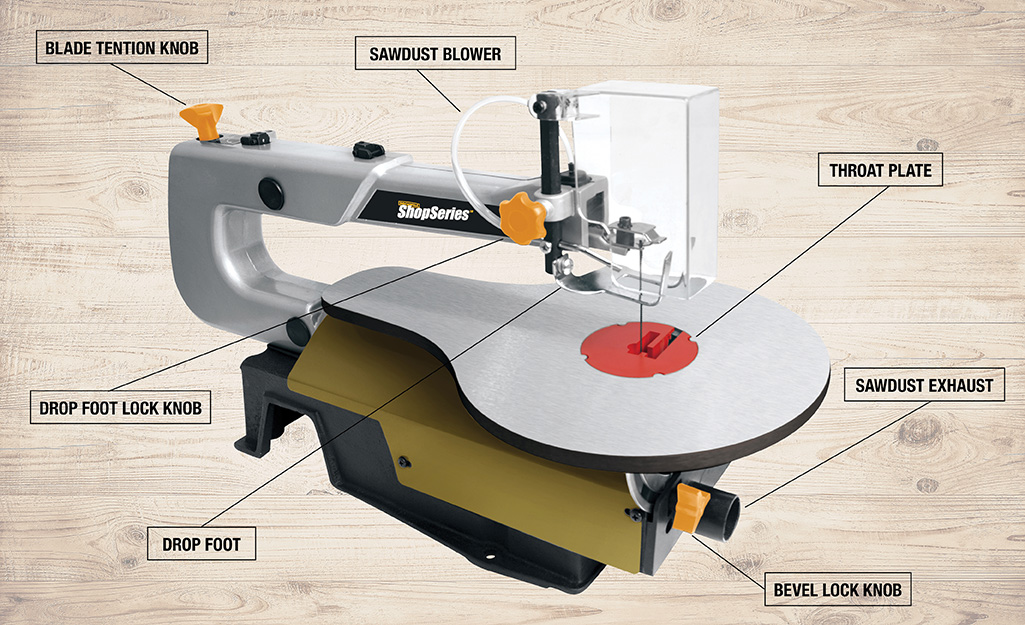
Image Source: contentgrid.homedepot-static.com
Fathoming the Scroll Saw: Core Components and Their Roles
To truly grasp how does a scroll saw work, it’s essential to familiarize yourself with its primary scroll saw parts and functions. Each component plays a crucial role in the saw’s operation, contributing to its unique cutting capabilities.
The Heart of the Saw: The Motor and Blade Mechanism
The scroll saw motor function is the engine that drives the entire operation. Typically, a scroll saw utilizes an electric motor, either a universal motor (found in most benchtop models) or a heavier-duty induction motor (common in professional machines). This motor converts electrical energy into mechanical energy, which then drives the blade.
How the motor translates to blade movement:
- Crankshaft and Connecting Rod: The motor’s rotating shaft is connected to a crankshaft. This crankshaft, much like in an engine, converts the rotational motion into a linear, reciprocating motion. A connecting rod links the crankshaft to the blade holder.
- Blade Holder (Chuck/Clamp): This is where the scroll saw blade is attached. The connecting rod pushes the blade holder up and pulls it down, causing the blade to move vertically. The speed at which this happens is determined by the motor’s RPM and the gearing within the saw.
The Cutting Edge: Scroll Saw Blades
The scroll saw blade is the business end of the tool. These blades are thin, with fine teeth, and are designed for making tight turns and detailed cuts. They come in a vast array of types, each suited for different materials and cutting styles.
Key characteristics of scroll saw blades:
- Tooth Count (TPI): Teeth Per Inch. A higher TPI means finer cuts and smoother finishes, ideal for delicate work. A lower TPI is better for faster, rougher cuts.
- Blade Width: Narrower blades allow for tighter curves and more intricate designs. Wider blades are better for straighter cuts.
- Blade Type:
- Plain-end blades: These are the most common and require special clamps to hold them in place.
- Pin-end blades: These have small pins at both ends for easier installation and are often used in older or simpler scroll saw models.
- Reverse tooth blades: These have teeth that point upwards on the bottom of the blade. This design pulls dust and debris away from the cut line on the underside of the workpiece, reducing tear-out.
The Stage for Your Work: The Table
The table is the flat surface where your workpiece rests. It’s crucial for supporting the material and guiding your cuts. Most scroll saw tables are adjustable, allowing you to tilt them for bevel cuts.
Table features to consider:
- Material: Cast iron tables are heavier and more stable, reducing vibration. Aluminum tables are lighter but can still be effective.
- Size: A larger table provides more support for bigger workpieces.
- Bevel Angle Adjustment: The ability to tilt the table is essential for creating angled edges.
- Table Insert: Some tables have removable inserts, which can be helpful for supporting delicate workpieces or for blades that require a tighter throat opening.
Guiding and Securing: The Hold-Down Foot and Dust Blower
- Hold-Down Foot: This adjustable foot rests on the workpiece, preventing it from lifting with the upward stroke of the blade. It’s crucial for maintaining consistent contact and preventing damage to the blade or workpiece. Proper scroll saw operation often involves adjusting this foot correctly.
- Dust Blower: Many scroll saws have a small nozzle that blows compressed air onto the cutting area. This helps to clear sawdust from the blade and your cut line, improving visibility and accuracy.
The Mechanics of Precision: Scroll Saw Operation Explained
Deciphering how to use a scroll saw involves understanding the interplay of its parts during scroll saw operation. The seemingly simple up-and-down motion of the scroll saw blade movement is orchestrated by a sophisticated internal mechanism.
The Rhythmic Dance: Blade Movement and Control
The core of how does a scroll saw work lies in the reciprocating motion of the blade. The motor, via the crankshaft and connecting rod, drives the blade holder.
The blade’s journey:
- Upward Stroke: The connecting rod pushes the blade holder upwards, forcing the blade through the workpiece.
- Downward Stroke: As the crankshaft continues to rotate, the connecting rod pulls the blade holder downwards. The blade, being flexible, retracts slightly, clearing the workpiece.
- Return Stroke: The momentum of the motor and the design of the crankshaft ensure the blade is immediately ready for the next upward stroke.
This continuous, rapid up-and-down movement is what allows the fine teeth of the scroll saw blade to efficiently cut through material. The speed of this movement is a critical factor in the quality of the cut.
Mastering Speed: Scroll Saw Speed Control
One of the most vital scroll saw operation features is scroll saw speed control. Different materials and cutting tasks require different blade speeds.
Why speed control matters:
- Material Type: Softer woods can be cut at higher speeds, while hardwoods, plastics, and metals require slower speeds to prevent overheating and blade damage.
- Blade Thickness: Thicker blades can often handle higher speeds, while thinner, more delicate blades are best used at slower speeds to avoid breaking.
- Cut Complexity: Intricate cuts or very fine details might benefit from slower speeds for greater control and precision.
How speed control is achieved:
- Variable Speed Dial: Most modern scroll saws feature a variable speed dial or control. This directly adjusts the power sent to the motor, allowing the user to fine-tune the blade’s speed.
- Electronic Speed Control: Some models employ electronic feedback systems that maintain a consistent blade speed even under varying loads, ensuring smoother operation.
The Essential Airflow: Scroll Saw Dust Collection
Sawdust is an inevitable byproduct of cutting, and effective scroll saw dust collection is crucial for safety, visibility, and the longevity of your tool.
Why dust collection is important:
- Visibility: A clear cut line is paramount for accuracy. Dust and debris obscuring the line can lead to mistakes.
- Health: Inhaling fine wood dust can be harmful to your respiratory system.
- Tool Performance: Dust buildup can interfere with the smooth operation of the saw’s internal mechanisms and clog the motor.
Methods of dust collection:
- Dust Blower Port: As mentioned earlier, a dedicated port often blows air onto the blade to clear the cut line. While helpful, this doesn’t remove the dust from the workspace.
- Vacuum Port: Most scroll saws have a port designed to connect to an external vacuum cleaner or dust collection system. This is the most effective method for removing sawdust from the immediate cutting area and the surrounding environment.
- Blade Guard Dust Port: Some advanced models integrate a dust port directly into the blade guard assembly for more targeted dust removal.
Advanced Cutting: Scroll Saw Cutting Techniques
Once you’ve got a handle on the scroll saw basics and scroll saw operation, you can explore various scroll saw cutting techniques to create stunning projects.
Navigating Curves: Inside and Outside Curves
The defining characteristic of a scroll saw is its ability to make tight, intricate curves.
Cutting an inside curve:
- Blade Choice: Use a narrow blade with a high TPI for maximum maneuverability.
- Blade Orientation: Ensure the blade is set so the teeth cut on the downstroke. For tight curves, the blade’s width is critical.
- Cutting Action: As you approach the curve, gently guide the workpiece. For very tight curves, you may need to stop the saw, pivot the workpiece, and then resume cutting. This is often referred to as “pecking” the cut.
Cutting an outside curve:
- Blade Choice: A slightly wider blade might be suitable here if the curve is not extremely tight.
- Cutting Action: Guide the workpiece smoothly around the curve, allowing the blade to do the work.
The Art of the Cut-Out: Internal Cuts
One of the scroll saw’s unique abilities is making cuts within a workpiece without starting from an edge. This is achieved through internal cuts.
How to make internal cuts:
- Drill a Pilot Hole: Drill a small hole within the area you intend to cut out, large enough for the scroll saw blade to pass through.
- Thread the Blade: Loosen the blade clamps at the top and bottom. Thread the scroll saw blade through the pilot hole.
- Secure the Blade: Re-secure the blade in the clamps.
- Begin Cutting: Turn on the scroll saw and carefully cut along your marked line from the inside out.
- Remove the Blade: Once the cut is complete, loosen the blade clamps and remove the blade.
This technique is essential for creating fretwork, intricate patterns, and lettering.
Mastering Bevels: Angled Cuts
The ability to tilt the table allows for the creation of bevel cuts, adding depth and dimension to your projects.
How to make bevel cuts:
- Adjust Table Angle: Loosen the table locking mechanism and adjust the table to the desired bevel angle (e.g., 15, 30, 45 degrees). Secure the table firmly.
- Select Appropriate Blade: For bevel cuts, a blade that runs true and doesn’t drift is important. A good quality, standard tooth blade often works well.
- Guide Workpiece: Guide the workpiece along the tilted table, maintaining consistent pressure against the fence or edge of the table.
- Blade Tension: Ensure the blade tension is appropriate for the angle. Some operators prefer slightly higher tension for bevels.
Specialty Cuts and Blades
Beyond basic curves and bevels, specialized blades and techniques can open up a world of creative possibilities.
- Flying Dutchman Blades: These blades have teeth on the sides as well as the front, allowing for cuts in multiple directions without turning the workpiece.
- Scroll Saw Cutting Techniques with Specialty Blades: Experiment with blades designed for metal, plastic, or even very fine detail work to expand your material capabilities.
Ensuring Success: Scroll Saw Safety Tips
While a scroll saw is an incredible tool for intricate work, scroll saw safety tips are paramount for a positive and injury-free experience. Always prioritize safety.
Essential Safety Precautions:
- Read Your Manual: Before using any power tool, thoroughly read and understand the manufacturer’s manual. This will detail specific operating procedures and safety warnings for your model.
- Eye Protection: Always wear safety glasses or a face shield to protect your eyes from flying debris.
- Hearing Protection: While not as loud as some power tools, prolonged exposure to the saw’s noise can be detrimental. Consider wearing earplugs or earmuffs.
- Dust Mask: Wear a dust mask, especially when cutting wood, to protect your lungs from fine particles.
- Secure Workpiece: Always use the hold-down foot to secure your workpiece firmly to the table. Never cut freehand without proper support.
- Blade Tension: Ensure the blade is properly tensioned. A blade that is too loose can break or wander, while one that is too tight can break prematurely.
- Blade Condition: Use sharp, undamaged blades. Inspect blades before each use for any signs of damage or wear.
- Clear Workspace: Keep your work area clean and free of clutter. This reduces the risk of tripping hazards and ensures you have adequate space to maneuver your workpiece.
- No Loose Clothing or Jewelry: Avoid wearing loose clothing, jewelry, or anything that could get caught in the moving parts of the saw. Tie back long hair.
- Keep Hands Away from Blade: Never place your fingers near the path of the blade. Use push sticks or scrap wood for guiding small pieces if necessary.
- Proper Lighting: Ensure your workspace is well-lit to clearly see your cut line and the blade.
- Unplug When Changing Blades or Adjusting: Always unplug the scroll saw from the power source before changing blades, making adjustments, or performing maintenance.
- Concentration: Remain focused on the task at hand. Avoid distractions while operating the scroll saw.
Frequently Asked Questions (FAQ) about Scroll Saw Operation
Here are some common questions about how does a scroll saw work and its usage:
Q1: Can I cut metal with a scroll saw?
Yes, you can cut thin metal with a scroll saw, but you will need to use specialized metal-cutting scroll saw blades and operate the saw at a very slow speed. Ensure adequate cooling and lubrication if cutting thicker metals.
Q2: What is the purpose of the hold-down foot?
The hold-down foot keeps the workpiece pressed firmly against the table, preventing it from lifting with the upward stroke of the blade. This ensures consistent cutting and prevents the blade from snagging or breaking.
Q3: How do I tension a scroll saw blade correctly?
Blade tension is critical. Consult your saw’s manual. Generally, you tighten the blade until it is taut, then give it a slight twist. It should hum or “sing” when plucked. Over-tensioning can break the blade; under-tensioning can cause poor cuts or blade breakage.
Q4: What is the difference between plain-end and pin-end blades?
Plain-end blades are held by tension clamps at both ends. Pin-end blades have small pins that fit into specific holders, making them easier to install but often limiting the tightness of turns achievable.
Q5: My scroll saw is vibrating a lot. What can I do?
Excessive vibration can be caused by several factors: an uneven workbench, a loose blade, worn blade guides, or an unbalanced motor. Check that your saw is securely mounted or on a stable surface. Ensure the blade is properly tensioned and the blade guides are adjusted correctly.
Q6: How do I achieve a smooth cut on my scroll saw?
Achieving a smooth cut involves several factors:
* Using the correct blade for the material (fine teeth for smooth finishes).
* Selecting an appropriate speed (often slower speeds yield smoother cuts).
* Maintaining steady, consistent pressure on the workpiece.
* Ensuring the blade guides are properly adjusted to support the blade.
* Cleaning the cut line with the dust blower or vacuum.
By mastering these principles of how does a scroll saw work, you’ll be well on your way to creating beautiful and intricate projects with precision and confidence. Remember to always prioritize safety and practice your techniques to refine your skills.