
A typical corded circular saw uses between 10 and 15 amps, while portable circular saws, powered by batteries, will have a significantly lower amp draw, as their power is measured in volts and amp-hours.
Understanding the power requirements of your circular saw is crucial for safe and efficient operation. Whether you’re a seasoned DIYer or just starting out with power tools, knowing how many amps a circular saw uses can help you choose the right extension cords, avoid tripping breakers, and get the most out of your saw. This guide delves into the world of circular saw amperage, demystifying the electrical needs of these essential tools.
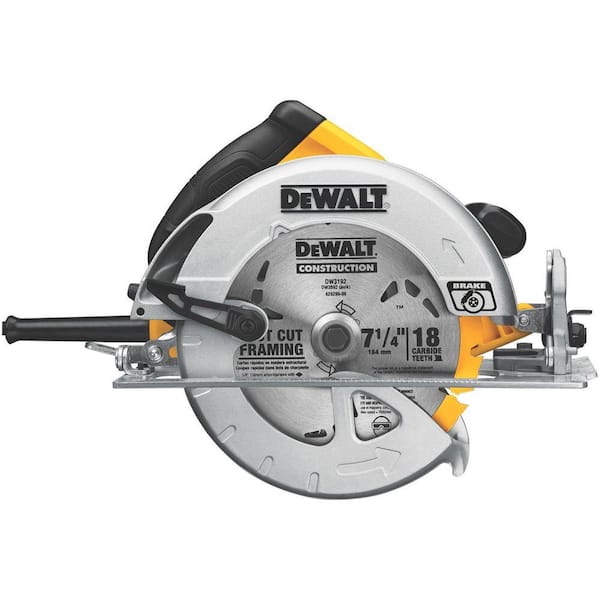
Image Source: images.thdstatic.com
Fathoming Circular Saw Amperage
The term “amps” refers to amperes, the unit of electric current. In essence, it’s a measure of how much electricity flows through a circuit. For a circular saw, the amperage draw is a key indicator of its power and performance. A higher amperage generally means a more powerful motor, capable of tackling tougher materials and longer cutting sessions without overheating.
Several factors influence the circular saw amperage a tool will draw:
- Motor Size and Power: Larger, more powerful motors require more electricity to operate, leading to a higher amperage draw.
- Blade Speed (RPM): While not directly tied to amperage, saws with higher RPMs often have more robust motors that might draw more current.
- Material Being Cut: Cutting through dense hardwoods, metal, or thick materials will cause the motor to work harder, resulting in a temporary increase in amperage draw.
- Blade Condition: A dull or damaged blade will force the motor to exert more effort, increasing the amperage needed.
- Saw Design and Efficiency: Different manufacturers and models have varying levels of motor efficiency, affecting their overall power consumption.
It’s important to distinguish between corded and cordless circular saws when discussing amperage.
Corded Circular Saw Amperage
Corded circular saws are directly plugged into a wall outlet and receive a constant supply of power. Their corded circular saw amperage is a direct reflection of the motor’s needs from the electrical grid.
- Typical Range: Most corded circular saws designed for general-purpose DIY and professional use fall within the 10 to 15 amp range.
- Heavy-Duty Models: Industrial-grade or specialized saws, such as those designed for cutting concrete or steel, might have higher amperage ratings, sometimes exceeding 15 amps. However, these are less common for standard woodworking.
- Compact or Trim Saws: Smaller, lighter-duty saws, often referred to as trim saws or compact circular saws, might operate on lower amperage, typically around 7 to 10 amps. These are great for lighter tasks but may struggle with demanding cuts.
The circular saw electrical needs of a corded saw are paramount when selecting appropriate extension cords and circuit breakers.
Portable Circular Saw Amps (Cordless)
Portable circular saws, also known as cordless or battery-powered saws, operate differently. They don’t have a direct amperage draw from the mains in the same way a corded saw does. Instead, their power is described by voltage and amp-hour (Ah) ratings of the battery.
- Voltage: This indicates the electrical potential of the battery. Common voltages for cordless circular saws are 18V, 20V (often marketed as 20V MAX), and sometimes higher for professional-grade tools.
- Amp-Hours (Ah): This rating indicates how much current a battery can deliver over a period of time. A higher Ah rating means the battery can power the saw for longer on a single charge.
- Amperage Draw (Under Load): While not a fixed rating like a corded saw, a cordless circular saw’s motor will draw a certain amount of amperage from the battery when in use. This draw can fluctuate based on the load. Manufacturers often don’t prominently display the peak amperage draw for cordless tools in the same way they do for corded ones, focusing instead on the battery specifications. However, it’s generally understood that to achieve the power of a corded saw, cordless tools employ efficient motors that can draw a significant amount of current from the battery pack, often in a similar ballpark to corded saws, but delivered through the battery system.
When considering portable circular saw amps, you’re looking at the battery’s capacity and the motor’s ability to draw power from it efficiently. A 20V, 5.0Ah battery, for example, provides both the “push” (voltage) and the “stamina” (amp-hours) for the tool.
Power Requirements Circular Saw: Matching Your Needs
Selecting the correct circular saw for your tasks involves more than just looking at the blade size. Understanding the power requirements circular saw will ensure you have the right tool and the necessary infrastructure to power it.
Wattage Circular Saw
Wattage is a measure of electrical power, calculated by multiplying voltage by amperage (Watts = Volts × Amps). This gives you a more complete picture of the saw’s energy consumption and output.
- Calculating Wattage for Corded Saws: If a corded saw is rated at 120 volts (standard in North America) and draws 15 amps, its maximum wattage is 120V × 15A = 1800 Watts. This is a significant amount of power, allowing it to cut through various materials effectively.
- Wattage of Cordless Saws: For cordless saws, the wattage is a product of the battery’s voltage and the motor’s instantaneous amperage draw. A 20V saw with a motor drawing, say, 20 amps at peak performance would deliver 20V × 20A = 400 Watts. This might seem lower than a corded saw’s wattage, but cordless tool technology has advanced significantly, using efficient brushless motors and optimized power management to deliver comparable cutting performance. The key is understanding that the instantaneous draw is what matters for performance, while the battery’s Ah rating determines runtime.
The wattage circular saw provides a direct measure of its cutting capability.
Amperage Draw Circular Saw Explained
The amperage draw circular saw is not a fixed number. It fluctuates based on several factors during operation:
- No-Load Amps: This is the amperage the saw draws when the motor is running but the blade is not in contact with any material. This is usually the lowest amperage reading.
- Under-Load Amps: This is the amperage drawn when the blade is cutting through material. As mentioned, this varies depending on the material density, cut depth, and blade sharpness.
- Peak Amps: This is the highest amperage the saw will draw during a cut, often occurring when the motor is heavily strained.
Knowing the typical amperage draw circular saw is essential for choosing the correct extension cord.
Electrical Considerations for Circular Saws
Powering your circular saw safely and effectively involves paying attention to electrical details. Incorrect setup can lead to tool damage, tripping breakers, or even fire hazards.
Extension Cord Amperage Rating
The extension cord you use is as critical as the saw itself. It needs to be able to handle the circular saw amperage without overheating.
- Gauge (AWG): The American Wire Gauge (AWG) system determines the thickness of the wire in an extension cord. Lower AWG numbers indicate thicker wires. Thicker wires have less resistance, allowing more current to flow with less heat buildup.
- Amperage Rating of the Cord: Every extension cord has a maximum amperage rating. This rating should always be equal to or greater than the amperage requirement of your circular saw.
- Cord Length: The longer the extension cord, the more resistance it has. For saws that draw high amperage (10-15 amps), it’s crucial to use shorter, heavy-gauge cords to minimize voltage drop and heat.
Table 1: Extension Cord Gauge Recommendations for Circular Saws
| Saw Amperage (Amps) | Cord Length (Feet) | Recommended Gauge (AWG) |
|---|---|---|
| 10-13 | 25 | 14 |
| 10-13 | 50 | 12 |
| 10-13 | 100 | 10 |
| 13-15 | 25 | 12 |
| 13-15 | 50 | 10 |
| 13-15 | 100 | 10 (heavy-duty) |
Note: Always use a cord rated for outdoor use if working outdoors. Avoid using a cord with a lower gauge number than recommended, as this can lead to overheating and a fire hazard.
Circuit Breakers and GFCI Protection
Your home’s electrical circuits are protected by circuit breakers or fuses.
- Standard Household Circuits: Most household circuits are rated for 15 or 20 amps. A 15-amp saw can generally be used on a 15-amp circuit. However, if other appliances are running on the same circuit, you could overload it.
- Using a 15-Amp Saw on a 20-Amp Circuit: This is usually safe, as the circuit can handle the load. However, it’s still good practice to avoid running too many devices on one circuit.
- Ground Fault Circuit Interrupters (GFCIs): For safety, especially when working with power tools in damp conditions or outdoors, it’s highly recommended to plug your circular saw into a GFCI-protected outlet. GFCIs detect imbalances in current and quickly shut off power to prevent electrical shock.
The circular saw electrical needs must be met by the available power supply.
Saw Motor Amps: Delving Deeper
The heart of any circular saw is its motor. The saw motor amps dictate its power and performance.
Motor Type and Efficiency
- Brushed Motors: These are common in older or less expensive circular saws. They use brushes to transfer electricity to the rotor, which can lead to wear and tear over time and less efficiency.
- Brushless Motors: Found in most modern cordless circular saws and some higher-end corded models, brushless motors are more efficient, durable, and offer better power delivery. They can achieve higher RPMs and provide more consistent torque, even as the battery drains.
Even if a brushless motor draws a similar peak amperage to a brushed motor, its overall efficiency often translates to better runtime on a battery or less strain on the power source.
Factors Affecting Saw Motor Amps
- Material Hardness: Cutting through soft pine requires less amperage than cutting through dense oak or composite materials.
- Blade Depth: A deeper cut engages more of the blade’s teeth, increasing the load on the motor and thus the amperage draw.
- Blade Kerf: The width of the cut made by the blade. A thicker kerf blade will create more resistance than a thin kerf blade.
- Blade Type: Blades designed for ripping (cutting with the grain) may have different amperage demands than blades designed for crosscutting (cutting across the grain).
The saw motor amps are a direct indicator of how much work the motor is doing.
Circular Saw Power Consumption: What to Expect
Understanding circular saw power consumption helps in planning your work and managing your energy usage.
How to Find Your Saw’s Amperage Rating
The amperage rating is usually found on a label on the circular saw itself. Look for:
- The nameplate: This is typically on the motor housing or the base of the saw.
- The product manual: The user manual will provide detailed specifications, including the amperage.
- Manufacturer’s website: You can usually find specifications for your model online.
Reading the Label
The label might show:
- Voltage (V): The operating voltage (e.g., 120V).
- Amperage (A): The rated amperage draw (e.g., 15A).
- Wattage (W): Sometimes the wattage is also listed.
- RPM: Revolutions per minute of the blade.
For cordless tools, the label will focus on battery voltage (V) and capacity (Ah).
Minimizing Power Consumption
While you can’t change the fundamental power requirements of your saw, you can optimize its use:
- Use Sharp Blades: A sharp blade cuts more efficiently, reducing motor strain and amperage draw.
- Match Blade to Material: Use blades designed for the specific material you are cutting.
- Avoid Forcing the Saw: Let the saw do the work. Forcing it will increase amperage draw and can damage the motor.
- Proper Maintenance: Keep the saw clean and ensure the motor vents are clear to prevent overheating.
Frequently Asked Questions (FAQ)
Q1: Can I use a 15-amp circular saw on a 13-amp extension cord?
No, you should never use an extension cord with a lower amperage rating than your saw. This can cause the cord to overheat, melt its insulation, and potentially start a fire. It can also damage the saw’s motor. Always match or exceed the saw’s amperage rating.
Q2: Will my circular saw work if I plug it into a standard household outlet?
Yes, most corded circular saws are designed to run on standard 120-volt household outlets. However, be mindful of what else is plugged into the same circuit, as a high-amperage saw could trip the breaker if the circuit is already heavily loaded.
Q3: How do I know if my extension cord is thick enough for my circular saw?
Check the AWG (American Wire Gauge) number on the cord’s packaging or the cord itself. Lower numbers mean thicker wires. For a 10-15 amp circular saw, a 12-gauge or 10-gauge cord is generally recommended, especially for lengths over 25 feet.
Q4: What does it mean if my circular saw is “bogging down”?
“Bogging down” refers to the motor slowing down significantly when you’re cutting. This usually indicates that the motor is struggling to overcome the resistance. Common causes include a dull blade, cutting too fast, trying to cut material that’s too hard for the saw, or an extension cord that’s too thin or too long, causing voltage drop.
Q5: Is it safe to use my circular saw outdoors?
Yes, but safety precautions are paramount. Use a GFCI-protected outlet, a heavy-duty outdoor-rated extension cord, and be aware of wet conditions. Never operate the saw in heavy rain.
By paying close attention to the circular saw amperage, power requirements circular saw, and the specifications of your extension cords, you can ensure safe, efficient, and productive use of your circular saw for all your cutting tasks.