
What is the main purpose of adjusting a Dewalt miter saw? The primary goal of adjusting a Dewalt miter saw is to ensure accurate and precise cuts, guaranteeing that your projects turn out exactly as intended.
A Dewalt miter saw is a powerful tool for any woodworker or DIY enthusiast. It allows for precise angled cuts, which are essential for many projects, from simple shelving to complex trim work. However, over time or with frequent use, the saw’s settings can drift, leading to inaccurate cuts. Performing regular Dewalt miter saw calibration is crucial to maintain its accuracy and ensure the quality of your work. This guide will walk you through the entire process of how to tune a miter saw, focusing on the specific adjustments you might need to make on your Dewalt model.
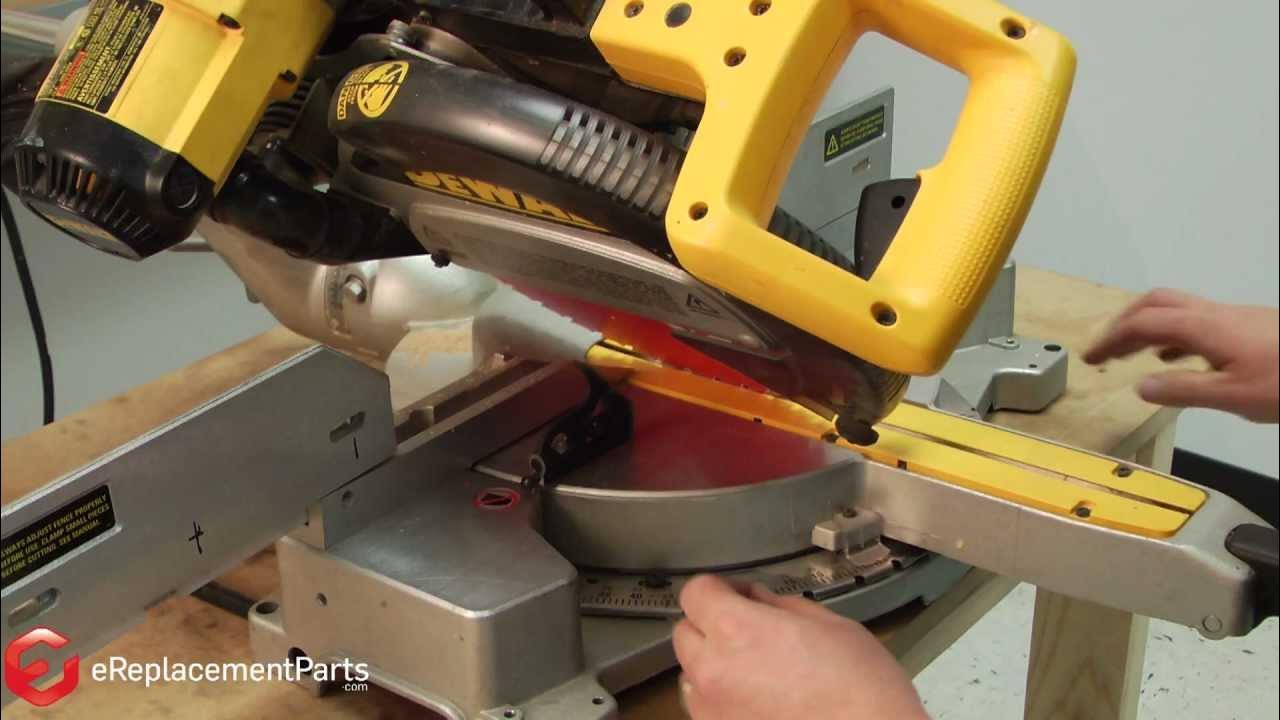
Image Source: i.ytimg.com
Why Dewalt Miter Saw Calibration Matters
Your Dewalt miter saw is designed for precision, but like any mechanical tool, it can lose its accuracy. This can happen due to:
- Wear and Tear: Moving parts can become loose or worn over time.
- Transport: Moving the saw from your workshop to a job site can knock it out of alignment.
- Impacts: Accidental bumps or drops can affect the delicate settings.
- Manufacturing Tolerances: Even new saws may require minor adjustments to meet perfect specifications.
When your miter saw is out of calibration, you’ll notice:
- Inaccurate Angles: Cuts that are supposed to be 90 degrees might be slightly off, creating gaps in your joints.
- Inconsistent Bevels: The blade angle may not match the setting on the bevel scale.
- Blade Wobble: The blade might not be perfectly perpendicular to the table.
Addressing these issues through miter saw angle adjustment and other calibrations will save you time, reduce material waste, and significantly improve the professional finish of your projects.
Essential Tools for Adjustment
Before you begin, gather these items:
- Combination Square or Speed Square: For checking 90-degree angles.
- Protractor or Angle Finder: For precise angle measurements.
- Allen Wrenches (Hex Keys): Usually included with the saw or commonly found in a good toolkit.
- Screwdrivers (Phillips and Flathead): For various adjustment screws.
- Small Level: To check blade and table alignment.
- Safety Glasses: Always wear safety glasses when working with power tools.
- Dust Mask: To avoid inhaling sawdust.
- Gloves: For better grip and protection.
Miter Saw Angle Adjustment: Getting the Basics Right
The most common adjustments involve the miter angle (left and right) and the bevel angle (tilt). We’ll start with the fundamental settings.
1. Dewalt Miter Saw Zeroing: Setting the 0-Degree Miter Angle
The 0-degree miter setting is your baseline for square cuts. If this isn’t accurate, all other miter angles will be off.
Steps:
- Ensure the saw is unplugged. Safety first!
- Position the saw on a stable, level surface.
- Move the saw head to the far left miter position.
- Locate the miter lock. This is usually a lever or knob that secures the saw head.
- Turn the miter lock to the “lock” position.
- Bring the saw head back to the 0-degree detent. Most Dewalt saws have positive stops (detents) at common angles like 0, 15, 22.5, 31.6, and 45 degrees. The 0-degree detent is the most critical.
- Use your combination square. Place the square against the blade’s tooth and the saw’s fence. The blade should sit perfectly flush against the fence at the 0-degree mark.
- If it’s not square:
- Look for a small screw or bolt that controls the 0-degree miter stop. This is often located near the miter index plate or pivot point.
- Loosen this screw slightly.
- Gently adjust the saw head until the blade is perfectly square (90 degrees) to the fence.
- Retighten the screw, making sure not to force it.
- Check the 0-degree setting again with your square. Repeat if necessary.
- Test other detents. Once the 0-degree miter is accurate, test a few other common detents (like 45 degrees) with your square. They should also be accurate. Sometimes, adjusting the 0-degree stop also corrects other detents.
2. Setting Bevel Stops on Dewalt Miter Saw: Adjusting the 0-Degree Bevel
The bevel angle controls the tilt of the blade. Similar to the miter, the 0-degree bevel is crucial for standard cuts.
Steps:
- Ensure the saw is unplugged.
- Lower the saw head to the flat position (0-degree bevel).
- Locate the bevel lock. This is usually a lever or knob that secures the saw head’s tilt.
- Turn the bevel lock to the “lock” position.
- Use your combination square. Place the square against the side of the blade (the flat side) and the saw’s base or table. The blade should be perfectly perpendicular (90 degrees) to the table.
- If it’s not perpendicular:
- Most Dewalt miter saws have an adjustment screw for the 0-degree bevel stop. This screw is often located on the side of the pivot mechanism, near the bevel scale. It might be a small screw that you turn clockwise or counterclockwise.
- Loosen the bevel lock slightly if it impedes adjustment.
- Turn the adjustment screw until the blade is perfectly perpendicular to the table.
- Once aligned, re-tighten the bevel lock firmly.
- Test the 0-degree bevel again with your square. Repeat if needed.
- Check 45-degree bevel stops. Many Dewalt saws also have positive stops for 45-degree bevels. Test these with a protractor or angle finder. If they are off, there might be separate adjustment screws for these stops. Consult your Dewalt miter saw manual for specifics on your model.
Fine-Tuning and Advanced Adjustments
Beyond the basic 0-degree settings, other factors can affect cut accuracy.
3. Miter Saw Blade Alignment: Ensuring Blade Perpendicularity to the Fence
Even if your 0-degree miter is set correctly, the blade must also be perfectly parallel to the fence when the saw is at its 0-degree miter position. This is vital for accurate crosscuts.
Steps:
- Unplug the saw.
- Set the saw to the 0-degree miter position.
- Use your combination square. Place the square against the blade’s side and the fence.
- Check the alignment at the front and back of the blade.
- If the blade is closer to the fence at the front than the back, the pivot point is likely too far forward relative to the fence.
- If the blade is closer to the fence at the back, the pivot point is likely too far back.
- Locate pivot point adjustment screws. These are usually on the main pivot assembly. You might need to consult your specific Dewalt model’s manual, as these can vary.
- Make small adjustments. Loosen the relevant screw slightly and turn it in the appropriate direction to move the blade’s pivot point.
- Tighten the screw and re-check. This is an iterative process. Make a small adjustment, check the alignment, and repeat until the blade is perfectly parallel to the fence.
4. Dewalt Miter Saw Fence Adjustment: Squaring the Fence
The fence is critical for supporting the workpiece and guiding the blade. It needs to be perfectly perpendicular to the blade’s path.
Steps:
- Unplug the saw.
- Set the saw to the 0-degree miter and 0-degree bevel.
- Place a known square object (like a steel rule or a piece of perfectly square stock) against the fence.
- Position the blade so it’s just touching the object.
- Use your combination square. Place it between the blade and the fence.
- Check for squareness.
- If the fence is not square:
- Look for adjustment screws or bolts that hold the fence to the saw base. These are typically on the back or underside of the fence.
- Loosen these screws slightly.
- Adjust the fence until it’s perfectly square to the blade.
- Tighten the screws, ensuring the fence remains square.
- Re-check with your combination square.
5. Adjusting Positive Stops (Detents)
Most Dewalt miter saws have built-in positive stops for common angles. If these aren’t lining up perfectly, you can often adjust them.
Miter Detents:
- Locate detent adjustment screws: These are typically small screws that engage with notches on the miter index plate. They are usually found near the angle scale or the main pivot.
- Adjustment: Loosen the screw holding the detent mechanism. You can then slightly reposition the detent mechanism itself until it aligns perfectly with the desired angle on the scale. Re-tighten the screw.
- Important: Always re-check your 0-degree miter after adjusting other detents to ensure you haven’t inadvertently knocked it out of alignment.
Bevel Detents:
- Locate detent adjustment screws: Similar to miter detents, these screws control the position of the stop that catches the bevel arm at specific angles (e.g., 45 degrees).
- Adjustment: These can be slightly trickier and might involve loosening a bolt on the bevel stop mechanism and repositioning it. Again, refer to your specific Dewalt manual for the exact location and method.
6. Miter Saw Crosscut Calibration: Ensuring Accuracy for Square Cuts
This is essentially a combination of ensuring the 0-degree miter is true and the blade is parallel to the fence. When these are correct, your crosscuts will be accurate.
Steps:
- Perform Dewalt miter saw zeroing for the 0-degree miter angle.
- Ensure the blade is parallel to the fence (Miter Saw Blade Alignment).
- Test the calibration:
- Take a piece of scrap wood.
- Make a clean cut at the 0-degree miter position.
- Flip the cut piece end-for-end and place it back against the fence, cutting it again.
- If the two cut ends meet perfectly with no gap, your crosscut calibration is spot on.
- If there’s a gap, you’ll need to re-visit the miter angle or blade-to-fence alignment.
7. Dewalt Sliding Miter Saw Adjustments: Specifics for Sliding Models
Sliding miter saws offer greater capacity, but the sliding mechanism itself can require attention.
- Rail Alignment: Ensure the sliding rails are clean, straight, and parallel to each other. If they are bent or misaligned, the blade’s movement will be inconsistent, affecting cut accuracy. Some saws have adjustable components on the rails.
- Blade to Fence Parallelism: This is even more critical on a sliding saw because the blade’s position relative to the fence changes as it slides. You’ll want to ensure the blade is parallel to the fence at both the front and back of the slide stroke. Adjustment screws are usually present to fine-tune this.
- Fence Squaring: The fence on a sliding saw needs to be square not only to the blade’s path when stationary but also maintain that squareness throughout the slide. Check and adjust the fence as described earlier.
Maintaining Your Dewalt Miter Saw for Long-Term Accuracy
Regular maintenance is key to keeping your saw calibrated and performing at its best.
Blade Maintenance
- Sharpening: A dull blade will force you to push harder, leading to movement and inaccurate cuts. Keep your blades sharp.
- Cleanliness: Sawdust and pitch buildup on the blade can affect its balance and cutting performance. Clean your blades regularly.
- Blade Runout: Ensure the blade is not warped or bent. A bent blade will always produce inaccurate cuts.
General Cleaning and Lubrication
- Keep it Clean: Regularly blow out dust and debris from the saw’s mechanisms, especially around the pivot points and detent mechanisms.
- Lubricate Moving Parts: Lightly lubricate pivot points and sliding rails (if applicable) according to your Dewalt manual’s recommendations. This ensures smooth operation and prevents wear.
Common Problems and Solutions
| Problem | Cause | Solution |
|---|---|---|
| Inaccurate 90-degree crosscut | 0-degree miter out of calibration; blade not parallel to fence. | Re-calibrate 0-degree miter; check and adjust blade-to-fence alignment. |
| Inaccurate miter angles | Miter detents or scale are not set correctly; pivot point is loose. | Re-adjust miter detents; tighten pivot point fasteners; check miter index plate. |
| Inaccurate bevel angles | 0-degree bevel or other bevel stops are out of calibration. | Re-adjust 0-degree bevel stop; adjust specific bevel detents. |
| Blade wobbles | Blade is dull, damaged, or not properly seated on the arbor. | Sharpen or replace blade; ensure blade is seated correctly and arbor nut is tight (with saw unplugged). |
| Saw head sticks or is stiff | Dust buildup or lack of lubrication on pivot points or slides. | Clean and lubricate pivot points and sliding rails according to the manual. |
| Fence is not square | Fence adjustment screws have loosened or fence is damaged. | Re-square the fence by adjusting its mounting screws. |
| Inconsistent cut depth | Damage to the depth stop mechanism or issues with the plunge mechanism. | Inspect depth stop and plunge components for damage or obstruction; adjust or repair as needed. |
Frequently Asked Questions (FAQ)
Q: How often should I perform Dewalt miter saw calibration?
A: It’s a good practice to check your calibration before starting any critical project. If you move your saw frequently or notice inaccurate cuts, perform a full calibration. Aim for at least a quick check of the 0-degree miter and bevel settings every few months.
Q: Can I adjust the positive stops for angles not listed on my Dewalt saw?
A: While you can fine-tune the existing detents, most saws are not designed to have new detents created. For angles between detents, you’ll rely on the scale and locking mechanism to hold the position.
Q: What if my Dewalt miter saw bevel scale is off, even when the blade is perfectly square?
A: This usually means the scale itself is misaligned or the pointer for the scale is out of position. There might be small screws that allow you to adjust the pointer’s position relative to the bevel arm, or you may need to re-align the scale plate. Consult your manual.
Q: My Dewalt sliding miter saw fence seems loose. How do I fix it?
A: The fence on sliding saws might have additional adjustment points or clamping mechanisms. Check the screws that mount the fence to the saw body and ensure they are tight. Some models might also have inserts or pads that can be adjusted for a snug fit against the blade.
Q: What is the best way to check for miter saw blade alignment?
A: The most common and effective way is to use a combination square. With the saw unplugged and set to its 0-degree miter position, place the square against the fence and the side of the blade. Check the gap at the front and back of the blade. Ideally, there should be no gap, indicating the blade is parallel to the fence.
By following these steps, you can ensure your Dewalt miter saw remains a precise and reliable tool for all your woodworking needs. Consistent Dewalt miter saw calibration will lead to better results and a more enjoyable crafting experience.