
Can you adjust the carburetor on a Stihl chainsaw? Yes, you can adjust the carburetor on most Stihl chainsaws to improve performance and resolve running issues. Is it difficult to adjust a Stihl chainsaw carburetor? With the right knowledge and tools, it’s a manageable task. This guide will walk you through the process of Stihl chainsaw carburetor tuning, helping you get your saw running at its best and troubleshoot common problems.
A well-adjusted carburetor is key to your Stihl chainsaw’s optimal performance. It ensures the correct Stihl chainsaw fuel mixture is delivered to the engine, allowing for smooth operation, good power output, and efficient fuel consumption. Over time, or after certain events like filter changes or altitude shifts, your carburetor may need adjustments. This guide will delve into how to tune a Stihl chainsaw carburetor, covering everything from identifying the adjustment screws to fine-tuning for peak performance and addressing Stihl chainsaw running rough situations.
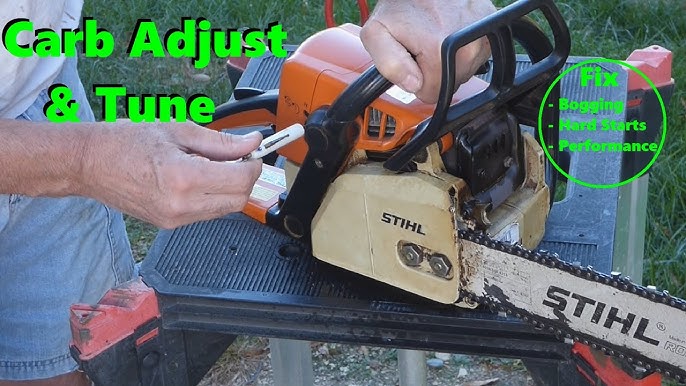
Image Source: i.ytimg.com
Why Adjust Your Stihl Chainsaw Carburetor?
There are several reasons why you might need to perform Stihl chainsaw carburetor tuning.
- Altitude Changes: The air density changes with altitude. At higher altitudes, there is less oxygen, and a carburetor set for lower altitudes might run too rich (too much fuel). Adjusting the carburetor can compensate for this.
- Air Filter Changes: A new, cleaner air filter allows more air into the engine. If the carburetor isn’t adjusted, the fuel-to-air ratio might become too rich.
- Carburetor Cleaning or Rebuild: After cleaning or rebuilding a carburetor, it will almost certainly need to be re-tuned.
- Performance Issues: If your chainsaw is sputtering, bogging down, running inconsistently, or has poor acceleration, carburetor adjustment might be the solution.
- Engine Overheating: An improperly adjusted carburetor, especially one running too lean (too little fuel), can cause the engine to overheat.
Locating and Identifying Stihl Chainsaw Carburetor Adjustment Screws
Stihl chainsaws typically have two main adjustment screws on the carburetor. These are commonly referred to as Stihl chainsaw mixture screws. They control the amount of fuel mixed with air.
- Low-Speed (L) Screw: This screw primarily affects the idle speed and the fuel mixture at low RPMs. It also influences the transition from idle to acceleration.
- High-Speed (H) Screw: This screw controls the fuel mixture at higher RPMs, particularly at full throttle.
It’s crucial to know the function of each screw. Incorrect adjustments can lead to poor performance, engine damage, or both.
Common Carburetor Types and Screw Locations
While Stihl uses various carburetor manufacturers (like Zama or Walbro), the principle of adjustment remains similar. The screws are usually found on the side or bottom of the carburetor body.
- Identifying the Screws: Look for small screws with slots or Philips heads. They are often labeled with “L” for low speed and “H” for high speed. If they are not labeled, consult your chainsaw’s owner’s manual for specific details.
| Carburetor Part | Function | Location Example (Varies) |
|---|---|---|
| Low-Speed (L) Screw | Controls fuel mix at idle and low RPMs | Side of carburetor |
| High-Speed (H) Screw | Controls fuel mix at high RPMs and full throttle | Side of carburetor |
| Idle Speed Screw | Adjusts throttle plate opening at idle | Often a separate screw or integrated adjustment |
Important Note: Some newer Stihl carburetors might not have externally adjustable mixture screws. These are often set at the factory and require specialized tools or replacement of the carburetor if issues arise. Always check your owner’s manual.
Tools You’ll Need for Stihl Chainsaw Carburetor Tuning
Before you start, gather the necessary tools to ensure a smooth and accurate Stihl chainsaw carburetor adjustment.
- Screwdrivers: You’ll need specific screwdrivers for the mixture screws. These are typically small flathead or slotted screwdrivers. Some Stihl carburetors might use specialized “limiters” on the screws, requiring a specific type of tool.
- Tachometer: A digital or analog tachometer is essential for accurately setting the idle speed. This ensures your adjustments are precise.
- Owner’s Manual: Your Stihl chainsaw’s owner’s manual is your best friend. It will provide specific Stihl chainsaw carb settings and procedures for your model.
- Cleaning Supplies: If you suspect your carburetor is dirty, you’ll need carburetor cleaner spray, compressed air, and potentially small brushes or picks. A Stihl chainsaw carburetor cleaning may be necessary before tuning.
- Safety Gear: Always wear safety glasses and gloves.
Step-by-Step Guide to Adjusting Your Stihl Chainsaw Carburetor
This process involves a few key steps to fine-tune your Stihl’s fuel delivery.
Step 1: Prepare Your Chainsaw
- Clean the Area: Remove any debris from around the carburetor. This prevents dirt from entering the engine during adjustment or cleaning.
- Ensure Proper Fuel: Make sure you’re using fresh, properly mixed fuel. Old fuel can cause Stihl chainsaw carburetor problems.
- Check Air Filter: Inspect and clean or replace the air filter. A clogged filter restricts airflow and affects the fuel mixture.
Step 2: Perform a Preliminary Carburetor Adjustment (The “Lean-to-Rich” Method)
This is a common starting point for how to tune a Stihl chainsaw carburetor.
- Locate the L and H Screws: Identify the low-speed (L) and high-speed (H) Stihl carburetor adjustment screws.
- Gently Seat the Screws: With the engine off, slowly turn the L screw clockwise until it lightly seats. Do not overtighten. Then, turn it counter-clockwise 1.5 to 2 full turns. This is your baseline setting.
- Repeat for the H Screw: Gently turn the H screw clockwise until it lightly seats. Do not overtighten. Then, turn it counter-clockwise 1 to 1.5 full turns. This is your baseline for the high-speed screw.
Note: The exact baseline turns can vary by Stihl model. Always refer to your manual if possible.
Step 3: Adjust the Low-Speed (L) Screw
This adjustment is critical for idle stability and smooth acceleration.
- Start the Engine: Start your Stihl chainsaw and let it idle.
- Adjust Idle Speed: If the engine stalls or idles too fast, you might need to adjust the idle speed screw first. This screw controls the throttle plate opening at idle. Turn it clockwise to increase idle speed and counter-clockwise to decrease it. Aim for a steady idle without the chain moving.
- Fine-tune the L Screw:
- Sputtering/Rich: If the engine sputters or seems to run too rich at idle, slowly turn the L screw counter-clockwise (leaner mixture) a small amount (e.g., 1/8 turn).
- Surging/Lean: If the engine surges or seems to run too lean at idle, slowly turn the L screw clockwise (richer mixture) a small amount.
- Check Acceleration: After adjusting the L screw, quickly open the throttle. The engine should accelerate smoothly without bogging down or hesitation. If it hesitates, it might be too lean. If it sputters or loads up, it might be too rich. Make small adjustments to the L screw until you get smooth acceleration.
Step 4: Adjust the High-Speed (H) Screw
This adjustment ensures proper performance at full throttle.
- Warm Up the Engine: Let the chainsaw run for a few minutes to reach operating temperature.
- Open to Full Throttle: Engage the throttle fully.
- Listen to the Engine:
- Over-revving/Sputtering (Rich): If the engine over-revs or sputters at full throttle, the mixture is likely too rich. Slowly turn the H screw counter-clockwise (leaner) in small increments (1/8 turn).
- Bogging Down/Hesitation (Lean): If the engine sounds like it’s struggling, bogging down, or lacks power at full throttle, the mixture is likely too lean. Slowly turn the H screw clockwise (richer) in small increments.
- Use a Tachometer (Recommended): For precise Stihl chainsaw carb settings, use a tachometer.
- With the engine at full throttle, note the RPM.
- Consult your owner’s manual for the recommended maximum engine speed.
- Adjust the H screw to achieve the correct RPM without the engine running too lean (which can cause overheating) or too rich (which causes poor performance).
- A lean condition will often make the engine sound “frantic” or like it wants to stall, while a rich condition will make it sound “throaty” and lack power.
Step 5: Final Idle Speed Adjustment
Once the L and H screws are set, you may need to re-adjust the idle speed.
- Let the Engine Idle: Allow the chainsaw to idle.
- Adjust Idle Speed Screw: If the chain is still moving slightly or the engine is about to stall, adjust the idle speed screw until the chain stops spinning when the engine is at idle. The goal is a steady idle without the chain engaging.
Troubleshooting Common Stihl Chainsaw Carburetor Problems
Many Stihl chainsaw carburetor problems can be resolved with proper tuning.
Chainsaw Running Rough
If your Stihl chainsaw is running rough, sputtering, or idling inconsistently, it’s often a fuel-air mixture issue.
- Check Fuel Filter: A dirty fuel filter can restrict fuel flow.
- Inspect Spark Plug: A fouled spark plug can cause poor combustion.
- Carburetor Adjustment: As detailed above, lean or rich adjustments are common culprits.
Stihl Chainsaw Idles Too High or Too Low
- Idle Speed Screw: This is the primary adjustment for idle speed.
- L-Screw: The low-speed mixture screw also influences idle quality. If it’s too lean, the idle might be high or unstable. If too rich, it can cause the engine to bog at idle.
Poor Acceleration
- L-Screw Setting: This is usually the cause of poor acceleration. If too lean, the engine will hesitate or bog when you open the throttle. If too rich, it might feel sluggish.
- Air Filter: A clogged air filter restricts airflow, leading to a rich mixture and poor acceleration.
Engine Overheating
- Lean Mixture: An engine running too lean (too much air, not enough fuel) will run hotter. This is a serious issue that can quickly damage your chainsaw. If you suspect an overheating issue, err on the side of slightly richer adjustments for the H screw.
- Clogged Spark Arrestor: A dirty spark arrestor screen can also cause overheating.
Stihl Chainsaw Won’t Start
While carburetor issues can prevent starting, other factors are more common:
- No Fuel: Check the fuel tank and fuel lines.
- No Spark: Inspect the spark plug and ignition system.
- Blocked Fuel Filter or Carburetor: If the fuel system is clogged, fuel won’t reach the engine. A Stihl chainsaw carburetor cleaning might be in order.
When to Consider Stihl Chainsaw Carburetor Cleaning
Sometimes, adjustment alone isn’t enough. If you’ve tried tuning and the problems persist, or if the chainsaw has been sitting for a long time, a Stihl chainsaw carburetor cleaning is likely necessary.
Signs Your Carburetor Needs Cleaning:
- Difficulty starting.
- Engine runs poorly even after attempted adjustments.
- Fuel leaks around the carburetor.
- The saw only runs with the choke partially on.
- Visible dirt or debris inside the carburetor.
Steps for Stihl Chainsaw Carburetor Cleaning:
- Remove the Carburetor: Carefully disconnect fuel lines and any linkages, noting their positions.
- Disassemble (Carefully): Lay out parts in order. Pay close attention to diaphragms and gaskets.
- Clean with Carb Cleaner: Spray all metal parts with carburetor cleaner. Use compressed air to blow out all passages, jets, and orifices. Avoid spraying cleaner directly onto rubber or plastic parts.
- Reassemble: Reassemble the carburetor, ensuring all gaskets and diaphragms are correctly seated.
- Re-tune: After cleaning and reassembly, you will need to perform the Stihl chainsaw carburetor tuning steps outlined above.
Advanced Tuning and Setting Considerations
For optimal performance and longevity, consider these advanced tips for Stihl chainsaw carb settings.
Ambient Temperature and Humidity
- Hot Weather: In very hot and humid conditions, the air is less dense. You might need to run slightly richer (turn H and L screws slightly clockwise) for optimal performance.
- Cold Weather: In cold, dry air, the air is denser. You might need to run slightly leaner (turn H and L screws slightly counter-clockwise).
Using a Tachometer for Precision
A tachometer is invaluable for accurate Stihl chainsaw carburetor tuning. It allows you to precisely set the high-speed RPM and ensure the idle speed is within the manufacturer’s specifications. Incorrectly set idle speed can lead to chain movement or stalling.
Limiter Caps on Screws
Many modern Stihl carburetors have limiter caps on the L and H screws. These caps limit the range of adjustment to prevent overly lean or rich conditions that could damage the engine. If your screws have these caps, you may need a special tool to adjust them. Consult your manual or a Stihl dealer if you’re unsure.
When to Seek Professional Help
While this guide covers most aspects of Stihl chainsaw carburetor tuning, some issues may require expert attention:
- If you are uncomfortable with the process.
- If your Stihl chainsaw has a carburetor without external adjustment screws.
- If you’ve performed cleaning and tuning, and the Stihl chainsaw running rough issue persists.
- If you suspect internal carburetor damage.
A qualified Stihl technician can diagnose and repair complex Stihl chainsaw carburetor problems.
Frequently Asked Questions (FAQ)
- Q1: Can I adjust the carburetor on any Stihl chainsaw?
- A1: Most older Stihl chainsaws have adjustable carburetors. However, newer models may have factory-sealed carburetors without external adjustment screws. Always check your owner’s manual.
- Q2: What happens if I adjust the Stihl chainsaw mixture screws too far?
- A2: Adjusting the screws too far lean can cause the engine to overheat and damage it. Adjusting too far rich can cause poor performance, excessive smoke, and fouled spark plugs. Always make small, incremental adjustments.
- Q3: My Stihl chainsaw is bogging down when I accelerate. What should I do?
- A3: This is usually a sign of a lean low-speed mixture. Try turning the L screw slightly clockwise (richer) in small increments until acceleration is smooth. Also, check your air filter.
- Q4: How often should I adjust my Stihl chainsaw carburetor?
- A4: You typically only need to adjust the carburetor if you notice performance issues, after significant maintenance like air filter replacement, or if you’ve moved to a different altitude. Regular adjustment isn’t usually necessary.
- Q5: What are Stihl chainsaw carb settings?
- A5: Stihl chainsaw carb settings refer to the specific positions of the low-speed (L) and high-speed (H) mixture screws that result in optimal engine performance for your particular chainsaw model and operating conditions. These settings are often a starting point (e.g., 1.5 turns out from seated) and are then fine-tuned by ear or with a tachometer.
By following these steps and tips for Stihl chainsaw carburetor tuning, you can keep your saw running smoothly and powerfully, ensuring it’s ready for any job. Remember to always prioritize safety and consult your owner’s manual for model-specific instructions.