
Image Source: images.thdstatic.com
How To Close Husky Utility Knife Safely
A common question is: How do you close a Husky utility knife safely? The answer depends on the specific model, but generally, it involves retracting the blade using a slider or button mechanism and ensuring it’s fully out of sight before storing. This guide will walk you through the safe operation and maintenance of your Husky utility knife.
Mastering Husky Utility Knife Safety
Using any sharp tool requires care, and your Husky utility knife is no exception. Husky utility knife safety is paramount to prevent injuries. Whether you’re cutting cardboard boxes or performing craft tasks, knowing how to handle your knife properly makes all the difference. This article aims to equip you with the knowledge to use and store your Husky utility knife with confidence.
The Importance of Proper Blade Retraction
The most critical aspect of safe handling is ensuring the blade is retracted when not in use. Husky offers various types of utility knives, from simple retractable blades to more complex folding designs. Each has its own method for blade retraction.
- Retractable Blades: Most Husky utility knives feature a sliding mechanism. A slider, often a plastic or metal tab, moves along a track to extend and retract the blade.
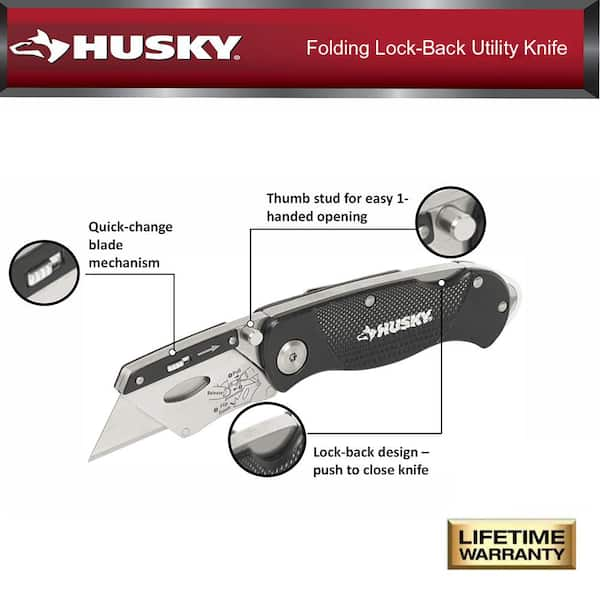
- Folding Knives: Some Husky models are folding knives, where the blade tucks neatly into the handle. These often have a lock or a specific grip required to fold the blade back in.
Navigating Husky Retractable Knife Operation
When you need to cut, extending the blade is straightforward. However, the crucial step is retracting it. Let’s delve into the typical Husky retractable knife operation.
Common Retraction Mechanisms
Most Husky retractable knives use a simple push or slide mechanism.
- Thumb Slider: This is the most common. You’ll find a slider on the side or top of the knife. To extend, push the slider forward. To retract, pull the slider back.
- Automatic Retraction: Some advanced Husky models might feature automatic retraction, where the blade snaps back into the handle when pressure is released from the slider or a specific button.
Key Steps for Retraction:
- Identify the Slider/Button: Locate the mechanism designed to control the blade.
- Apply Gentle Pressure: Don’t force it. If it feels stiff, check for obstructions.
- Move the Slider Backwards: Guide the slider to its rearmost position.
- Listen/Feel for Engagement: You should feel or hear the blade lock into its retracted position.
- Visually Confirm: Always look to ensure the blade is completely hidden within the knife body.
Safe Extension and Usage
Before retracting, remember safe usage.
- Cut Away From Yourself: Always direct the blade away from your body and other people.
- Use a Stable Surface: Ensure the material you are cutting is stable and won’t shift unexpectedly.
- Apply Steady Pressure: Avoid jerky movements that can cause the blade to slip.
Mastering Husky Folding Knife Closing Techniques
For Husky folding knife closing, the process is slightly different but equally important for safety. These knives offer a compact and secure way to store a sharp blade.
Understanding Folding Blade Mechanisms
Husky folding knives often incorporate a locking mechanism to keep the blade open during use. Closing requires disengaging this lock.
- Liner Lock: A common type where a metal piece inside the handle moves to lock the blade. To close, you press this liner inwards to release the blade.
- Frame Lock: Similar to a liner lock but the lock is part of the handle frame itself.
- Thumb Stud/Disc: Some folding knives have a stud or disc attached to the blade that aids in opening. Closing usually involves a similar unlocking mechanism.
Steps for Closing a Folding Husky Utility Knife:
- Grip the Handle Firmly: Hold the handle securely, ensuring your fingers are not near the blade’s path.
- Locate the Locking Mechanism: This is usually a tab or lever on the side of the handle.
- Disengage the Lock: Press the locking mechanism inwards with your thumb or finger.
- Gently Fold the Blade: As you press the lock, slowly fold the blade back into the handle.
- Ensure Full Closure: The blade should sit flush within the handle, with no part exposed.
Safety Tips for Folding Knives
- Keep Fingers Clear: Always be mindful of where your fingers are in relation to the blade path.
- Avoid Excessive Force: If it’s hard to close, don’t force it. There might be a reason the lock isn’t disengaging.
- Store Securely: Once closed, ensure the blade cannot accidentally open.
Husky Box Cutter Folding: A Secure Solution
Husky box cutter folding designs offer convenience and safety for everyday tasks. They are excellent for opening packages, cutting tape, and various other jobs. The folding action ensures the blade is safely tucked away.
Benefits of Folding Box Cutters
- Portability: They are compact and easy to carry in a pocket or toolbox.
- Safety: When folded, the blade is protected, reducing the risk of accidental cuts.
- Durability: Husky box cutters are built to last, even with frequent use.
Safe Folding Procedures
The procedure for closing a Husky box cutter that folds is similar to other folding knives.
- Clear the Blade Path: Ensure no fingers or other objects are in the way.
- Release the Lock: Press the release mechanism (often a button or lever).
- Fold the Blade: Gently push the blade back into the handle.
- Check for Secure Closure: Make sure it locks closed if it has a secondary locking feature.
How to Retract Husky Utility Blade: A Detailed Look
Let’s dive deeper into how to retract Husky utility blade, focusing on the most common types.
Understanding Blade Extension and Retraction Controls
The control for blade movement is usually a slider. Some models might have a button, especially those with automatic retraction.
- Manual Slider: This is the most prevalent. You push it forward to expose the blade and pull it back to hide it.
- Automatic Retraction: When you release pressure on the slider or press a specific button, the blade springs back. This is a significant safety feature, as it minimizes the time the blade is exposed.
Troubleshooting Blade Retraction Issues
Sometimes, the slider might feel sticky or the blade might not retract fully. Here are some Husky utility knife troubleshooting tips:
- Check for Debris: Dust, tape residue, or cardboard fibers can jam the mechanism.
- Solution: Use a small brush or compressed air to clean the slider track and blade channel.
- Blade Extension Limit: Ensure the blade is not extended to its maximum length, which can sometimes cause resistance when retracting.
- Solution: Try retracting it from a midway point.
- Blade Damage: A bent or damaged blade can snag.
- Solution: Inspect the blade for damage. If damaged, consider replacing the blade.
- Lubrication: A lack of lubrication can make the slider stiff.
- Solution: Apply a small amount of silicone-based lubricant to the slider track. Avoid oily lubricants that can attract dirt.
- Stuck Blade: If the blade is stuck extended, do not force it.
- Solution: Gently tap the handle on a firm surface or try wiggling the slider very carefully. If still stuck, blade replacement might be necessary.
Husky Heavy Duty Knife Closure: Built for Tough Jobs
Husky heavy duty knife closure is designed for durability and reliability. These knives are often used in demanding environments, so safe closure is crucial.
Features of Heavy Duty Knives
- Robust Construction: Made with stronger materials to withstand tougher cutting tasks.
- Ergonomic Handles: Designed for a secure grip, even with gloves on.
- Advanced Locking Mechanisms: Often feature more secure locks to prevent accidental blade opening.
Secure Closure for Heavy Duty Use
Even with robust designs, the principles of safe closure remain the same.
- Retract Fully: Ensure the blade is completely withdrawn into the housing.
- Check Lock Engagement: If it has a secondary lock, make sure it’s engaged.
- Store Properly: Keep it in a safe place where it won’t be accidentally activated.
Husky Knife Maintenance: Keeping Your Tool Sharp and Safe
Proper Husky knife maintenance extends the life of your utility knife and ensures its safe operation.
Cleaning Your Utility Knife
Regular cleaning prevents dirt and debris from interfering with the blade mechanism.
- Wipe Down: After each use, wipe the knife with a clean cloth to remove dust and debris.
- Deep Cleaning: Periodically, you might need to disengage the blade mechanism (if possible on your model) and clean out any accumulated material.
- Tools: Small brush, cotton swabs, compressed air.
Lubrication and Blade Care
- Lubricate Moving Parts: A tiny amount of silicone lubricant on the slider track can keep it moving smoothly.
- Blade Replacement: Dull blades are more dangerous as they require more force, increasing the risk of slippage.
- When to Replace: If the blade is chipped, bent, or no longer cuts cleanly.
Blade Replacement: Husky Snap-Off Knife Replacement and More
For knives with replaceable blades, knowing how to change them safely is vital. This is especially relevant for Husky snap-off knife replacement.
- Snap-Off Blades: These blades have scoring lines that allow you to break off a dull section to reveal a sharp edge.
- How to Snap: Extend the blade to a point where you can grip the dull section. Use pliers or a designated snap-off tool to break off the used segment. Dispose of the sharp segment safely.
- Standard Utility Blades: Many Husky knives use standard #11 or similar utility blades.
- Replacement Procedure:
- Retract the Blade Completely: Ensure the blade is fully hidden.
- Unscrew or Release the Blade Holder: Locate the screw or release mechanism holding the blade in place.
- Remove the Old Blade: Carefully take out the old blade, holding it by its base.
- Insert the New Blade: Place the new blade correctly, ensuring it’s seated properly.
- Secure the Blade Holder: Screw or lock the mechanism back into place.
- Test the Mechanism: Extend and retract the new blade to confirm smooth operation.
- Replacement Procedure:
Storing Your Husky Utility Knife
Safe storage is just as important as safe use.
- Retract the Blade: Always ensure the blade is fully retracted or the knife is folded closed.
- Keep Dry: Store in a dry environment to prevent rust.
- Designated Place: Keep it in a toolbox, a dedicated sheath, or a drawer where it won’t be accidentally bumped or handled by children.
- Husky Craft Knife Storage: For Husky craft knife storage, consider a case or a tool roll that keeps the blade protected and organized.
Husky Utility Knife Troubleshooting: Common Fixes
We’ve touched on troubleshooting, but let’s consolidate common issues and solutions.
Common Problems and Solutions
| Problem | Possible Cause | Solution |
|---|---|---|
| Blade won’t extend/retract | Debris in slider track, stiff mechanism | Clean mechanism, lubricate lightly with silicone spray, check for obstructions. |
| Blade stuck in extended position | Jammed mechanism, bent blade | Gently tap handle, wiggle slider, check blade for damage, consider blade replacement. |
| Blade feels loose | Improperly tightened blade holder, worn mechanism | Re-tighten blade holder screw, inspect mechanism for wear and tear. |
| Slider is difficult to move | Lack of lubrication, dirt, bent slider track | Clean and lubricate slider track, check for bent parts, if significantly bent consider replacement. |
| Accidental blade extension | Damaged safety lock, improper handling | Ensure lock engages fully, always retract immediately after use, replace if lock is faulty. |
| Snap-off blade won’t break cleanly | Dull scoring line, blade too thick for snap | Use pliers for a firmer grip, ensure you are breaking at a scored line, try a stronger snap-off tool. |
FAQ: Your Husky Utility Knife Questions Answered
Here are some frequently asked questions about using and closing your Husky utility knife.
Q1: How do I know if my Husky utility knife is safely closed?
A1: The blade should be completely hidden within the knife’s body. For retractable knives, the slider should be in its rearmost position. For folding knives, the blade should be folded flush into the handle.
Q2: Can I leave the blade extended on my Husky utility knife?
A2: No, you should always retract the blade when not in use. Leaving it extended is a significant safety hazard.
Q3: What should I do if my Husky utility knife blade is bent?
A3: A bent blade should be replaced immediately. Using a bent blade can cause it to snag or break unexpectedly, leading to injury.
Q4: How often should I clean my Husky utility knife?
A4: It’s best to wipe down your knife after each use. A more thorough cleaning should be done periodically, especially if you use it in dusty or dirty conditions.
Q5: My Husky utility knife slider is stuck. What’s the best way to fix it?
A5: First, try cleaning out any debris from the slider track. If that doesn’t work, a small amount of silicone lubricant can help. If it’s still stuck or feels bent, you may need to replace the blade or the entire knife if the mechanism is damaged.
Q6: Where is the best place to store my Husky utility knife?
A6: Store it in a dry place, with the blade retracted or folded, and out of reach of children. A toolbox or a dedicated tool pouch is ideal.
Q7: My Husky snap-off knife blade is dull. How do I replace a section?
A7: Extend the blade to expose the dull section. Grip the dull part firmly, often with pliers, and snap it off at a scored line. Dispose of the sharp segment safely.
By following these guidelines, you can ensure your Husky utility knife remains a safe and effective tool for all your cutting needs. Prioritizing Husky utility knife safety through proper operation, maintenance, and storage protects you and those around you.