
Can you cut baseboards with a miter saw? Absolutely! Using a miter saw is the best way to get clean, precise baseboard cuts, especially for those tricky corners. This guide will walk you through everything you need to know about miter saw baseboard cuts and cutting baseboard corners like a pro. We’ll cover the right miter saw settings for baseboards, how to cut molding with a miter saw, and miter saw techniques for trim to ensure precise baseboard cuts for your baseboard installation cuts. Let’s dive into this base mitering guide to achieve perfect angle cuts for baseboards.
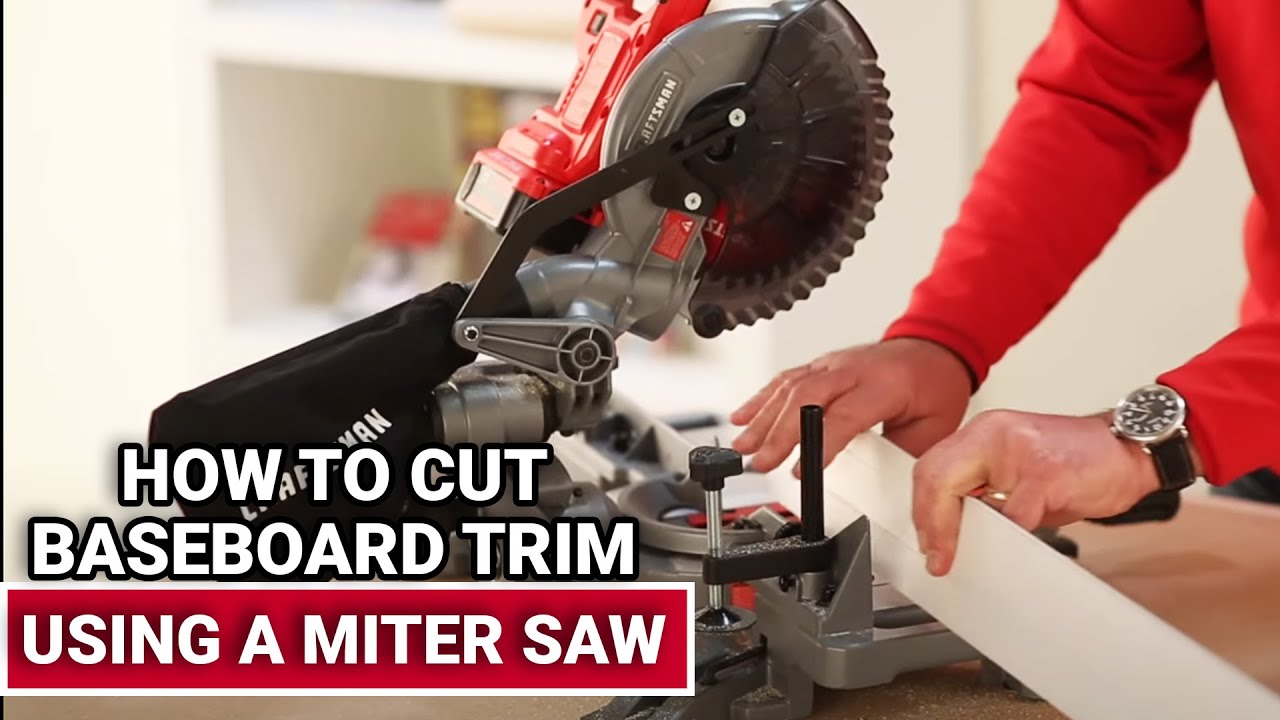
Image Source: i.ytimg.com
Getting Ready: Tools and Materials for Baseboard Cuts
Before you start making any miter saw baseboard cuts, having the right tools and materials is key to successful baseboard installation cuts. This ensures you can achieve those clean, tight joints that make a big difference in your finished project.
Essential Tools You’ll Need:
- Miter Saw: This is your main tool. Whether it’s a manual miter box and handsaw or a powered miter saw (sliding or compound), ensure it’s in good working order. A compound miter saw offers the most versatility for angle cuts for baseboards.
- Measuring Tape: A reliable tape measure is crucial for accurate measurements.
- Pencil: For marking your cut lines.
- Safety Glasses: Always wear safety glasses when operating a miter saw.
- Hearing Protection: Miter saws can be loud, so ear protection is recommended.
- Dust Mask: Sawdust can be an irritant.
- Clamps: To secure the baseboard to the saw’s fence and your workbench.
- Scrap Wood: For testing your cuts.
- Baseboards: Of course! Make sure you have enough for your project, plus a little extra for mistakes.
Choosing the Right Saw Blade:
The blade you use can significantly impact the quality of your miter saw baseboard cuts.
- Tooth Count: For baseboards, a higher tooth count blade (60-80 teeth) is generally preferred. This creates a smoother finish, minimizing splintering and tear-out, which is vital for precise baseboard cuts.
- Blade Material: Carbide-tipped blades are durable and hold their sharpness longer.
- Blade Kerf: A thinner kerf blade removes less material, saving your baseboard and making cuts slightly easier.
Understanding Baseboard Joints: The Foundation of Perfect Corners
To make perfect cutting baseboard corners, you first need to know about the common types of joints used in baseboard installation cuts. The most common are the miter joint and the butt joint, but for corners, miter joints are essential.
The Miter Joint: The Heart of Corner Cuts
A miter joint is created by cutting two pieces of molding at an angle so they meet at a specific point, typically forming a 90-degree corner. For interior corners, each piece is cut at a 45-degree angle. For exterior corners, it’s also a 45-degree angle. The key to a perfect miter joint is absolute precision in your miter saw settings for baseboards.
Why Miter Joints are Best for Corners:
- Aesthetics: Mitered corners look clean and professional, creating a seamless transition.
- Tight Fit: When cut accurately, miter joints create very tight, gap-free corners, unlike butt joints which can sometimes be visible.
- Structural Integrity: While not the primary function for thin baseboards, miter joints can offer good adhesion for glues and caulking.
Setting Up Your Miter Saw for Baseboards: Precision is Key
Achieving those perfect baseboard mitering guide results starts with properly setting up your miter saw. This is where miter saw settings for baseboards become crucial.
Adjusting the Miter Angle:
- For 90-Degree Corners: You’ll need to set your saw’s miter angle to 45 degrees. Most miter saws have detents (locking points) at common angles like 45 and 90 degrees, making this easy.
- How to Set:
- Loosen the miter lock.
- Rotate the saw’s turntable until the blade aligns with the 45-degree mark.
- Lock the miter mechanism firmly.
- Always double-check the angle with a reliable square.
Adjusting the Bevel Angle (For Compound Cuts):
While not always necessary for basic baseboards, a compound miter saw allows you to tilt the blade (bevel). For standard baseboard installation, you’ll typically keep the bevel at 0 degrees. However, some decorative moldings or specific installation situations might require a slight bevel. If your baseboard has a specific profile that needs to sit flat against the wall at an angle, you might need to experiment with small bevel adjustments. For most standard baseboards, the best way to cut baseboards involves a flat cut (0-degree bevel).
Fence Setup: Supporting Your Baseboard
The fence on your miter saw is essential for supporting the baseboard securely and ensuring consistent cuts.
- Flat Against the Fence: For most baseboards, you’ll want to lay the baseboard flat on the saw’s turntable and push its back edge firmly against the fence. This is the standard method for how to cut molding with a miter saw.
- Crown Molding Settings (If Applicable): If you’re working with crown molding, which is installed at an angle, you might need to use “nested” or “deformed” miter settings, where the molding is placed upside down against the saw’s fence and turntable. However, for standard baseboards, the flat-against-the-fence method is the way to go.
Mastering Miter Saw Techniques for Trim: The Art of the Cut
Now that your saw is set up, let’s explore the miter saw techniques for trim that will give you precise baseboard cuts.
Step 1: Measure Twice, Cut Once
This old adage is never more true than when working with molding.
- Accurate Measurements: Measure the length of the wall or the section of baseboard you need to replace. Remember to measure along the wall, not the baseboard itself, as walls are rarely perfectly square.
- Marking the Cut Line: Transfer your measurement to the baseboard. For the first cut of a piece, you might simply be cutting it to a manageable length. For the second end, you’ll mark the precise point where your angled cut needs to end.
Step 2: Performing the First Cut (For a Straight Piece)
If you need a specific length of baseboard, you’ll make two miter cuts.
- Position the Baseboard: Place the baseboard on the saw’s table, flat against the fence.
- Align the Blade: Position the baseboard so the saw blade will cut on the waste side of your mark.
- Secure the Baseboard: Use clamps to hold the baseboard firmly against the fence and the saw table. This prevents any movement during the cut, which is crucial for precise baseboard cuts.
- Make the Cut: Turn on the saw and let the blade reach full speed before lowering it through the baseboard. Hold the blade guard down until the cut is complete.
- Allow the Blade to Stop: Wait for the blade to stop spinning completely before lifting it and removing the cut piece.
Step 3: Cutting Corners – The Inside Miter
Let’s tackle those internal corners, where two baseboard pieces meet. Each piece needs a 45-degree cut.
- Identify the Corner: Determine if it’s an inside or outside corner. For an inside corner, the baseboards will meet in an inward-facing angle.
- Set Your Saw: Set your miter saw to 45 degrees.
- Position for the Cut:
- Take your first baseboard piece. Place it flat against the fence.
- The cut should angle away from the wall it will sit against. Imagine looking at the end of the baseboard; the side that will face the room should be longer.
- Align the blade so it cuts on the waste side of your measured length.
- Clamp and Cut: Secure the baseboard with clamps and make the cut.
- The Second Piece: For the corresponding piece of baseboard that will meet the first at the corner:
- Place it on the saw, flat against the fence.
- This time, the 45-degree cut will be in the opposite direction. The side facing the room should be the shorter side of the cut.
- Align your measurement and cut.
- Test the Fit: Bring the two cut pieces to the corner. They should meet perfectly at a 45-degree angle, forming a snug 90-degree corner. If there’s a small gap, you might need to slightly adjust the miter angle or refine your measurement. This is where miter saw techniques for trim really shine.
Step 4: Cutting Corners – The Outside Miter
Outside corners are similar, but the angles point outwards.
- Identify the Corner: Outside corners project outwards from the wall.
- Set Your Saw: Set your miter saw to 45 degrees.
- Position for the Cut:
- Take your first baseboard piece. Place it flat against the fence.
- The cut should angle towards the wall it will sit against. Imagine looking at the end of the baseboard; the side that will face the room should be shorter.
- Align the blade so it cuts on the waste side of your measured length.
- Clamp and Cut: Secure the baseboard with clamps and make the cut.
- The Second Piece: For the corresponding piece:
- Place it on the saw, flat against the fence.
- This time, the 45-degree cut will be in the opposite direction. The side facing the room should be the longer side of the cut.
- Align your measurement and cut.
- Test the Fit: Bring the two pieces to the outside corner to check their fit.
Step 5: Fine-Tuning Your Cuts
It’s rare to get a perfect fit on the first try, especially with intricate profiles or slight imperfections in walls.
- Small Adjustments: If a joint has a tiny gap, you might need to shave off a sliver of material. You can do this by making a very slight adjustment to your miter angle (e.g., 44.5 degrees or 45.5 degrees) and making a new cut on a scrap piece to test.
- The Trim Puller: If you’ve already installed the piece and need to adjust, a trim puller is helpful to carefully remove it without damaging the wall.
Advanced Miter Saw Techniques for Trim Work
For those looking to elevate their baseboard installation cuts, here are some advanced miter saw techniques for trim.
Cutting Baseboards with Specific Profiles
Many baseboards have decorative profiles that can make cutting more challenging.
- Back-Cutting (Nested Method): For crown molding, this is essential. For some baseboards with deep profiles, you might find it beneficial to experiment with placing the baseboard upside down and backward on the saw to achieve a specific miter angle. However, for most standard baseboards, laying them flat is the simplest and most effective. Always ensure the baseboard is stable and the intended face of the molding is clear.
- Test Cuts are Crucial: Always test your cuts on scrap pieces of the same baseboard material. This allows you to see how the profile behaves at different angles and identify any potential tear-out issues.
Using a Sliding Miter Saw for Longer Baseboards
A sliding miter saw offers a wider cutting capacity, allowing you to cut longer pieces of baseboard without needing to reposition.
- Extended Reach: The sliding mechanism allows the blade to move forward and backward through the material, increasing the width of the cut.
- Stability: When cutting longer pieces, ensure the baseboard is fully supported on both sides to prevent tipping and ensure a clean cut. Use outfeed supports or sawhorses if necessary.
Mitering Baseboards Against a Curved Wall
Curved walls present a unique challenge for cutting baseboard corners.
- Radial Cuts: You won’t be able to achieve a tight fit with simple straight miter cuts. Instead, you’ll need to make a series of small, incremental cuts to create a gentle curve.
- Precision and Patience: This requires setting your miter saw to very small angles (e.g., 1-2 degrees) and making many cuts along the length of the baseboard, essentially creating a segmented curve.
- Test and Adjust: This method requires considerable practice and careful adjustment to achieve a smooth, flowing curve that hugs the wall.
Common Problems and Solutions When Cutting Baseboards
Even with careful setup, you might encounter a few issues. Here’s how to address them.
Problem: Splintering or Tear-Out
This is common with softer woods or blades that aren’t sharp enough.
- Solution:
- Use a Sharp, High-Tooth-Count Blade: This is the most effective solution.
- Score the Cut Line: Lightly score the cut line on the baseboard with a utility knife before cutting.
- Use Painter’s Tape: Apply painter’s tape along the cut line. This can help hold fibers together.
- Cut Back-to-Front (on some saws): For some types of saws and molding, cutting from the back of the molding to the front can reduce tear-out on the visible surface.
Problem: Gaps in Corner Joints
Gaps often result from inaccurate angle settings or movement during the cut.
- Solution:
- Verify Miter Settings: Always double-check your miter saw’s angle settings.
- Secure the Baseboard: Ensure the baseboard is firmly clamped to the fence and table.
- Calibrate Your Saw: Periodically check and calibrate your miter saw’s angles using a precision square.
- Fine-Tune: Make small adjustments to the miter angle on your saw and test on scrap wood until you achieve a perfect fit.
Problem: Baseboard Doesn’t Sit Flush Against the Wall
This can happen if the wall is not perfectly straight or the baseboard has a slight curve.
- Solution:
- Caulk: A bead of caulk is the standard solution to fill small gaps between the baseboard and the wall.
- Trim Router: For more significant issues, a router with a trim bit can be used to shave a slight bevel onto the back of the baseboard, allowing it to conform better to the wall.
- Shims: In some cases, very thin shims might be placed behind the baseboard before nailing to help it sit straighter.
FAQs: Your Baseboard Cutting Questions Answered
Here are answers to some common questions about how to cut baseboards with a miter saw.
What is the best angle to cut baseboards for corners?
For both inside and outside 90-degree corners, the best angle to cut baseboards is 45 degrees. This allows two pieces to meet at a 90-degree angle.
Can I use a handsaw and miter box for baseboards?
Yes, you can. A manual miter box and handsaw are effective for baseboard installation cuts, especially for shorter lengths or if you don’t have a powered miter saw. However, achieving perfectly clean and precise cuts, especially for intricate moldings, is more challenging and requires more practice than with a powered miter saw. A powered miter saw is generally the best way to cut baseboards for professional-looking results.
How do I cut a baseboard for an inside corner?
For an inside corner, you need to set your miter saw to 45 degrees. Take one piece of baseboard and cut it so the long edge will be on the side facing the room. For the adjoining piece, cut it at 45 degrees in the opposite direction, ensuring the long edge is again on the side facing the room. The two 45-degree cuts should then meet to form a 90-degree corner.
How do I cut a baseboard for an outside corner?
For an outside corner, you also set your miter saw to 45 degrees. Take one piece and cut it so the short edge will be on the side facing the room (the corner will jut out). For the adjoining piece, cut it at 45 degrees in the opposite direction, again making the side facing the room the shorter edge of the cut.
What is the best way to ensure precise baseboard cuts?
To ensure precise baseboard cuts, always measure carefully, mark your lines clearly, use a sharp blade with a high tooth count, firmly clamp the baseboard to the saw’s fence and table, and perform test cuts on scrap pieces before cutting your actual baseboards. Regularly check and calibrate your miter saw’s angle settings.
How do I deal with baseboard profiles when cutting?
Most standard baseboards can be cut flat against the fence. For more complex profiles or if you encounter tear-out on the visible face, experiment with slightly different blade positions or consider scoring the cut line with a knife. Always perform test cuts on scrap pieces to see how the specific profile reacts.
Conclusion: Achieving Professional Baseboard Finishes
Mastering how to cut baseboards with a miter saw is a fundamental skill for any DIYer or professional trim carpenter. By following these steps, focusing on accurate miter saw settings for baseboards, and practicing good miter saw techniques for trim, you can achieve those perfect cutting baseboard corners. Remember that practice makes perfect, and with a little patience and attention to detail, your baseboard installation cuts will look seamless and professional. This comprehensive base mitering guide should equip you with the knowledge to tackle any baseboard project with confidence, delivering precise baseboard cuts and beautiful angle cuts for baseboards every time.