
Can you cut crown molding with a compound miter saw? Yes, you absolutely can! In fact, a compound miter saw is the ideal tool for achieving precise and clean crown molding miter cuts. This guide will walk you through everything you need to know to master this essential skill for crown molding installation. We’ll cover how to set up your compound miter saw for molding, understand cutting crown molding angles, and provide practical crown molding cutting tips for both inside and outside corners. Whether you’re a seasoned DIYer or tackling your first crown molding project, this miter saw crown molding guide will equip you with the knowledge to achieve professional-looking results with your bevel cut for crown molding.
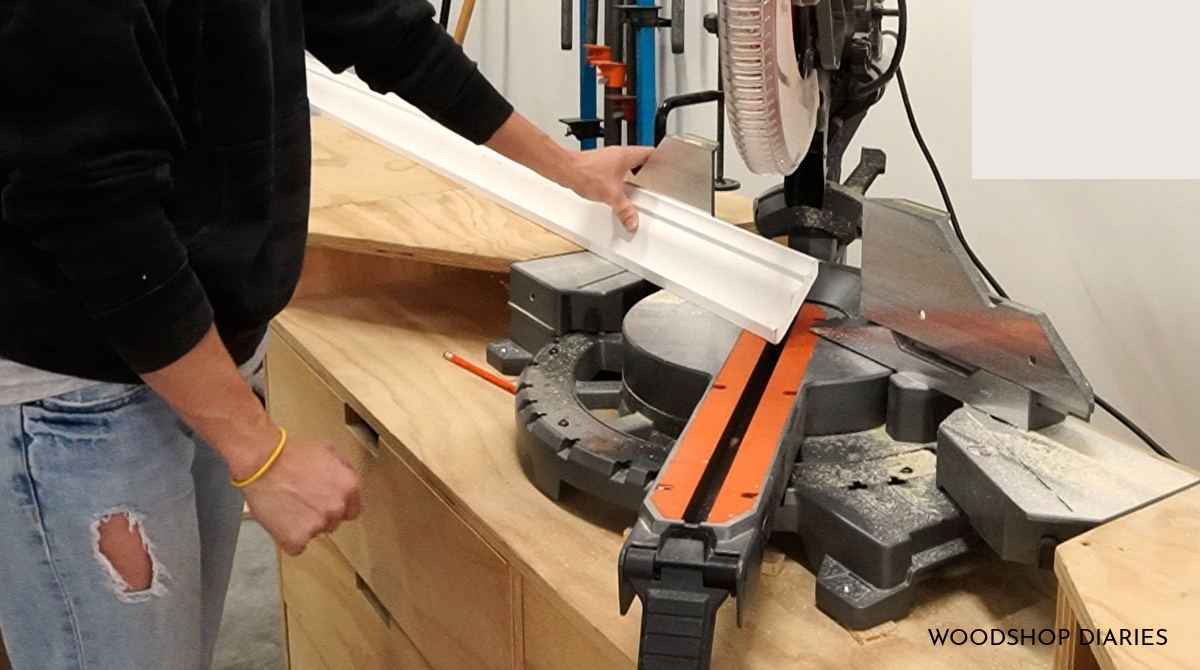
Image Source: www.woodshopdiaries.com
Why Use a Compound Miter Saw for Crown Molding?
When it comes to installing crown molding, accuracy is key. The aesthetic appeal of your room hinges on the precise joining of molding pieces at corners. A compound miter saw for molding offers several advantages over other cutting methods:
- Precision: The motorized blade and adjustable angles allow for exact cuts, ensuring tight-fitting joints.
- Versatility: A compound miter saw can handle both straight miter cuts and the compound angles needed for crown molding.
- Efficiency: Once set up, cutting multiple pieces of molding becomes a fast and repeatable process.
- Clean Cuts: Sharp blades on a miter saw produce smooth cuts, reducing the need for extensive sanding.
Deciphering Crown Molding Angles
Crown molding sits at an angle between the wall and the ceiling. This unique positioning requires specific cutting crown molding angles that are not typical for standard trim work. The key is to replicate the angle at which the molding will sit in its final position.
The standard angles for crown molding are derived from its placement against the wall and ceiling. Imagine the molding laid flat on the saw’s table. The two surfaces it will meet – the wall and the ceiling – form a 90-degree angle. Because the molding is designed to fit into this corner, its angles are determined by dividing that 90-degree angle by two, and then accounting for the tilt of the saw.
- Spring Angle: This is the most crucial angle to understand. Most crown molding has a “spring angle” of 38 degrees. This means that when the molding is placed against the wall and ceiling, it rests at a 38-degree angle to the wall (or ceiling).
- Miter Angle: For a standard 90-degree inside or outside corner, the miter angle on your saw will be 45 degrees.
- Bevel Angle: This is where the “compound” aspect of the saw comes into play. For crown molding, you’ll need to introduce a bevel cut for crown molding. The specific bevel angle depends on the molding’s spring angle and the angle at which you’re cutting it.
Setting Up Your Compound Miter Saw for Crown Molding
Proper setup is crucial for successful crown molding cutting angles. Many woodworkers find cutting crown molding a bit counter-intuitive at first, but with the right setup, it becomes straightforward.
The “Upside Down and Backwards” Method
This is the most common and effective method for cutting crown molding with a compound miter saw. It requires you to position the molding upside down and backwards on the saw’s base.
Why this method?
By placing the molding upside down and backwards, you’re essentially laying the molding flat on the saw’s table in a position that mimics how it will sit against the wall and ceiling. This allows you to use standard miter and bevel settings that are readily available on most saws.
Setting the Miter and Bevel Angles
For a standard 90-degree inside or outside corner, when using the upside-down and backwards method:
- Miter Angle: Set your saw’s miter angle to 31.6 degrees. (This is derived from 45 degrees minus the compound angle adjustment).
- Bevel Angle: Set your saw’s bevel angle to 33.9 degrees. (This is derived from the spring angle of the molding).
Table: Standard Crown Molding Angles (Upside Down & Backwards Method)
| Corner Type | Miter Angle Setting | Bevel Angle Setting |
|---|---|---|
| Inside Corner | 31.6 degrees | 33.9 degrees |
| Outside Corner | 31.6 degrees | 33.9 degrees |
Note: These angles are based on a common spring angle of 38 degrees. Always check your specific molding’s specifications or test on scrap material.
Important Considerations for Setup:
- Saw Capability: Ensure your compound miter saw for molding can achieve the necessary bevel angles. Most modern compound miter saws can.
- Blade Type: Use a sharp, high-tooth count blade designed for fine trim work. This will minimize tear-out and provide cleaner cuts.
- Test Cuts: Always perform test cuts on scrap pieces of the same molding before cutting your final lengths. This is one of the most vital crown molding cutting tips.
Cutting an Inside Corner Crown Molding Cut
An inside corner crown molding cut is where two pieces of molding meet at an internal angle of a room, like where two walls meet.
Steps for an Inside Corner Cut:
- Position the Molding: Place your first piece of crown molding upside down and backwards on the saw’s table. The top edge of the molding (which will be against the ceiling) should be against the saw’s fence. The bottom edge (which will be against the wall) should be resting on the base.
- Set the Angles:
- Set the miter angle to 31.6 degrees (turn the saw to the left for the left-hand cut).
- Set the bevel angle to 33.9 degrees (ensure the bevel is tilting to the left).
- Measure and Mark: Measure the length of the wall where the molding will be installed. Mark the underside of the molding where the cut should be made. Remember that the measurement is taken along the wall-side edge of the molding.
- Make the Cut: Secure the molding against the fence and the base. With the blade guard in place, lower the blade and make the cut.
- Cut the Second Piece: For the opposite wall of the inside corner, you’ll need to mirror the cut.
- Flip the molding piece upside down and backwards.
- Set the miter angle to 31.6 degrees (turn the saw to the right for the right-hand cut).
- Set the bevel angle to 33.9 degrees (ensure the bevel is tilting to the right).
- Measure and mark your second piece.
- Secure the molding and make the cut.
- Test the Fit: Bring the two cut pieces together to check if they form a tight joint. Adjust the angles slightly if needed.
Cutting an Outside Corner Crown Molding Cut
An outside corner crown molding cut is where two pieces of molding meet at an external angle, such as the corner of a room or a decorative architectural feature.
Steps for an Outside Corner Cut:
- Position the Molding: For an outside corner, the molding is again placed upside down and backwards. However, the top edge of the molding (against the ceiling) will now be leaning away from the saw’s fence, and the bottom edge (against the wall) will be resting on the base.
- Set the Angles:
- Set the miter angle to 31.6 degrees (turn the saw to the left for the left-hand cut).
- Set the bevel angle to 33.9 degrees (ensure the bevel is tilting to the right for this cut).
- Measure and Mark: Measure the required length for the outside corner. Remember to account for the angle when measuring. It’s often best to measure along the longest (back) edge of the molding to the point where the cut will meet the wall.
- Make the Cut: Secure the molding and make the cut.
- Cut the Second Piece: For the other side of the outside corner, mirror the cuts.
- Flip the molding piece upside down and backwards.
- Set the miter angle to 31.6 degrees (turn the saw to the right for the right-hand cut).
- Set the bevel angle to 33.9 degrees (ensure the bevel is tilting to the left for this cut).
- Measure and mark.
- Secure and cut.
- Test the Fit: Bring the two pieces together to ensure a snug fit.
Advanced Crown Molding Cutting Tips
Mastering cutting crown molding angles involves more than just setting the saw. Here are some advanced crown molding cutting tips to elevate your results:
Using a Miter Saw Crown Molding Guide
For consistent and safer cuts, consider using a miter saw crown molding guide. These are jig attachments that clamp onto your saw’s fence, providing a stable surface to rest the molding against. They help ensure the molding stays put during the cut, especially for longer pieces. Many guides also help in positioning the molding more intuitively, reducing the reliance on the “upside down and backwards” method for some users.
Handling Odd Angles
Not all corners are perfect 90-degree angles. For non-standard corners, you’ll need to adjust your miter angle.
- Measure the Corner Angle: Use an angle finder or a digital angle gauge to measure the actual angle of the corner.
- Calculate the Miter Angle: For a standard miter saw, the miter angle will be half of the measured corner angle. For example, if the corner measures 80 degrees, your miter angle will be 40 degrees.
- Adjust the Bevel Angle: The bevel angle will remain the same as long as the spring angle of the molding doesn’t change and you continue to use the upside-down and backwards method. However, if your saw has a limited bevel range, or if you need to cut at a different orientation, you might need to research specific compound angle calculations.
Using Shims and Supports
When cutting longer pieces of molding, they can sometimes bow or lift off the saw table. Use shims or small pieces of scrap wood to support the molding and keep it stable against the fence and base during the cut.
Dado Blade for Special Cuts (Rare)
While not typically used for standard crown molding installation, a dado blade can be used on some miter saws for specialized cuts or to create copes. However, this is an advanced technique and usually not necessary for typical installations.
Maintaining Blade Sharpness
A dull blade will tear through the wood, leaving a rough edge that requires more sanding. Keep your saw blades sharp and clean for the best results.
Embracing the “Copeless” Method
While the traditional method involves precise miter and bevel cuts, experienced installers sometimes use a “copeless” method. This involves slightly adjusting the angle and relying on caulk and filler to hide any minor imperfections. However, for a truly professional finish, precise crown molding miter cuts are preferred.
Common Pitfalls and How to Avoid Them
Even with the right tools and knowledge, mistakes can happen. Here are some common pitfalls and how to avoid them:
Mismatched Angles
- Problem: The molding pieces don’t meet cleanly at the corner.
- Solution: Double-check your saw’s miter and bevel settings. Always perform test cuts on scrap pieces and try fitting them before cutting your finished lengths.
Tear-out
- Problem: The blade rips the wood fibers, leaving a rough edge.
- Solution: Use a sharp, high-tooth count blade. Support the molding securely. For the final cut, consider a zero-clearance insert for your saw, if available. Also, try to advance the blade through the molding smoothly.
Incorrect Measurement
- Problem: The molding is too long or too short.
- Solution: Measure twice, cut once. Pay close attention to where you’re measuring from, especially on angled cuts. Measuring along the wall-side edge is usually the most accurate for inside and outside corners.
Molding Slipping
- Problem: The molding moves during the cut, resulting in an inaccurate angle.
- Solution: Ensure the molding is firmly pressed against the saw’s fence and base. Use clamps or a miter saw crown molding guide for extra security.
Finalizing Your Crown Molding Installation
Once you’ve mastered the cutting crown molding angles, the rest of the crown molding installation process involves:
- Dry Fitting: Before applying any adhesive or nails, dry-fit your cut pieces in the corner to ensure a perfect seam.
- Adhesive and Fasteners: Use a strong construction adhesive along the back of the molding and secure it with finishing nails.
- Nail Hole Filling: Fill any nail holes with wood filler or putty.
- Caulking: Apply a bead of paintable caulk along the top and bottom edges where the molding meets the ceiling and wall to hide any small gaps and create a seamless look.
- Painting: Once everything is dry and filled, paint the crown molding to match your trim or walls.
Frequently Asked Questions (FAQ)
Q1: Can I use a regular miter saw for crown molding?
A1: While a regular miter saw can make straight cuts and miter cuts, it lacks the ability to tilt the blade for the compound bevel cut for crown molding. You can still cut crown molding on a standard miter saw by tilting the molding itself, but it’s a more complex and less intuitive process, and often requires custom jigs. A compound miter saw for molding is highly recommended for ease and precision.
Q2: What is the standard spring angle for crown molding?
A2: The most common spring angle for crown molding is 38 degrees. This is the angle the molding makes with the wall (or ceiling) when it’s installed.
Q3: How do I cut crown molding if my saw doesn’t have the exact bevel angle?
A3: If your saw’s bevel capacity is limited, you might need to adjust your miter angle slightly or use a different cutting orientation. This often involves more complex trigonometric calculations or using specialized jigs. It’s best to have a saw with a bevel capacity of at least 45 degrees for comfortable crown molding cutting angles.
Q4: What’s the easiest way to measure for crown molding cuts?
A4: For an inside corner, measure the wall length. For an outside corner, measure along the longest edge of the molding that will sit against the wall or ceiling to the point where the cut will terminate. Always err on the side of slightly long, as you can trim it down.
Q5: Do I need to adjust my angles for different types of crown molding?
A5: Yes. While 38 degrees is common, some moldings have different spring angles. Always check your specific molding’s specifications or perform test cuts on scrap to confirm your cutting crown molding angles and how to set compound miter saw for crown molding.
Mastering the compound miter saw for molding is a rewarding skill that significantly enhances the finished look of any room. By paying attention to detail, practicing your crown molding miter cuts, and following these crown molding cutting tips, you’ll be well on your way to achieving a professional crown molding installation.