
Can you hang a sawtooth frame without a level? Yes, but it’s much easier and the results will be straighter if you use one. Hanging a sawtooth frame is a straightforward process, perfect for beginners or anyone looking to quickly adorn their walls with art and photos. Sawtooth hangers are those little metal teeth that often come pre-attached to the back of picture frames. They’re designed to catch on a nail or screw, making hanging simple and secure. This guide will walk you through everything you need to know to hang your sawtooth frame perfectly straight and safely.
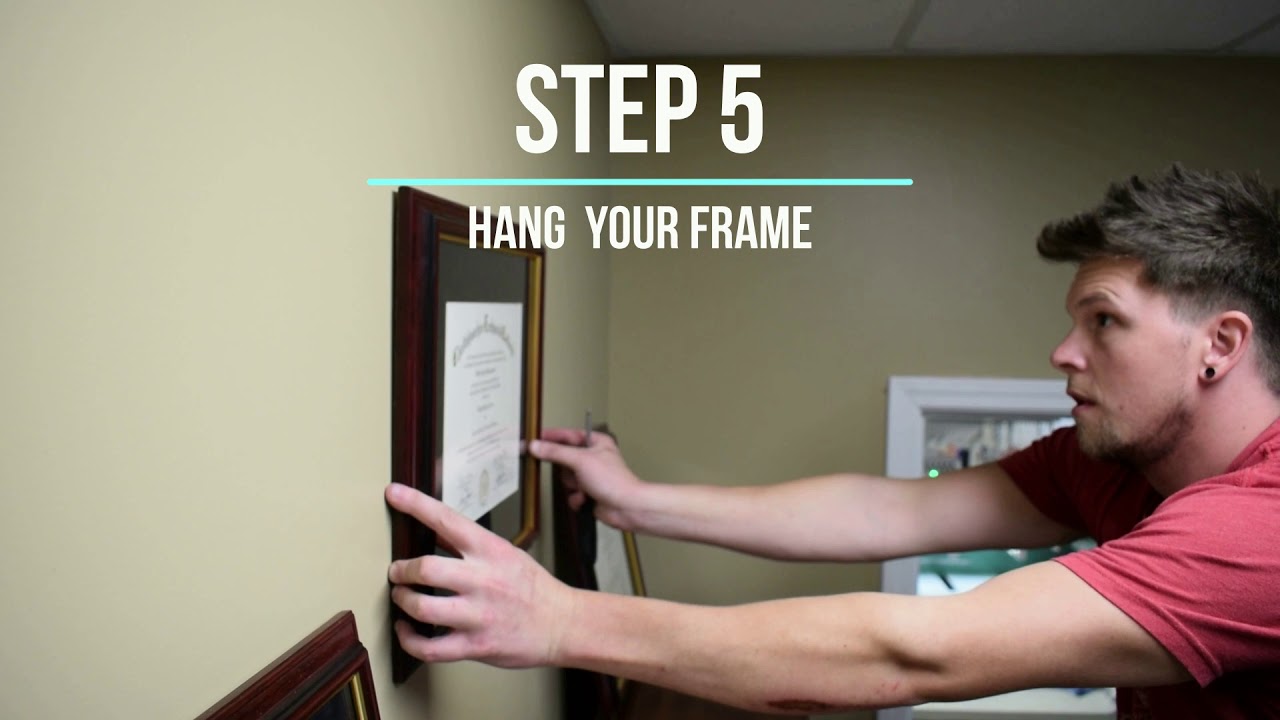
Image Source: i.ytimg.com
What You’ll Need: Your Sawtooth Frame Hanging Toolkit
Before you start, gather all your supplies. Having everything ready will make the process smooth and efficient.
- The Sawtooth Frame: The star of our show! Make sure it’s clean and the sawtooth hanger is securely attached.
- Picture Hanging Kit: This is your general go-to for various hanging needs. Many kits contain nails, screws, and sometimes even the wall anchors you might need.
- Hammer: For gently tapping in nails.
- Nails: Small, thin nails are usually best for sawtooth hangers. They should be long enough to go through the frame’s backing and into the wall securely, but not so long they poke out the front.
- Measuring Tape: Essential for positioning your frame precisely where you want it.
- Pencil: For marking the wall.
- Level Tool: Crucial for ensuring your frame is perfectly straight. A small torpedo level or a longer spirit level will work.
- Optional: Screw Hooks: If your sawtooth frame is particularly heavy, or if you’re hanging it on a wall that might not hold a nail well, screw hooks offer extra strength.
- Optional: Wall Anchors / Drywall Anchors: These are vital if you’re not hitting a stud and are hanging something heavier than a very light frame. Drywall anchors spread the weight within the drywall, preventing the nail or screw from pulling out.
Step-by-Step: Guiding Your Sawtooth Frame to the Wall
Let’s get hanging! Follow these steps to ensure your sawtooth frame ends up exactly where you want it.
Step 1: Prep Your Frame and Choose Your Spot
First, inspect your frame. The sawtooth hanger should be centered on the top edge of the frame and firmly attached. If it feels loose, a couple of small nails can secure it better.
Next, decide where you want to hang your frame. Hold it up to the wall and get a feel for its placement. Consider the height relative to furniture, other wall art, and the overall room. A good rule of thumb is to hang the center of the artwork at eye level, which is typically around 57-60 inches from the floor.
Step 2: Measure Twice, Mark Once: Finding the Hanger’s Position
This is where your measuring tape and pencil come in.
Method 1: Using the Sawtooth Hanger Directly
- Measure the Frame: Use your measuring tape to find the distance from the top of the frame to the very highest point of the sawtooth hanger. For example, if the hanger sits 1 inch down from the top edge, make a note of that.
- Mark the Wall: Decide the desired height for the top of your frame. Measure down from this mark on the wall the same distance you measured from the frame’s top to the hanger (e.g., 1 inch). This new mark is where the nail or screw hook will go.
- Center Your Mark: Now, find the horizontal center of your frame. Measure the width of your frame and divide by two. Measure that distance from one side edge of the frame to find the center point. Transfer this measurement to the wall, marking the center point for your nail or screw hook at the height you just determined.
Method 2: Marking the Sawtooth Hanger Itself
This method is often considered easier and more accurate.
- Prep the Hanger: Take your pencil and lightly mark the center point of the sawtooth hanger on the frame itself.
- Position and Mark: Hold the frame against the wall at your desired final height. Align the center pencil mark on the hanger with the center point you’ve chosen on the wall.
- Transfer the Mark: While holding the frame steady, press the pencil tip firmly against the wall through the center mark on the sawtooth hanger. Make a clear mark on the wall indicating where the nail or screw hook needs to go. This mark is precisely where the nail will sit to catch the hanger.
Step 3: Installing the Wall Mount: Nail or Screw Hook?
Now it’s time to put something in the wall to hold your frame.
Hanging with a Nail
- Choose Your Nail: Select a small, sturdy nail. It should be long enough to get a good grip in the wall but not so long that it protrudes through the other side of the frame.
- Position the Nail: Place the tip of the nail on the mark you made on the wall.
- Angle for Strength: For maximum holding power, drive the nail into the wall at a slight upward angle (about 45 degrees). This angle helps the nail resist gravity better.
- Tap Gently: Using your hammer, gently tap the nail into the wall. You want it to go in firmly, leaving enough of the nail head exposed to catch the sawtooth hanger. Don’t hammer too hard, as you could damage the wall or bend the nail.
Hanging with a Screw Hook
If your frame is heavier, or you want extra security, a screw hook is a great option.
- Pre-Drill (Optional but Recommended): For harder walls or to make insertion easier, you can pre-drill a small pilot hole. Use a drill bit that is slightly smaller than the screw threads.
- Install the Screw Hook: Align the screw hook with your mark on the wall. Gently twist the screw hook into the wall by hand or with pliers until it is firmly seated. Ensure the open part of the hook is facing upwards, ready to receive the sawtooth hanger.
What About Wall Anchors?
If you’re not hitting a wall stud (which is the solid wooden beam inside your wall), you’ll likely need wall anchors, especially for anything with a bit of weight.
- Drywall Anchors: These come in various types (plastic expansion anchors, self-drilling anchors).
- For Plastic Anchors: You’ll usually need to drill a hole of the correct size for the anchor, then gently tap the anchor into the hole with your hammer until it’s flush with the wall. Then, you drive your nail or screw into the anchor.
- For Self-Drilling Anchors: These often have a pointed end and screw directly into the drywall without a pilot hole.
- Using Anchors with Nails: After installing the drywall anchor, drive your nail into the anchor at a slight upward angle.
- Using Anchors with Screw Hooks: Drive the screw hook directly into the installed drywall anchor.
Important Note on Weight: Always check the weight limit of your chosen wall mounting hardware, especially if using drywall anchors. The packaging will usually tell you how much weight it can support.
Step 4: The Moment of Truth: Hanging Your Frame
Now for the exciting part!
- Lift the Frame: Carefully lift your sawtooth frame.
- Align the Hanger: Position the frame so the sawtooth hanger aligns directly with the nail or screw hook you installed.
- Hook It On: Gently lower the frame, allowing the teeth of the sawtooth hanger to catch onto the nail or hook.
- Check for Security: Give the frame a very gentle tug to ensure it feels secure. It shouldn’t wobble or feel loose.
Step 5: Leveling and Adjusting
This is where your level tool saves the day.
- Place the Level: Rest your level tool on the top edge of the frame.
- Observe the Bubble: If the bubble is in the center, your frame is perfectly level! Congratulations!
- Adjust as Needed:
- If the bubble is to the left, the left side of the frame is too high. You’ll need to lift that side slightly.
- If the bubble is to the right, the right side of the frame is too high. You’ll need to lift that side slightly.
- Fine-Tuning: You might need to gently shift the frame slightly on the nail/hook to get it perfectly level. Sometimes, you might need to slightly adjust the position of the nail or hook if the frame is significantly off. If so, remove the frame, adjust the nail or hook, and try again.
Step 6: Final Touches
Once your frame is perfectly straight and secure, step back and admire your work! You’ve successfully hung your sawtooth frame.
Fathoming Different Wall Types and Their Needs
The type of wall you’re hanging on significantly impacts the best way to secure your frame.
Drywall
Drywall is the most common wall material in modern homes. It’s a gypsum plaster pressed between two thick sheets of paper.
- Pros: Easy to cut into and work with.
- Cons: Not very strong on its own. Cannot support much weight without proper anchors.
- Best Practice: If you can locate a wall stud behind the drywall, drive your nail or screw directly into it. This provides the strongest hold. If you can’t find a stud, use appropriate drywall anchors for your frame’s weight.
Plaster and Lath
Older homes often have plaster walls, which are a mixture of gypsum plaster applied over thin strips of wood called lath.
- Pros: Can be very durable and provide a solid base.
- Cons: Can be brittle and prone to cracking. Finding studs can be trickier, and plaster can crumble if you’re not careful.
- Best Practice: Similar to drywall, hitting a stud is ideal. If not, specialty anchors for plaster or using a strong, thin nail can work. Be gentle when hammering to avoid cracking the plaster. Sometimes, small screws are better than nails as they are less likely to cause damage.
Wood Paneling
Wood paneling offers a more solid surface to work with.
- Pros: Generally very strong and forgiving.
- Cons: Can be decorative, so you need to be precise with placement.
- Best Practice: You can usually drive nails or screws directly into the wood paneling. Again, ensure the fastener is long enough to go through the paneling and provide a good grip.
Brick or Concrete
These solid surfaces require different tools and techniques.
- Pros: Extremely strong.
- Cons: Difficult to penetrate without specialized tools.
- Best Practice: You will need a masonry drill bit and a hammer drill (or regular drill with a masonry bit). Drill a hole slightly larger than your chosen anchor (usually a plastic plug or lead anchor). Insert the anchor into the hole, then screw a screw hook or a screw into the anchor to hang your frame.
Frequently Asked Questions About Hanging Sawtooth Frames
Here are some common queries people have when tackling this task.
Q1: How do I know if I hit a stud?
A1: You can use a stud finder, which is an electronic device that detects changes in wall density. Alternatively, you can tap on the wall; areas with studs sound more solid. You can also drill a very small exploratory hole with a thin drill bit. If it hits resistance, you’ve likely found a stud.
Q2: What if my sawtooth hanger is missing or broken?
A2: No problem! You can easily buy replacement sawtooth hangers at most hardware or craft stores. They usually come with small nails to attach them to the frame. You can also install D-rings and picture hanging wire for a more robust hanging solution, especially for heavier items.
Q3: How far apart should sawtooth hangers be?
A3: For most frames with a single sawtooth hanger, one is sufficient and it should be centered on the top edge of the frame. If you have a very wide or heavy frame, or if the original hanger feels inadequate, you might consider adding two smaller sawtooth hangers, spaced a few inches apart from the center. However, this is less common for standard sawtooth hangers.
Q4: Can I hang a sawtooth frame on a ceiling hook?
A4: While sawtooth hangers are designed for vertical walls, you could theoretically use them with a ceiling hook if the hook is shaped to catch the teeth. However, this is not their intended use and would likely not be very secure or aesthetically pleasing. Specialized ceiling hooks and hanging systems are recommended for hanging items from the ceiling.
Q5: What if the nail won’t go into the wall?
A5: This usually means you’re hitting a stud, a pipe, or electrical wiring. If you suspect a stud, try a slightly thinner nail or pre-drill a pilot hole. If you suspect wiring or plumbing, stop immediately and consult a professional. If the wall is very hard, like concrete or very dense plaster, you’ll need to switch to masonry drill bits and anchors.
Q6: Is a picture hanging kit always necessary?
A6: Not always. If you have basic nails, a hammer, a measuring tape, and a level, you have most of what you need. However, a good picture hanging kit often includes a variety of fasteners (nails, screws, hooks), wall anchors, and even a small level or measuring tape, making it a convenient all-in-one solution, especially if you plan to hang multiple items.
Q7: How do I clean the frame before hanging?
A7: Use a soft, dry cloth to wipe away any dust or debris from the frame and the sawtooth hanger. If the frame is dirty, you can use a slightly damp cloth (not wet!) and then dry it thoroughly.
By following these steps and choosing the right wall mounting hardware for your specific wall type, you can confidently hang your sawtooth frames and beautifully display your cherished pictures and artwork.