
Can you hold a chainsaw safely and correctly? Yes, with proper technique and consistent adherence to safety guidelines, anyone can learn how to hold and operate a chainsaw safely. What is the most important safety feature when holding a chainsaw? The most critical safety feature is your chainsaw grip, combined with your overall awareness and commitment to chainsaw safety grip practices. This guide will delve deep into the best practices for chainsaw handling, ensuring you can use this powerful tool with confidence and minimal risk.
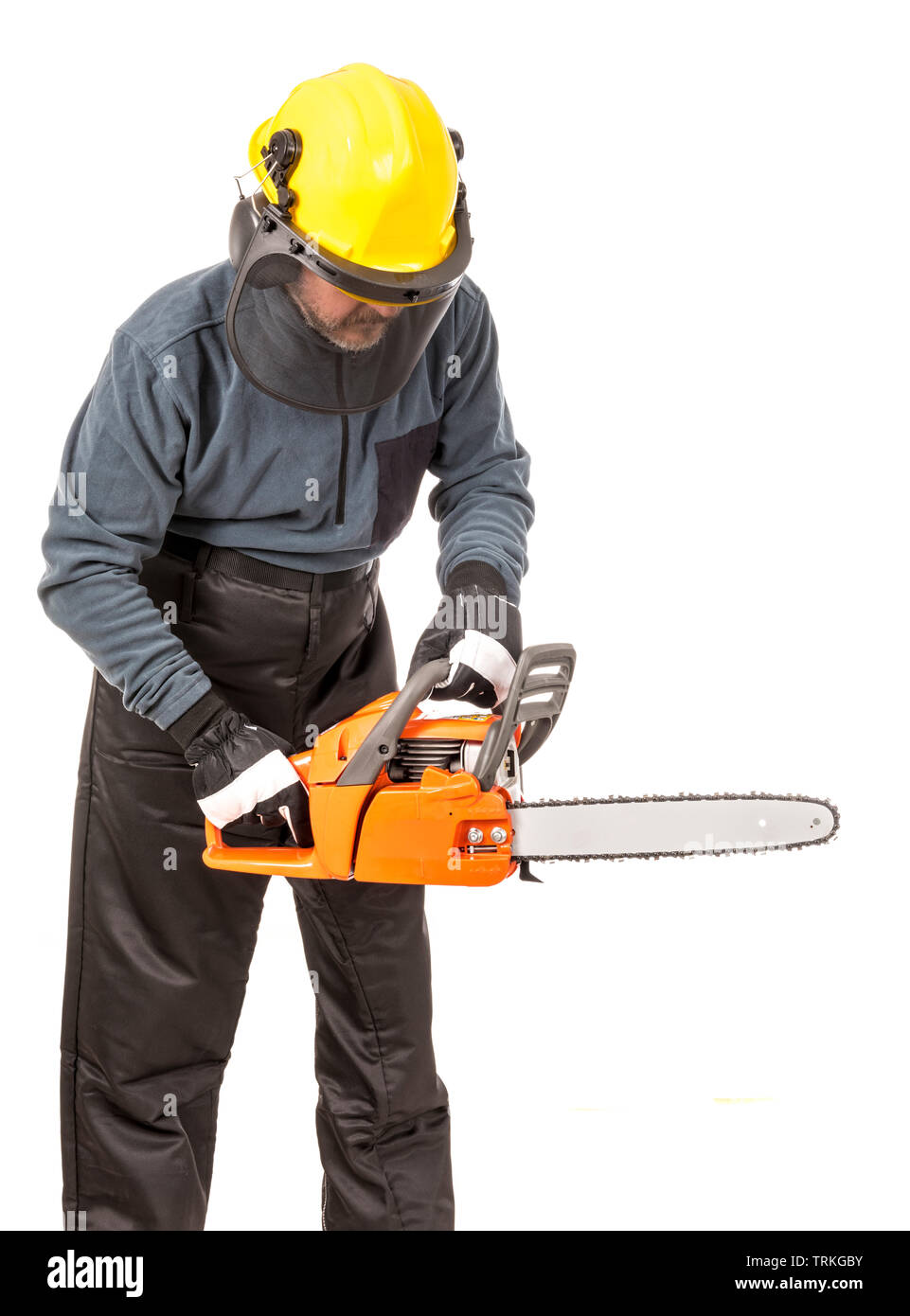
Image Source: c8.alamy.com
Grasping the Fundamentals: Your Chainsaw Grip
The foundation of safe chainsaw operation lies in mastering the chainsaw grip. A secure and correct grip is paramount to maintaining control, preventing accidents, and ensuring efficient cutting. Your grip isn’t just about holding on; it’s an active connection between you and the machine, allowing you to guide its power effectively.
The Two-Handed Chainsaw Grip: Your Primary Connection
The two-handed chainsaw grip is the standard and most crucial technique for operating a chainsaw. This grip allows for maximum control and stability, essential for preventing accidents like kickback. Let’s break down this fundamental aspect of chainsaw handling.
- Dominant Hand Placement: Your dominant hand should always be placed on the rear handle, also known as the throttle handle. Wrap your fingers securely around the handle, ensuring your thumb is also firmly on the handle. This placement gives you direct control over the throttle and the saw’s engine speed.
- Non-Dominant Hand Placement: Your non-dominant hand should be placed on the front handle, also called the support handle. Again, a firm grip is essential, with your fingers wrapped around the handle and your thumb on the top or underside of the handle, depending on your comfort and the specific saw design. This hand is crucial for guiding the saw and absorbing some of the vibration.
- Thumb Position: A key element of a chainsaw safety grip is the position of your thumbs. Both thumbs should be wrapped firmly around their respective handles. This prevents your hands from slipping off the saw, especially during jarring movements or if the saw kicks back. Never let your thumbs float freely.
Hand Placement and Safety: Why It Matters
The specific way you position your hands significantly impacts your ability to control the chainsaw. A loose grip or incorrect hand placement can lead to loss of control, increasing the risk of injury.
- Grip Strength: Maintain a firm but not overly tense grip. A death grip can lead to fatigue and reduce your dexterity. Aim for a comfortable, secure hold that allows you to react quickly.
- Wrist Position: Keep your wrists relatively straight. Bending your wrists excessively can lead to strain and reduce your ability to react to sudden movements.
- Elbow Position: Keep your elbows slightly bent. This allows you to use your body weight and muscles to absorb shock and maintain control. Straight arms can transmit more vibration and make it harder to manage the saw’s power.
Optimizing Chainsaw Posture: Standing Tall for Safety
Beyond just your grip, your overall chainsaw posture plays a vital role in safe and effective operation. Proper posture allows you to maintain balance, distribute weight, and react appropriately to the chainsaw’s movements. Operating a chainsaw correctly involves being physically aligned with the tool.
The Balanced Stance
A stable stance is your first line of defense against losing control. Think of yourself as an extension of the chainsaw, needing to be grounded and ready for action.
- Foot Placement: Stand with your feet shoulder-width apart. This provides a wide base of support, enhancing stability. Position your feet so that your dominant foot is slightly forward, giving you a natural feel for movement and balance.
- Weight Distribution: Distribute your weight evenly between both feet. Avoid leaning too far forward or backward. You should feel grounded and balanced, ready to shift your weight as needed during cutting.
- Body Alignment: Keep your body aligned with the saw. If you are cutting a log, position your body so you are not twisting your torso. This reduces strain and improves your ability to control the saw.
Body Positioning for Different Cuts
Your chainsaw posture may need slight adjustments depending on the type of cut you are making. Chainsaw cutting angles are crucial for both efficiency and safety.
- Cutting Low: When cutting low to the ground, bend your knees, not your waist. This keeps your center of gravity low and your back straight, preventing injury.
- Cutting at Height: When cutting branches or logs at a height, ensure you have a stable platform or are securely positioned. Never overreach. If you need to cut something out of your comfortable reach, reposition yourself or consider alternative methods.
- Side Cutting: For most cuts, position yourself to the side of the cutting line, not directly behind the saw. This helps you avoid contact with the bar and chain if something unexpected happens.
Mastering Chainsaw Handling: Beyond the Grip
Chainsaw handling encompasses more than just holding the tool. It involves how you move with the saw, how you initiate cuts, and how you respond to its power. Effective chainsaw handling is a learned skill that improves with practice and adherence to best practices.
Chainsaw Starting Position: Getting Ready to Cut
The way you start a chainsaw is a critical safety step. A proper chainsaw starting position minimizes the risk of accidental engagement or loss of control.
- Ground Starting: This is the safest method. Place the chainsaw on a flat, firm surface. Engage the chain brake. Place your right foot firmly on the rear handle (or into the designated foot brace if your saw has one) to hold the saw steady. Place your left hand on the front handle. Pull the starter rope with your right hand.
- Between-the-Legs Starting (Cautionary Note): While some experienced users may use this method, it is generally discouraged for beginners due to the increased risk of the saw moving unexpectedly. If you must use it, ensure the chain brake is engaged and the saw is held firmly between your legs with your feet planted wide.
The Art of Carrying a Chainsaw
When not in use, or when moving between cutting sites, proper chainsaw carrying technique is essential to prevent accidental activation and protect yourself and others.
- Engage the Chain Brake: ALWAYS engage the chain brake before carrying the chainsaw. This locks the chain and prevents it from spinning.
- Turn Off the Engine: For longer distances or when storing, always turn off the engine.
- Proper Carry: Carry the chainsaw with the guide bar pointing backward and away from your body. Use the designated handles. If carrying it on your shoulder, ensure the bar is facing away from your head and body.
- Transport: When transporting the chainsaw in a vehicle, use a proper scabbard or case to protect the bar and chain and prevent damage to the vehicle. Secure it to prevent it from shifting.
Chainsaw Cutting Angles: Precision and Safety
The angle at which the guide bar meets the wood can significantly impact the efficiency and safety of your cut. Chainsaw cutting angles are a key component of operating a chainsaw correctly.
- Typical Cutting Angle: Most cuts are made with the guide bar perpendicular to the log or branch. This allows the chain to engage the wood effectively and minimizes the risk of the saw binding.
- Avoid the Tip: Never cut with the tip of the guide bar. The area known as the “kickback zone” is at the tip. Contacting this area with an object can cause the saw to be violently thrown upward and backward. This is a primary cause of chainsaw kickback prevention failure.
- Pushing vs. Pulling: Be aware of whether you are pushing or pulling the saw through the wood. Different saws and cutting situations may favor one over the other, but always maintain control.
Chainsaw Kickback Prevention: Your Most Critical Task
Chainsaw kickback prevention is arguably the most critical aspect of safe chainsaw operation. Kickback is a violent, upward reaction of the chainsaw that can occur when the tip of the guide bar (the kickback zone) snags on an object or is pinched.
What Causes Kickback?
- Contacting the Kickback Zone: As mentioned, hitting an object with the tip of the guide bar is the primary cause.
- Pinching the Bar: If the saw binds in the wood, the bar can be pinched, causing the chain to stop suddenly and the saw to react.
- Improper Grip: A weak or incorrect chainsaw grip can prevent you from controlling the saw’s reaction.
How to Prevent Chainsaw Kickback
- Maintain a Firm Two-Handed Chainsaw Grip: Your grip is your first line of defense. Wrap your thumbs firmly around the handles.
- Keep Your Elbows Bent: This allows you to absorb the shock of kickback.
- Never Cut with the Tip: Always be aware of where the tip of your guide bar is.
- Watch for Obstructions: Before you cut, clear the area of any potential obstructions like nails, rocks, or branches.
- Don’t Overreach: Position yourself so you can cut comfortably without extending your reach.
- Use the Right Saw for the Job: A saw that is too small or too large for the task can increase the risk of kickback.
- Keep the Chain Sharp: A dull chain requires more force, increasing the likelihood of kickback.
- Be Aware of Pinch Points: If you are cutting a log that is under tension, be aware that it could pinch the bar.
Essential Safety Gear: Protecting Yourself
While mastering your chainsaw grip and chainsaw posture are crucial, they are only part of the safety equation. Proper personal protective equipment (PPE) is non-negotiable when operating a chainsaw correctly.
The Chainsaw Safety Gear Checklist
- Safety Helmet: Protects against falling branches and impacts.
- Eye Protection: Safety glasses or a face shield to protect from flying debris.
- Hearing Protection: Earplugs or earmuffs to prevent hearing damage from the loud engine noise.
- Chainsaw Chaps or Protective Trousers: These are made of special materials that will stop a moving chain, preventing serious leg injuries. This is a critical component of your chainsaw safety grip by extension, as it protects your legs which support your stance.
- Steel-Toed Boots: Protect your feet from falling logs and the chainsaw itself.
- Work Gloves: Provide a better grip and protect your hands from blisters and debris.
Maintenance for Safe Operation
A well-maintained chainsaw is a safer chainsaw. Regular maintenance ensures the saw operates efficiently and reduces the risk of malfunctions that could lead to accidents.
Key Maintenance Tasks
- Chain Sharpening: A sharp chain cuts efficiently and reduces the risk of kickback. Learn how to sharpen your chain or have it done professionally.
- Chain Tension: The chain should be snug but still able to be pulled around the bar by hand (with gloves on). Too loose a chain can fly off; too tight a chain can damage the saw.
- Bar Lubrication: Ensure the bar and chain are adequately lubricated. This prevents overheating and premature wear.
- Air Filter: Keep the air filter clean for optimal engine performance.
- Spark Plug: Check and clean the spark plug regularly.
Practicing and Refining Your Skills
Operating a chainsaw correctly is a skill that improves with practice and attention to detail. Never underestimate the importance of starting small and gradually increasing your confidence and experience.
Tips for Practice
- Start with Smaller Jobs: Begin with cutting small branches or logs.
- Practice in a Safe Environment: Choose a clear area away from people, buildings, and obstacles.
- Focus on Technique: Pay close attention to your chainsaw grip, chainsaw posture, and controlled movements.
- Observe Experienced Users: If possible, watch experienced chainsaw operators and learn from their techniques.
- Consider a Chainsaw Safety Course: Many organizations offer training courses that can provide invaluable hands-on instruction and safety tips. This is an excellent way to solidify your chainsaw handling skills.
Frequently Asked Questions (FAQ)
Q1: What is the most common mistake people make when holding a chainsaw?
A1: The most common mistake is not maintaining a firm, proper chainsaw grip, particularly with the thumbs not fully wrapped around the handles. This can lead to loss of control, especially during kickback.
Q2: Can I use a chainsaw with only one hand?
A2: No, it is extremely dangerous and strongly advised against. Always use a proper two-handed chainsaw grip for maximum control and stability. Operating a chainsaw with one hand significantly increases the risk of accidents.
Q3: How often should I check my chainsaw’s chain tension?
A3: You should check your chain tension frequently, especially when the saw is new or if you’ve been cutting for a while. It’s also good practice to check it every time you refuel.
Q4: What is the “kickback zone” on a chainsaw?
A4: The kickback zone is the upper quadrant of the guide bar’s tip. Contacting this area with an object can cause the chainsaw to be violently thrown upwards and backward. Chainsaw kickback prevention focuses heavily on avoiding contact with this zone.
Q5: Is it safe to carry a chainsaw while the engine is running?
A5: No, it is never safe to carry a chainsaw with the engine running. Always engage the chain brake and turn off the engine before moving. Proper chainsaw carrying technique includes ensuring the saw is safely deactivated.
By dedicating yourself to learning and consistently applying these safety principles, you can ensure that your time spent with a chainsaw is productive, efficient, and most importantly, safe. Remember, the power of a chainsaw is immense, and respecting that power through correct chainsaw handling and unwavering attention to safety is paramount.