
Installing a 30 amp circuit breaker yourself is possible for those with a good understanding of electrical work, but it’s crucial to prioritize safety above all else. Can you install a 30 amp circuit breaker without an electrician? Yes, if you have the right knowledge and follow strict safety procedures. However, due to the inherent risks involved, it’s always recommended to consult a qualified electrician if you’re unsure about any step. This guide will walk you through the process, emphasizing safe practices for DIY circuit breaker installation.
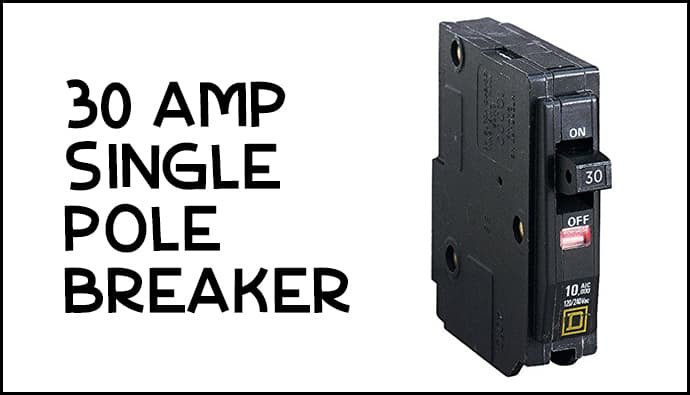
Image Source: cdn.shopify.com
When Do You Need a 30 Amp Circuit Breaker?
A 30 amp circuit breaker is typically used for appliances and circuits that draw a significant amount of power. Common examples include:
- Electric ranges and ovens: These appliances often require a dedicated 30 amp circuit.
- Central air conditioning units: Many residential AC units are powered by a 30 amp dedicated circuit.
- Electric water heaters: Larger electric water heaters can also necessitate a 30 amp breaker.
- Clothes dryers (electric): Some electric dryers might require a 30 amp circuit, though many use a 30 amp, four-prong outlet with a 30 amp breaker.
- Hot tubs and spas: These require substantial power and are often connected to a 30 amp circuit, sometimes requiring specific GFCI breaker installation for safety.
It’s essential to ensure you are using the correct breaker size for the specific appliance or circuit you are powering. Over-sizing a breaker can lead to overheating and fires, while under-sizing can cause nuisance tripping.
Understanding Circuit Breaker Types
Before you begin, it’s important to know about different circuit breaker types. For a 30 amp circuit, you’ll most commonly encounter a 30 amp double pole breaker.
Standard Single-Pole Breaker
- Purpose: Controls one 120-volt circuit.
- Appearance: Typically a single switch lever.
- Amperage: Available in various amperages (e.g., 15, 20, 30 amp).
Double-Pole Breaker
- Purpose: Controls a 240-volt circuit and simultaneously interrupts both hot wires. This is crucial for high-power appliances.
- Appearance: Features two switch levers connected by a handle tie, so both poles trip together.
- Amperage: Also available in various amperages, including 30 amp.
GFCI (Ground Fault Circuit Interrupter) Breakers
- Purpose: Detects imbalances in current flow between the hot and neutral wires, tripping the circuit to prevent electrical shock. They are often required in wet locations like bathrooms, kitchens, garages, and outdoors.
- Installation: A GFCI breaker functions similarly to a standard breaker but includes additional sensing and tripping mechanisms. GFCI breaker installation is a critical safety measure for certain circuits.
AFCI (Arc Fault Circuit Interrupter) Breakers
- Purpose: Detects dangerous arcing conditions that can cause fires. These are often required in bedrooms and living areas.
For a 30 amp circuit powering a 240-volt appliance, you will definitely need a 30 amp double pole breaker. If the appliance or location requires GFCI protection, you would install a 30 amp double-pole GFCI breaker.
Safety First: Essential Precautions for Electrical Work
Working with electricity is inherently dangerous. Safety precautions electrical work should never be overlooked. Before you even think about touching anything in your electrical panel, ensure you understand and follow these vital steps:
1. De-Energize the Circuit: The Most Critical Step
- Turn off the main breaker: This is the primary safety measure. Locate your main electrical panel. The main breaker is usually the largest one, often at the top or side, and it controls all power to your home.
- Verify power is off: Use a non-contact voltage tester or a multimeter to confirm that there is no power at the breaker you will be working on, and ideally, at the main service entrance if you are comfortable doing so. Test your tester on a known live circuit first to ensure it’s working correctly.
- Inform others: Let household members know you are working on the electrical system and to avoid touching the main breaker or any light switches.
2. Wear Appropriate Safety Gear
- Safety glasses: Protect your eyes from dust, debris, or potential sparks.
- Insulated gloves: While not a substitute for de-energizing, they offer an extra layer of protection.
- Rubber-soled shoes: Provide insulation from the ground.
- Non-conductive tools: Use tools with insulated handles.
3. Work in a Dry Environment
- Ensure the area around the electrical panel is dry and well-lit. Never work on electrical systems in damp or wet conditions.
4. Never Work Alone
- Having someone else present can be crucial in case of an accident. They can call for help or assist in an emergency.
5. Familiarize Yourself with Your Electrical Panel
- Know the layout of your panel, the location of the main breaker, and the labels for each circuit.
6. Consult the National Electrical Code (NEC)
- The NEC provides guidelines for safe electrical installations. Familiarize yourself with relevant sections for your project.
Tools and Materials Needed for Installation
Gather all your tools and materials before you begin. This will ensure a smoother and safer installation process.
Essential Tools
- Non-contact voltage tester: For verifying power is off.
- Screwdrivers: Phillips and flathead, with insulated handles.
- Wire strippers/cutters: For preparing wires.
- Pliers: Needle-nose pliers are useful for manipulating wires.
- Torque screwdriver/wrench: Essential for tightening breaker connections to the specified torque, which is crucial for preventing loose connections and overheating.
- Electrical tape: For insulating connections if necessary.
- Work light: To ensure adequate illumination.
Materials
- 30 Amp Double Pole Circuit Breaker: Ensure it is compatible with your electrical panel brand and type.
- Appropriate gauge wire: The wire gauge must match the amperage rating of the breaker and the appliance. For a 30 amp circuit, typically 10 AWG copper wire is required. Refer to the appliance’s manual and electrical codes for specifics.
- Wire connectors (wire nuts): If you need to splice wires.
- Circuit breaker panel cover: If you need to replace or access it.
Step-by-Step Guide: Wiring a 30 Amp Breaker
This guide assumes you are replacing an existing breaker or installing a new one in a panel that has the correct capacity. Wiring a 30 amp breaker involves working with higher voltage and current, so extreme caution is necessary.
Step 1: Identify the Correct Location in the Panel
- Panel Capacity: Ensure your electrical panel has enough available slots for a double-pole breaker. A double-pole breaker occupies two adjacent slots in the panel.
- Load Balancing: If adding a new circuit, consider load balancing. Ideally, you want to distribute the electrical load evenly across the phases of your electrical service. Consult your panel’s labeling or a diagram.
- Labeling: If you are replacing a breaker, ensure you are working on the correct circuit. If installing a new one, plan where it will go and label it appropriately.
Step 2: Turn Off Power and Remove Panel Cover
- Confirm Power Off: Double-check that the main breaker is OFF and no power is present at the intended breaker location using your voltage tester.
- Remove Cover: Carefully unscrew and remove the front cover of your electrical panel. Be mindful of any sharp edges.
Step 3: Remove the Old Breaker (If Replacing)
- Identify Wires: Note which wires are connected to the old breaker. For a double-pole breaker, there will be two “hot” wires connected to the two screw terminals on the breaker.
- Disconnect Wires: Loosen the screw terminals on the old breaker and carefully remove the wires.
- Unhook Breaker: Most breakers clip onto the bus bar in the panel. There’s usually a slot at the bottom you can pry with a screwdriver to release the clip, allowing you to pull the breaker away from the bus bar.
Step 4: Prepare the New 30 Amp Double Pole Breaker
- Check Compatibility: Ensure the new breaker is designed for your panel brand and series. Breakers are not universally interchangeable between brands.
- Inspect: Check the breaker for any visible damage.
Step 5: Connect the Wires to the New Breaker
- Wire Gauge Check: Confirm the wire gauge is appropriate for 30 amps (usually 10 AWG copper). Using undersized wire is a fire hazard.
- Strip Wires: If necessary, strip about 1/2 to 3/4 inch of insulation from the ends of the two hot wires you will connect. Ensure the stripped portion is clean and free of nicks.
- Connect to Terminals:
- The two hot wires from the circuit will connect to the screw terminals on the new double-pole breaker.
- Tighten the screws securely. Overtightening can damage the wire, while undertightening can lead to loose connections, overheating, and arcing. Torque settings are often specified by the breaker manufacturer; use a torque screwdriver if available to meet these specifications.
- No Neutral or Ground: Typically, a standard double-pole breaker for a 240-volt circuit only connects the two hot wires. The ground wire should be connected to the ground bus bar in the panel, and the neutral wire (if present for a 120/240V appliance) to the neutral bus bar. For a pure 240V appliance, there won’t be a neutral wire involved at the breaker.
Step 6: Install the New Breaker in the Panel
- Align with Bus Bar: Align the new breaker’s clip with the corresponding slots on the panel’s bus bar.
- Snap into Place: Push the breaker firmly upwards or downwards (depending on panel design) until it snaps securely onto the bus bar. Ensure it’s seated properly. The two levers should be aligned.
Step 7: Secure the Breaker and Connections
- Check Wire Connections: Gently tug on the wires to ensure they are securely fastened to the breaker terminals.
- Check Breaker Seating: Ensure the breaker is firmly seated on the bus bar.
Step 8: Reinstall the Panel Cover and Restore Power
- Replace Cover: Carefully place the panel cover back on and screw it into place. Ensure no wires are pinched.
- Turn On Main Breaker: Turn the main breaker ON.
- Turn On New Breaker: Flip the new 30 amp breaker to the ON position.
Step 9: Test the Circuit
- Appliance Test: Connect the appliance to the circuit and verify it operates correctly.
- Troubleshooting: If the breaker trips immediately, turn it off, re-check all connections, and ensure the appliance is functioning correctly and not drawing excessive current. If you’re unsure, call an electrician.
Important Considerations for 30 Amp Circuits
- Wire Gauge: As mentioned, 10 AWG copper wire is typically required for a 30 amp circuit. Using smaller gauge wire is a serious fire hazard. Always confirm with the appliance manufacturer’s specifications and local electrical codes.
- Appliance Requirements: Always match the breaker size to the appliance’s requirements. Check the appliance’s nameplate or manual for its amperage draw and voltage.
- Existing Circuits and Breaker Amperage Upgrade: If you are replacing an existing breaker with a higher amperage breaker (e.g., upgrading from a 20 amp to a 30 amp), you MUST ensure that the existing wiring and any connected outlets or fixtures are rated for the higher amperage. Breaker amperage upgrade without corresponding wire capacity upgrades is a significant fire risk.
- Dedicated Circuits: High-amperage appliances like ranges, dryers, and AC units usually require dedicated circuits. This means only that one appliance should be on that circuit.
- GFCI Protection: For circuits serving areas where water might be present (outdoors, garages, some kitchens, bathrooms), a GFCI breaker might be required by code. This is especially important for hot tubs and spas. The process for GFCI breaker installation is similar, but you’ll connect the ground wire to a dedicated terminal on the GFCI breaker, and potentially a neutral wire depending on the breaker’s design.
When to Call a Professional Electrician
While this guide provides information for DIY circuit breaker installation, there are many situations where calling a professional electrician is the safest and wisest choice:
- Unfamiliarity: If you feel uncomfortable or uncertain about any part of the process.
- Panel Issues: If your electrical panel is old, outdated, has loose connections, or shows signs of damage (discoloration, burning smell).
- Existing Wiring Concerns: If you suspect the existing wiring is not suitable for a 30 amp circuit (wrong gauge, old insulation, aluminum wiring).
- Complex Installations: For installations involving new wiring runs, sub-panels, or services requiring permits and inspections.
- Code Compliance: Electricians are knowledgeable about local building codes and ensure your installation is compliant.
- Frequent Tripping: If you are replacing a breaker because the circuit trips frequently, there might be an underlying issue that needs professional diagnosis. Knowing how to reset a tripped breaker is one thing, but understanding why it tripped is crucial.
Frequently Asked Questions (FAQ)
Q1: What is the correct breaker size for my appliance?
A1: Always refer to the appliance’s manufacturer specifications (usually found on a nameplate or in the manual). It will clearly state the required voltage and amperage. Using the correct breaker size is paramount for safety.
Q2: Can I replace a 20 amp breaker with a 30 amp breaker?
A2: Only if the wiring and any connected devices (outlets, fixtures) are rated for 30 amps. If the wire gauge is smaller than 10 AWG copper, or if the existing components are only rated for 20 amps, you cannot make this breaker amperage upgrade without replacing the wiring and components. Doing so is a serious fire hazard.
Q3: Do I need a GFCI breaker for my 30 amp circuit?
A3: This depends on the location and the appliance. For circuits in damp or wet locations, or as required by local code (e.g., for hot tubs), a GFCI breaker is necessary. Always check local electrical codes and appliance requirements.
Q4: How do I know if my wiring is rated for 30 amps?
A4: For 30 amp circuits, 10 AWG copper wire is typically required. You can identify wire gauge by looking at the printing on the wire’s insulation. Aluminum wiring requires a larger gauge for the same amperage. If you are unsure, consult an electrician.
Q5: What happens if I don’t use the right wire gauge for a 30 amp breaker?
A5: Using wire that is too small for the breaker’s amperage rating will cause the wire to overheat. This can melt the insulation, leading to short circuits, electrical fires, and damage to your home. It’s crucial to use the correct breaker size and corresponding wire gauge.
Q6: I flipped the breaker, and it immediately tripped again. What should I do?
A6: If the breaker trips immediately after turning it on, there is likely a short circuit or an overload on the circuit. First, ensure no appliances are plugged in or running on that circuit. If it still trips, turn the breaker off and call a qualified electrician to diagnose the problem. Knowing how to reset a tripped breaker is not enough; you need to understand why it tripped.
Q7: What is a 30 amp double pole breaker?
A7: A 30 amp double pole breaker is a safety device designed to protect a 240-volt circuit. It has two switches that are linked, so when a fault occurs, both “hot” wires of the 240-volt circuit are disconnected simultaneously.
Q8: Is it safe to do my own electrical work?
A8: It can be, provided you have a solid grasp of electrical principles and strictly follow safety precautions electrical work. However, the risks are significant. For anything beyond simple replacements or if you have any doubts, it’s always safer to hire a licensed electrician.
Installing a 30 amp circuit breaker is a task that requires diligence and adherence to safety protocols. By following these steps and prioritizing caution, you can safely manage your electrical projects.