
What is an arc fault circuit breaker? An arc fault circuit breaker (AFCI breaker) is a special type of circuit breaker that detects dangerous electrical arcs – sparks that can cause fires – and shuts off the power before a fire starts. Can I install one myself? Yes, if you have basic electrical knowledge and follow safety precautions, you can install an AFCI breaker yourself. Who is an AFCI breaker for?** AFCI breakers are designed to protect people and property from fires caused by electrical wiring issues, making them essential for most modern homes.
This guide will walk you through the process of installing an AFCI breaker, a crucial step in enhancing your home’s residential electrical safety. By understanding the basics of circuit protection guide and home wiring improvements, you can effectively upgrade your existing system. We’ll cover everything from identifying the need for an AFCI breaker to the final safety checks.
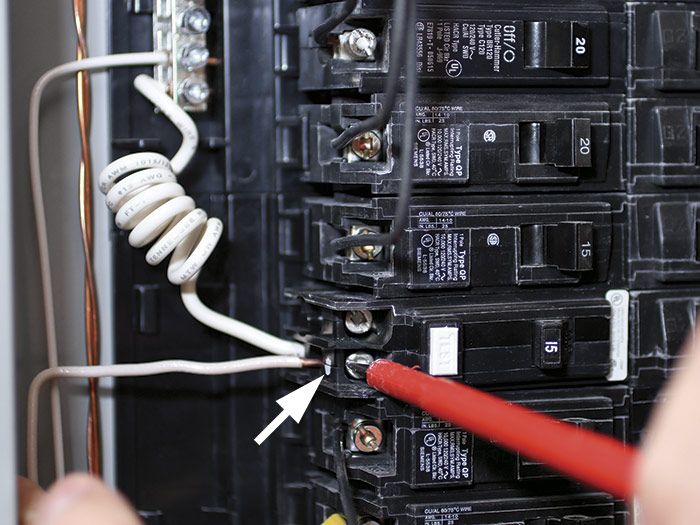
Image Source: images.finehomebuilding.com
Why You Need AFCI Protection
Electrical fires are a significant hazard in homes. They can be caused by damaged wiring, faulty appliances, or overloaded circuits. Traditional circuit breakers are designed to protect against overloads and short circuits, but they don’t always detect the dangerous “arcing” that can lead to fires. This is where AFCI breakers come in.
Deciphering Arc Faults
An arc fault is an unintentional electrical discharge that travels through the air between conductors. These arcs can generate intense heat, enough to ignite nearby combustible materials like insulation, dust, or wood.
Common causes of arc faults include:
- Damaged wires: Pinched, frayed, or nicked wires are common culprits. This can happen during construction, renovations, or even from rodents chewing on wires.
- Loose electrical connections: Over time, connections in outlets, switches, or junction boxes can become loose. This looseness creates resistance, leading to arcing.
- Old or worn-out insulation: As wire insulation degrades, it can expose conductors, increasing the risk of arcing.
- Faulty appliances: Appliances with internal wiring issues can also produce arc faults.
- Extension cords: Damaged or improperly used extension cords are a frequent source of arc faults.
Traditional circuit breakers don’t respond to these low-level, erratic arcs because they don’t draw enough current to trip the breaker. AFCI breakers, however, are designed to detect the specific electronic “signature” of an arc fault.
The Benefits of AFCI Breakers
Installing AFCI breakers offers several key advantages:
- Fire Prevention: Their primary function is to prevent fires caused by electrical arcs.
- Code Compliance: Many building codes now mandate AFCI protection in specific areas of the home, such as bedrooms, living rooms, and hallways. Installing them ensures you meet these code compliance breaker requirements.
- Enhanced Safety: They provide a higher level of protection than standard breakers, contributing to overall residential electrical safety.
- Peace of Mind: Knowing your home is better protected against electrical fire hazards offers significant peace of mind.
When to Consider an AFCI Breaker Replacement or Upgrade
Several situations warrant an AFCI breaker replacement or an electrical panel upgrade to incorporate AFCI protection:
- Renovations or Additions: If you are undertaking any significant renovation or adding new circuits, it’s an excellent opportunity to ensure wiring for arc fault protection is in place.
- Old Homes: Older homes may not have AFCI protection as it wasn’t a requirement when they were built. Upgrading is highly recommended.
- Specific Areas: If your local codes require AFCI protection in certain rooms (e.g., bedrooms, family rooms), ensure these circuits are covered.
- Frequent Electrical Issues: If you’ve experienced flickering lights, tripping breakers, or noticed any signs of worn wiring, it’s a good time to consider upgrading.
- Electrical Panel Upgrade: When undergoing an electrical panel upgrade, it’s the perfect time to install new AFCI breakers to replace older, non-AFCI breakers. This ensures your entire panel is up-to-date with modern safety standards.
Preparing for Installation: Safety First!
Before you begin any work on your electrical panel, safety is paramount. Safety breaker installation means understanding the risks and taking all necessary precautions.
Essential Safety Precautions:
- Turn Off Power: This is the most critical step. Locate your main electrical panel and switch off the main breaker that controls power to your entire house. Double-check that the power is off by using a non-contact voltage tester on outlets and switches in the area you’ll be working.
- Wear Safety Gear: Always wear safety glasses to protect your eyes from debris. Insulated gloves are also a good idea, though not a substitute for turning off the power.
- Use Insulated Tools: Ensure all your tools have insulated handles to protect against accidental contact with live wires.
- Never Work Alone: If possible, have another person present who can assist or call for help if needed.
- Know Your Limits: If you are unsure about any step or feel uncomfortable, do not proceed. Hire a qualified electrician. Breaker box maintenance and upgrades should only be performed by those with adequate knowledge.
Gathering Your Tools and Materials:
You’ll need a few specific items for this project:
- AFCI Circuit Breaker: Ensure you purchase the correct type and amperage for your circuit. Check your existing breaker or the wiring to determine the appropriate rating. AFCI breakers are typically double-width, meaning they take up two slots in your panel.
- Non-Contact Voltage Tester: Essential for confirming that power is off.
- Screwdrivers: Both Phillips head and flathead screwdrivers will be needed.
- Wire Strippers: For carefully removing insulation from wires.
- Pliers: Standard and needle-nose pliers can be useful for manipulating wires.
- Torque Screwdriver (Optional but Recommended): Ensures connections are tightened to the manufacturer’s specifications, which is crucial for preventing future issues.
- AFCI Breaker Installation Manual: Always refer to the specific instructions provided by the breaker manufacturer.
Step-by-Step Guide to Installing an AFCI Circuit Breaker
This guide outlines the general process for replacing an existing circuit breaker with an AFCI breaker. Remember to consult your breaker’s manual for specific instructions.
Step 1: Locate and Access Your Electrical Panel
- Your electrical panel is usually located in a basement, garage, utility room, or closet.
- Open the panel door to access the circuit breakers.
Step 2: Turn Off Power to the Specific Circuit
- Identify the circuit breaker you intend to replace. It will be labeled with the circuit it controls (e.g., “Living Room Lights,” “Kitchen Outlets”).
- Switch this breaker to the “OFF” position.
Step 3: Confirm Power is Off
- Use your non-contact voltage tester to ensure the circuit you’re working on is de-energized. Touch the tester to the wires connected to the breaker and the breaker itself. If the tester lights up or beeps, the power is still on – go back to Step 1 and turn off the main breaker.
Step 4: Remove the Old Circuit Breaker
- Disconnect the Wire: You’ll see a wire (usually black or red) connected to the screw terminal on the side of the breaker. Use a screwdriver to loosen this screw and carefully remove the wire.
- Release the Breaker: Most breakers clip onto a bus bar within the panel. Gently pry the breaker away from the bus bar. Some breakers may have a clip on the top or bottom that needs to be released. Once it’s free from the bus bar, you can usually pull it straight down or out.
Step 5: Prepare the New AFCI Breaker
- Read the Manufacturer’s Instructions: AFCI breakers may have specific wiring requirements.
- Identify the Hot Wire: This is the wire you disconnected from the old breaker.
- Identify the Neutral Wire (if applicable): Some AFCI breakers also require a connection to the neutral wire (often white). There will be a separate terminal for this. Ensure you identify the correct neutral wire from your circuit.
Step 6: Install the New AFCI Breaker
- Connect the Hot Wire: Carefully strip about ½ inch of insulation from the end of the hot wire if it isn’t already prepared. Insert the wire into the screw terminal on the AFCI breaker and tighten the screw securely. Do not overtighten, but ensure the connection is firm. Using a torque screwdriver set to the manufacturer’s recommended setting is ideal for consistent and safe connections.
- Connect the Neutral Wire (if applicable): If your AFCI breaker has a neutral terminal, connect the white neutral wire to it and tighten the screw.
- Mount the Breaker: Align the AFCI breaker with the bus bar in the panel where the old breaker was located. Push the breaker firmly onto the bus bar until it clicks into place. Ensure it is seated correctly. If your AFCI breaker is a “tandem” or “slimline” type (taking up only one slot but providing AFCI protection), follow specific instructions for placement.
Step 7: Reconnect the Panel Cover and Restore Power
- Carefully replace the panel cover, ensuring no wires are pinched.
- Turn the main breaker back on.
- Go to the circuit you worked on and switch the new AFCI breaker to the “ON” position.
Step 8: Test the AFCI Breaker
- Most AFCI breakers have a “Test” button on the front. Press this button. The breaker should trip, shutting off power to the circuit. This confirms the AFCI functionality is working correctly.
- Reset the breaker by pushing it firmly to the “OFF” position and then back to the “ON” position.
- Use your non-contact voltage tester again to confirm power is restored to the circuit. Test a few outlets or lights on that circuit to ensure everything is working as expected.
When to Consider an Electrical Panel Upgrade
If your existing electrical panel is old, overloaded, or doesn’t have enough space for new breakers, an electrical panel upgrade might be necessary. This is a more complex job than simply replacing a breaker and should ideally be performed by a qualified electrician.
An upgrade can provide:
- More Capacity: Allows for the addition of more circuits, including AFCI and GFCI breakers.
- Improved Safety: Modern panels have better safety features and are built to handle higher electrical loads.
- Better Organization: A new panel can be wired more efficiently, improving breaker box maintenance.
- Compliance with Newer Codes: Ensures your entire electrical system meets current code compliance breaker standards.
If you’re planning multiple home wiring improvements or experiencing frequent issues with your current panel, an upgrade is a worthwhile investment.
Troubleshooting Common Issues
- Breaker won’t stay on: If the AFCI breaker trips immediately after you turn it on, there might be a short circuit or a faulty appliance on that circuit. Try unplugging all devices on the circuit and then resetting the breaker. If it still trips, there’s likely a wiring issue that needs professional attention.
- Test button doesn’t work: This could indicate a faulty AFCI breaker. Replace it with a new one.
- No power after installation: Double-check that the main breaker is on and that the breaker was properly seated on the bus bar. Ensure the hot wire is securely connected.
Frequently Asked Questions (FAQ)
Q1: Do I need AFCI breakers for all circuits?
A: Building codes often specify AFCI protection for circuits serving habitable rooms like bedrooms, living rooms, dining rooms, family rooms, and hallways. Kitchens and laundry areas may also require them depending on the code. It’s best to check your local electrical codes.
Q2: Can I install a standard breaker in place of an AFCI breaker?
A: While technically possible, it’s strongly discouraged. AFCI breakers are a safety upgrade, and replacing one with a standard breaker reduces your home’s protection against arc faults. If you are replacing an AFCI, ensure the new breaker provides the same type of protection.
Q3: What is the difference between AFCI and GFCI breakers?
A: AFCI breakers protect against fires caused by arc faults. GFCI (Ground Fault Circuit Interrupter) breakers protect against electric shock by detecting imbalances in current flow that could indicate a person is completing the circuit. Both are important for home safety, and some breakers are dual-function AFCI/GFCI.
Q4: How do I know if I need an AFCI breaker replacement?
A: If you are renovating, if your current breaker is faulty, or if your local codes require it for the area, you should consider an AFCI breaker replacement.
Q5: Are AFCI breakers compatible with all electrical panels?
A: Most AFCI breakers are designed to fit standard electrical panels (like those made by Square D, GE, Cutler-Hammer, etc.). However, it’s crucial to buy breakers that are specifically listed for use in your particular brand and model of electrical panel. Using incompatible breakers can be a safety hazard.
Q6: Can I install an AFCI breaker if my wiring is old?
A: While AFCI breakers are beneficial for older wiring, they are not a substitute for repairing damaged or deteriorated wiring. If your wiring is in poor condition, you should consider having it inspected and potentially replaced by a qualified electrician.
Q7: What does the “test” button on an AFCI breaker do?
A: The “test” button simulates an arc fault. When pressed, it should cause the breaker to trip, shutting off power to the circuit. This allows you to verify that the AFCI functionality is operational. Regular testing (monthly is often recommended) is good practice.
Q8: Do AFCI breakers consume more electricity?
A: AFCI breakers draw a very small amount of power to monitor the circuit, but this is negligible and won’t significantly impact your electricity bill. The safety benefits far outweigh this minimal power consumption.
Conclusion
Installing AFCI breakers is a vital step in enhancing your home’s residential electrical safety and ensuring code compliance breaker standards are met. Whether you’re performing an AFCI breaker replacement or considering a full electrical panel upgrade, taking the time to properly implement wiring for arc fault protection is an investment in the safety of your family and property. Remember to always prioritize safety, use the correct tools, and if you’re ever in doubt, consult a qualified electrician. This circuit protection guide provides the foundational knowledge to empower you in making your home a safer place.