
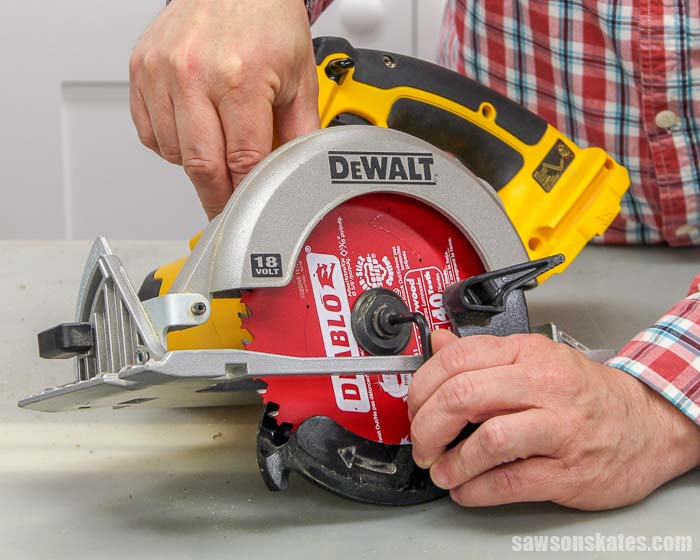
Image Source: sawsonskates.com
Expert Tips: How To Tighten Circular Saw Blade
Can you tighten a circular saw blade with your hands? While you might be able to initially loosen or tighten a very loose blade by hand, it is strongly recommended to use the appropriate tools for safety and proper tightening. What is the best way to tighten a circular saw blade? The best way involves using the correct wrench, engaging the spindle lock, and ensuring the arbor nut is securely fastened without over-tightening.
Keeping your circular saw blade properly tightened is a crucial aspect of power tool maintenance that directly impacts both the quality of your cuts and your safety. A loose blade can wobble, leading to uneven cuts, splintering, and potentially dangerous kickback. Conversely, an over-tightened blade can strain the motor or even damage the saw itself. This comprehensive guide will walk you through the essential steps and considerations for ensuring your circular saw blade is always perfectly snug and ready for action.
The Anatomy of a Circular Saw Blade Mount
Before we dive into the tightening process, it’s helpful to familiarize yourself with the key components involved. This knowledge will make the steps clearer and help you avoid common pitfalls.
- Blade: The cutting disc itself, available in various tooth counts and configurations for different materials.
- Arbor: The shaft that the blade mounts onto, extending from the motor.
- Arbor Nut: A threaded fastener that holds the blade securely against the saw’s flanges. This is what you’ll be tightening.
- Flanges: These are the washer-like components that sandwich the blade. Usually, one flange is fixed to the arbor, and the other is secured by the arbor nut.
- Spindle Lock: A button or mechanism, usually found on the saw’s body, that locks the arbor in place, preventing it from turning while you loosen or tighten the arbor nut. This is a vital hand tool safety feature.
Why Blade Tightness Matters: Beyond a Simple Screw
The security of your cutting disc is paramount for several reasons:
- Cut Accuracy: A wobbling blade, due to being loose, will produce rough, inaccurate cuts. This can ruin your project and waste material.
- Kickback Prevention: Kickback occurs when the blade binds in the material and the saw is violently thrown back towards the operator. A loose blade is more susceptible to this dangerous phenomenon.
- Blade and Saw Longevity: Proper tension ensures the blade runs true, reducing stress on the arbor and motor bearings. This translates to a longer lifespan for your saw.
- Noise Reduction: A properly secured blade will vibrate less, leading to quieter operation.
Essential Tools for the Job
You won’t need a vast array of specialized equipment, but having the right tools is key.
- Circular Saw Wrench: Most circular saws come with a specific wrench designed to fit the arbor nut. This is usually a hex wrench or a pin-type wrench. It’s important to use the correct wrench size. If you’ve lost the original, check your saw’s manual for specifications or visit a hardware store.
- Gloves: For better grip and to protect your hands from sharp edges and grease.
- Clean Cloth: To wipe away any dust or debris from the arbor and blade.
- Safety Glasses: Absolutely non-negotiable when working with any power tool, especially when dealing with saw assembly components.
Step-by-Step Guide: Tightening Your Circular Saw Blade
Here’s a detailed breakdown of how to properly tighten your circular saw blade:
Step 1: Ensure Safety First
- Disconnect Power: The most critical step. Always unplug the saw from the power source or remove the battery pack before attempting any blade adjustments. Double-check that it’s completely disconnected.
- Stable Surface: Place the saw on a flat, stable surface.
- Wear Safety Gear: Put on your safety glasses and gloves.
Step 2: Locate the Spindle Lock
- Examine the body of your circular saw. You’ll typically find a button or lever near the blade housing. This is the spindle lock.
- Press and hold the spindle lock firmly. This mechanism engages a pin that prevents the arbor shaft from rotating. You’ll usually hear or feel a click when it’s engaged. Keep it depressed throughout the tightening process.
Step 3: Access the Arbor Nut
- The arbor nut is located in the center of the blade. It might be covered by a blade guard that you can retract or temporarily hold open.
- Some saws have a blade guard that can be easily swung out of the way. Others might require you to gently push the guard up with your hand or a piece of scrap wood.
Step 4: Loosening the Old Blade (if applicable)
If you are changing blade or the blade is already loose, you’ll need to loosen the arbor nut.
- With the spindle lock engaged, place the appropriate wrench onto the arbor nut.
- Turn the wrench counter-clockwise. Remember the adage: “Lefty loosey, righty tighty.”
- You may need to apply firm pressure. If the nut is particularly stubborn, a gentle tap on the wrench handle with a rubber mallet can sometimes help, but be cautious not to damage the saw.
Step 5: Removing the Old Blade (if applicable)
Once the arbor nut is loosened:
- Continue to unscrew the arbor nut completely.
- Carefully slide the nut off the arbor.
- Grasp the blade by its edges (wear gloves!) and gently pull it away from the saw. Be mindful of any sharp teeth.
- Check the flanges for any debris or burrs. Clean them with a cloth. Inspect the arbor itself for any damage.
Step 6: Mounting the New Blade (or Re-mounting the Old)
- Ensure the new blade is the correct type and size for your saw. The blade should have markings indicating the direction of rotation – this arrow should point in the direction the saw blade spins when turned on.
- Slide the blade onto the arbor, aligning the center hole with the shaft. Make sure the correct side of the blade faces the saw body.
- Place the arbor nut back onto the arbor and start screwing it on by hand, clockwise.
Step 7: Tightening the Arbor Nut
This is the core of the process.
- With the new blade in place, re-engage the spindle lock.
- Place the wrench onto the arbor nut.
- Turn the wrench clockwise to tighten. Apply firm pressure.
- How tight should a circular saw blade be? You want it snug and secure, but do not over-tighten. Over-tightening can strip the threads or damage the arbor. A good rule of thumb is to tighten it until you feel firm resistance, and then give it a slight extra turn. Many professionals recommend tightening it until the spindle lock can no longer hold the arbor against the force of tightening.
- Once you believe it’s snug, remove the wrench. Try to manually rotate the blade. It should not wobble. The spindle lock should have held the arbor firm enough for you to apply sufficient torque.
Step 8: Final Checks
- Retract the blade guard to its normal position.
- Visually inspect the blade and ensure it’s seated correctly against the flanges.
- Confirm the spindle lock is no longer engaged (release the button).
- If you removed a battery, reinsert it. If it’s a corded saw, plug it back in, but keep the power switch off.
- Give the blade a gentle spin with your hand to ensure it moves freely without binding.
Common Mistakes to Avoid
- Not Disconnecting Power: This is the most dangerous mistake and can lead to severe injury.
- Using the Wrong Wrench: This can strip the arbor nut or the wrench itself.
- Over-tightening: As mentioned, this can damage the saw.
- Not Engaging the Spindle Lock: Makes tightening difficult and ineffective.
- Forgetting Blade Direction: Mounting the blade backward will result in poor cuts and can damage the material.
- Ignoring Blade Wobble: A loose or damaged blade should never be used.
Troubleshooting Common Issues
| Problem | Possible Cause | Solution |
|---|---|---|
| Arbor Nut Won’t Tighten | Spindle lock not engaged properly | Ensure the spindle lock button is fully depressed and locked. Try a different angle of pressure. |
| Stripped threads on arbor nut or arbor | Inspect threads. If damaged, the arbor nut or arbor may need replacement. Consult your saw’s manual or a service center. | |
| Blade Wobbles After Tightening | Blade not seated properly on flanges | Remove and re-seat the blade, ensuring it sits flush against both flanges. |
| Damaged blade or flanges | Inspect the blade and flanges for any bends, cracks, or debris. Clean or replace as necessary. | |
| Arbor nut not tight enough | Re-engage spindle lock and tighten the arbor nut further, ensuring not to over-tighten. | |
| Wrench Won’t Fit Nut | Incorrect wrench size being used | Verify the correct wrench size from your saw’s manual and use the designated wrench. |
| Difficulty Loosening Blade | Arbor nut is extremely tight or corroded | Ensure spindle lock is fully engaged. Try a penetrating oil (allow time to work) and gentle tapping. If still stuck, seek professional help. |
Advanced Considerations for Blade Maintenance
Beyond just tightening, proper power tool maintenance extends to the blade itself.
- Blade Cleaning: Sawdust and resin can build up on blades, affecting cut quality and increasing friction. Clean blades regularly with specialized blade cleaners or denatured alcohol.
- Blade Inspection: Before changing blade or re-installing a blade, inspect it for dull teeth, chips, or cracks. A damaged blade compromises both cut quality and safety.
- Blade Storage: Store blades properly to prevent damage to the teeth. Blade cases or racks are ideal.
Frequently Asked Questions (FAQ)
Q1: How often should I check my circular saw blade tightness?
It’s a good practice to check the tightness of your circular saw blade before each use, especially if you’ve recently changed it or have been performing demanding cuts. Regular inspection is part of good power tool maintenance.
Q2: What if my spindle lock button gets stuck?
If your spindle lock button is difficult to engage or won’t release, there might be debris or a mechanical issue. Try cleaning around the button. If it persists, the saw may need professional servicing. Do not force it.
Q3: Can I use a different wrench if the original is lost?
While it might seem convenient, using the wrong wrench size can damage the arbor nut. Always try to find the original wrench or a replacement specifically designed for your saw model. Check your owner’s manual for specifications.
Q4: Is it normal for the blade to spin freely after tightening?
Once tightened, the blade should spin with the arbor shaft. It should not wobble, and you shouldn’t be able to easily rotate it independently of the arbor by hand.
Q5: What are the signs of a loose circular saw blade?
Signs include excessive vibration during operation, noisy cutting, uneven or rough cuts, and a wobbling appearance of the blade when the saw is running (this last sign is a critical safety warning).
By following these detailed steps and tips, you can confidently ensure your circular saw blade is always securely tightened, leading to safer operation and superior cutting results. Remember, proper hand tool safety and power tool maintenance are key to a long-lasting and reliable tool.