
Can you tune a chainsaw carburetor? Yes, you can tune a chainsaw carburetor, and it’s a vital skill for any chainsaw owner looking to keep their equipment running smoothly and powerfully. This in-depth guide will walk you through the process of chainsaw carburetor adjustment, helping you achieve optimal performance and resolve common issues like chainsaw sputtering.
A well-tuned carburetor is the heart of a healthy chainsaw engine. It precisely mixes fuel and air, ensuring efficient combustion. When your chainsaw isn’t running right, chances are the carburetor needs attention. This chainsaw carburetor tuning guide will demystify the process, making it accessible even for those new to chainsaw maintenance. We’ll cover everything from identifying the symptoms of a poorly tuned carburetor to the step-by-step adjustments needed to get your saw purring like new.
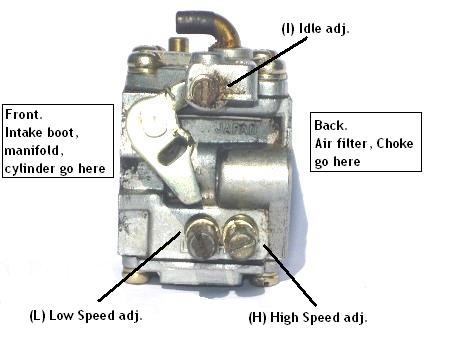
Image Source: cdn.shopify.com
The Role of the Chainsaw Carburetor
The carburetor’s main job is to blend the right amount of fuel with the incoming air before it enters the engine’s combustion chamber. Think of it as the engine’s lungs and fuel mixer. It has several crucial components that work together:
- Venturi: A narrowed section that speeds up airflow, creating a vacuum.
- Fuel Jet: This tiny opening controls the flow of fuel into the Venturi.
- Throttle Valve: Controlled by the throttle trigger, it regulates the amount of air entering the engine.
- Mixture Screws: These are your primary tools for fine-tuning the fuel-air mixture. We’ll focus heavily on chainsaw mixture screws later.
- Idle Speed Screw: This screw sets the engine’s idle speed, ensuring it runs without stalling. This is key for setting chainsaw idle speed.
When the carburetor isn’t working correctly, you might experience issues such as chainsaw sputtering, loss of power, or difficulty starting. These are often signs of an incorrect fuel-air mixture, potentially a chainsaw lean condition (too much air, not enough fuel) or a chainsaw rich condition (too much fuel, not enough air).
Why Tune Your Chainsaw Carburetor?
Regular chainsaw carburetor adjustment offers numerous benefits:
- Improved Performance: A tuned carburetor ensures your chainsaw has the power it needs for demanding tasks.
- Easier Starting: Proper tuning makes starting your chainsaw significantly less of a struggle.
- Smoother Operation: Eliminate rough idling and chainsaw sputtering for a more pleasant and efficient experience.
- Fuel Efficiency: A well-adjusted carburetor uses fuel more effectively, saving you money.
- Extended Engine Life: Prevent damage caused by incorrect fuel mixtures, prolonging the life of your engine.
When to Tune Your Chainsaw Carburetor
Several indicators suggest it’s time for a carburetor tune-up:
- Difficult Starting: If your chainsaw is hard to start, especially when cold or hot.
- Rough Idling: The engine shakes or stalls when the throttle is released. This relates to the chainsaw idle speed.
- Sputtering or Hesitation: The engine bogs down or makes uneven noises when you accelerate. This is a classic symptom of chainsaw sputtering.
- Loss of Power: The chainsaw doesn’t cut as effectively as it used to.
- Excessive Smoke: Black smoke from the exhaust can indicate a chainsaw rich condition.
- Engine Overheating: A chainsaw lean condition can cause the engine to run too hot.
- Fuel Leaks: While not directly a tuning issue, it often indicates a problem that might require carburetor disassembly and cleaning. A chainsaw carburetor cleaning might be the first step.
Preparing for Carburetor Adjustment
Before you start turning screws, gather what you’ll need and take some safety precautions.
Essential Tools
- Flathead Screwdriver: Most common for adjusting chainsaw mixture screws and idle speed. Ensure it fits snugly to avoid damaging the screw heads.
- Tachometer (Optional but Recommended): A digital tachometer is invaluable for accurately setting the chainsaw idle speed and high-speed settings.
- Owner’s Manual: Your chainsaw’s manual is the best resource for specific settings and procedures for your model.
- Compressed Air: Useful for cleaning dust and debris from around the carburetor.
- Carburetor Cleaner (Optional): For more thorough cleaning if needed.
- Clean Rags: For wiping up spills and keeping the area clean.
Safety First!
- Cool Engine: Always work on a cool engine to avoid burns.
- Ventilation: Work in a well-ventilated area, away from open flames or sparks.
- Disconnect Spark Plug: Disconnect the spark plug wire before doing any work on the carburetor to prevent accidental starting.
- Gloves and Eye Protection: Wear appropriate safety gear.
Locating the Carburetor and Adjustment Screws
The carburetor is usually a metal or plastic component located between the air filter and the engine’s intake manifold. It’s often a distinct, somewhat cylindrical part.
Look for the adjustment screws on the side or bottom of the carburetor. Most modern chainsaws have two primary adjustment screws:
- Low Idle Speed Screw (L): This screw, often marked “L,” primarily affects the fuel mixture at idle and low RPMs. It influences the chainsaw low idle performance.
- High Idle Speed Screw (H): Marked “H,” this screw controls the fuel mixture at higher RPMs and under load. It affects chainsaw high idle and overall power.
Some older or simpler carburetors might only have one mixture screw, or the adjustments might be internal. Always consult your owner’s manual.
The Carburetor Adjustment Process: Step-by-Step
This chainsaw carburetor tuning guide breaks down the process into manageable steps.
Step 1: Initial Carburetor Cleaning (Optional but Recommended)
Before adjusting, a clean carburetor is essential.
- Remove the Air Filter: Carefully remove the air filter cover and the air filter itself.
- Inspect and Clean: Blow any loose debris away from the carburetor intake with compressed air. If the carburetor itself looks dirty or gummed up, you might consider a quick external cleaning with a rag. For a more thorough chainsaw carburetor cleaning, you might need to disassemble it, but for basic tuning, external cleaning is usually sufficient.
Step 2: Setting the Baseline – The “Seat and Return” Method
This is a crucial starting point for most chainsaw carburetor adjustment.
- Locate Screws: Identify your “L” and “H” mixture screws.
- Gently Seat Screws: With a flathead screwdriver, slowly turn the “L” screw clockwise until you feel it gently seat against its stop. Do not overtighten, as this can damage the internal components.
- Back Out Screws:
- For the “L” screw, turn it counter-clockwise 1 to 1.5 turns.
- For the “H” screw, turn it counter-clockwise 1 to 1.5 turns.
- (Note: These are general starting points. Your owner’s manual may provide specific “turns out” recommendations for your model.)
Step 3: Adjusting the Low Idle Speed (L Screw)
This step focuses on establishing a stable chainsaw idle speed.
- Reconnect Spark Plug: Reconnect the spark plug wire.
- Start the Engine: Start the chainsaw and let it idle.
- Listen and Observe: Pay attention to how the engine idles.
- If the engine stalls: The mixture is likely too lean.
- If the engine runs rough or “hunts” (RPMs fluctuate): The mixture may be too rich or too lean.
- If you hear a “four-stroking” sound (engine bogs down slightly then picks up): The mixture is likely too rich.
- Adjust the “L” Screw:
- For a lean condition (stalling): Slowly turn the “L” screw counter-clockwise (richer mixture) in ¼ turn increments. Wait a few seconds between adjustments for the engine speed to stabilize.
- For a rich condition (four-stroking): Slowly turn the “L” screw clockwise (leaner mixture) in ¼ turn increments.
- Find the Sweet Spot: Continue making small adjustments until the engine idles smoothly and consistently without stalling. The ideal chainsaw low idle should be stable and responsive when you gently blip the throttle.
Step 4: Adjusting the High Idle Speed (H Screw)
This adjustment optimizes performance at higher engine speeds.
- Rev the Engine: While the engine is idling smoothly, slowly squeeze the throttle to bring the engine to a higher RPM. You might need to briefly disconnect the spark plug and reconnect it to get the engine revving if it’s not responding well.
- Listen for Performance:
- If the engine hesitates or bogs down when you rev it: The mixture is likely too lean.
- If the engine “lags” or sounds like it’s struggling at high RPMs, or you hear a “four-stroking” sound: The mixture is likely too rich.
- If the engine reaches a high, steady RPM: This is generally good.
- Adjust the “H” Screw:
- For a lean condition (hesitation): Slowly turn the “H” screw counter-clockwise (richer mixture) in ¼ turn increments.
- For a rich condition (lugging): Slowly turn the “H” screw clockwise (leaner mixture) in ¼ turn increments.
- Test Acceleration: The goal is to achieve crisp acceleration without hesitation or bogging. The engine should smoothly transition from idle to full throttle.
Step 5: Setting the Idle Speed Screw (Throttle Stop Screw)
This screw directly controls the engine’s chainsaw idle speed. This is not a mixture screw, but a mechanical stop for the throttle linkage.
- Locate the Screw: This screw is usually larger and directly adjusts how far the throttle can close. It might be marked with a “T” or simply be a visible screw that contacts the throttle linkage.
- Adjust for Stability:
- If the engine stalls when you release the throttle: The idle speed is too low. Turn the idle speed screw counter-clockwise slightly to increase the idle RPM.
- If the engine revs too high or the clutch engages at idle: The idle speed is too high. Turn the idle speed screw clockwise slightly to decrease the idle RPM.
- Target RPM: Consult your owner’s manual for the recommended chainsaw idle speed (often around 2,500-3,000 RPM). If you have a tachometer, use it here for precision. The chainsaw should idle smoothly without any tendency to stall or move forward.
Step 6: Fine-Tuning and Testing
After the initial adjustments, perform a comprehensive test run.
- Test Under Load: Cut some wood. Does the saw have good power? Does it hesitate or bog down under load?
- Check Acceleration: Repeatedly rev the engine from idle to full throttle. Does it accelerate smoothly?
- Observe Idling: Let the saw idle for a minute after cutting. Does it remain stable?
- Re-adjust if Necessary: If you encounter any issues during testing, return to the relevant adjustment step and make minor corrections. For instance, if you notice chainsaw sputtering during cutting, the “H” screw might need a slight adjustment. If it stalls after cutting, the chainsaw low idle may need tweaking.
Troubleshooting Common Carburetor Issues
Even with careful chainsaw carburetor tuning, you might encounter persistent problems.
Chainsaw Sputtering or Hesitation
- Cause: Often a chainsaw lean condition or a clogged fuel filter.
- Fix:
- Slightly richen the “L” or “H” mixture screws (turn counter-clockwise) in small increments.
- Check and clean or replace the fuel filter.
- Inspect the fuel lines for kinks or blockages.
- Ensure you are using fresh, properly mixed fuel.
Chainsaw Rich Condition (Drowning Out, Black Smoke)
- Cause: Too much fuel, not enough air.
- Fix:
- Lean out the mixture screws (turn clockwise) in small increments.
- Check the air filter for dirt or damage, which can restrict airflow.
- Ensure the choke is fully disengaged after starting.
Chainsaw Lean Condition (Overheating, Loss of Power)
- Cause: Too much air, not enough fuel. This can damage your engine if not corrected.
- Fix:
- Richen the mixture screws (turn counter-clockwise) in small increments.
- Inspect the carburetor gasket and intake manifold for air leaks.
- Ensure the primer bulb is functioning correctly (if equipped).
- Check for a clogged fuel filter or fuel line.
High Chainsaw Idle Speed
- Cause: Idle speed screw set too high, or a chainsaw lean condition causing the engine to rev up on its own.
- Fix:
- Adjust the idle speed screw clockwise to lower the idle RPM.
- If the idle is unstable and high, re-evaluate the “L” mixture screw setting.
Low Chainsaw Idle Speed (Stalling)
- Cause: Idle speed screw set too low, or a chainsaw rich condition at idle.
- Fix:
- Adjust the idle speed screw counter-clockwise to raise the idle RPM.
- Re-evaluate the “L” mixture screw setting if the engine continues to stall.
Advanced Tuning and Carburetor Cleaning
If basic adjustments don’t resolve your chainsaw’s issues, a more thorough chainsaw carburetor cleaning might be necessary. This involves disassembling the carburetor, cleaning its internal passages with a specialized cleaner, and potentially replacing worn parts like diaphragms or gaskets.
Table 1: Common Carburetor Symptoms and Likely Adjustments
| Symptom | Likely Cause | Primary Adjustment Focus | Recommended Action |
|---|---|---|---|
| Chainsaw sputtering during acceleration | Chainsaw lean condition at higher RPMs | “H” Screw | Turn “H” screw counter-clockwise (richer) |
| Engine stalls at idle | Chainsaw low idle too slow or rich condition | Idle Speed Screw, “L” Screw | Increase idle speed; slightly lean “L” screw (clockwise) |
| Four-stroking at high RPM | Chainsaw rich condition at higher RPMs | “H” Screw | Turn “H” screw clockwise (leaner) |
| Hesitation or bogging on acceleration | Chainsaw lean condition | “H” Screw | Turn “H” screw counter-clockwise (richer) |
| Black smoke from exhaust | Chainsaw rich condition | “L” and/or “H” Screw | Lean mixture screws (clockwise) |
| Overheating or engine seizure | Severe chainsaw lean condition | “L” and/or “H” Screw | Immediately richen mixture screws (counter-clockwise) |
| Rough chainsaw idle speed | Improper “L” screw setting | “L” Screw | Adjust “L” screw for smooth idle |
| Clutch engages at idle | Idle speed too high | Idle Speed Screw | Turn idle speed screw clockwise (lower idle) |
Chainsaw Carburetor Cleaning Steps (Brief Overview)
- Disconnect Spark Plug: Always!
- Remove Air Filter & Carburetor Cover.
- Carefully Remove Carburetor: Note the order and orientation of linkages and fuel lines.
- Disassemble: Remove adjustment screws, idle speed screw, float bowl (if applicable), and diaphragms/gaskets. Keep parts organized.
- Clean Components: Use carburetor cleaner to spray through all passages and orifices. Use compressed air to dry and clear them. A thin wire or specialized carb cleaning tool can clear stubborn blockages.
- Inspect: Look for damaged diaphragms, gaskets, or worn parts. Replace as needed.
- Reassemble: Carefully put the carburetor back together, ensuring diaphragms are seated correctly.
- Reinstall and Tune: Reinstall the carburetor, air filter, and cover. Then, follow the chainsaw carburetor tuning steps outlined earlier.
Frequently Asked Questions (FAQ)
Q1: How often should I tune my chainsaw carburetor?
A1: It’s good practice to check and tune your chainsaw carburetor at least once a year, or whenever you notice performance issues like chainsaw sputtering, difficulty starting, or loss of power. If you use your chainsaw frequently, you might need more frequent checks.
Q2: Can I use regular gasoline in my chainsaw?
A2: No. Chainsaws require a specific fuel mix of unleaded gasoline and 2-stroke engine oil. Always use fresh fuel mixed according to your chainsaw manufacturer’s recommendations. Stale fuel is a common cause of starting problems and poor performance, which can mimic carburetor issues.
Q3: My chainsaw is running fine, do I still need to tune the carburetor?
A3: While not strictly necessary if it’s running perfectly, performing a basic chainsaw carburetor adjustment annually can help maintain optimal performance and catch minor issues before they become major problems. It’s like an oil change for your car – preventative maintenance.
Q4: What happens if I set the chainsaw mixture screws too lean?
A4: Setting the mixture too lean (too much air, not enough fuel) can cause the engine to overheat, run rough, and potentially seize (engine failure). This is a critical chainsaw lean condition to avoid.
Q5: What happens if I set the chainsaw mixture screws too rich?
A5: Setting the mixture too rich (too much fuel, not enough air) will cause the engine to run poorly, lack power, emit black smoke, and foul the spark plug. You might also notice a “four-stroking” sound. This is a chainsaw rich condition.
Q6: Can I adjust the carburetor without a tachometer?
A6: Yes, you can perform chainsaw carburetor tuning by ear and feel. However, a tachometer provides a much more precise way to set the chainsaw idle speed and high-speed settings, ensuring optimal performance and preventing potential engine damage.
Q7: My chainsaw still runs poorly after adjusting the carburetor. What else could it be?
A7: If you’ve followed this chainsaw carburetor tuning guide and still have issues, the problem might lie elsewhere. Check the following:
* Spark Plug: Is it clean, properly gapped, and in good condition?
* Fuel Filter: Is it clogged?
* Air Filter: Is it dirty or damaged?
* Fuel Lines: Are there any kinks or blockages?
* Ignition System: Is the spark strong?
* Compression: Is the engine’s compression adequate?
* Primer Bulb: Is it working correctly?
* Emissions Controls: If your chainsaw has them, ensure they are functioning.
Conclusion
Mastering chainsaw carburetor adjustment is a rewarding skill that directly translates to a more reliable and powerful chainsaw. By following this comprehensive chainsaw carburetor tuning guide, you can confidently tackle issues like chainsaw sputtering and ensure your saw is always ready for the job. Remember to always prioritize safety, consult your owner’s manual for model-specific information, and don’t hesitate to perform a thorough chainsaw carburetor cleaning if basic adjustments aren’t enough. A well-tuned carburetor means a happy engine and efficient work.