
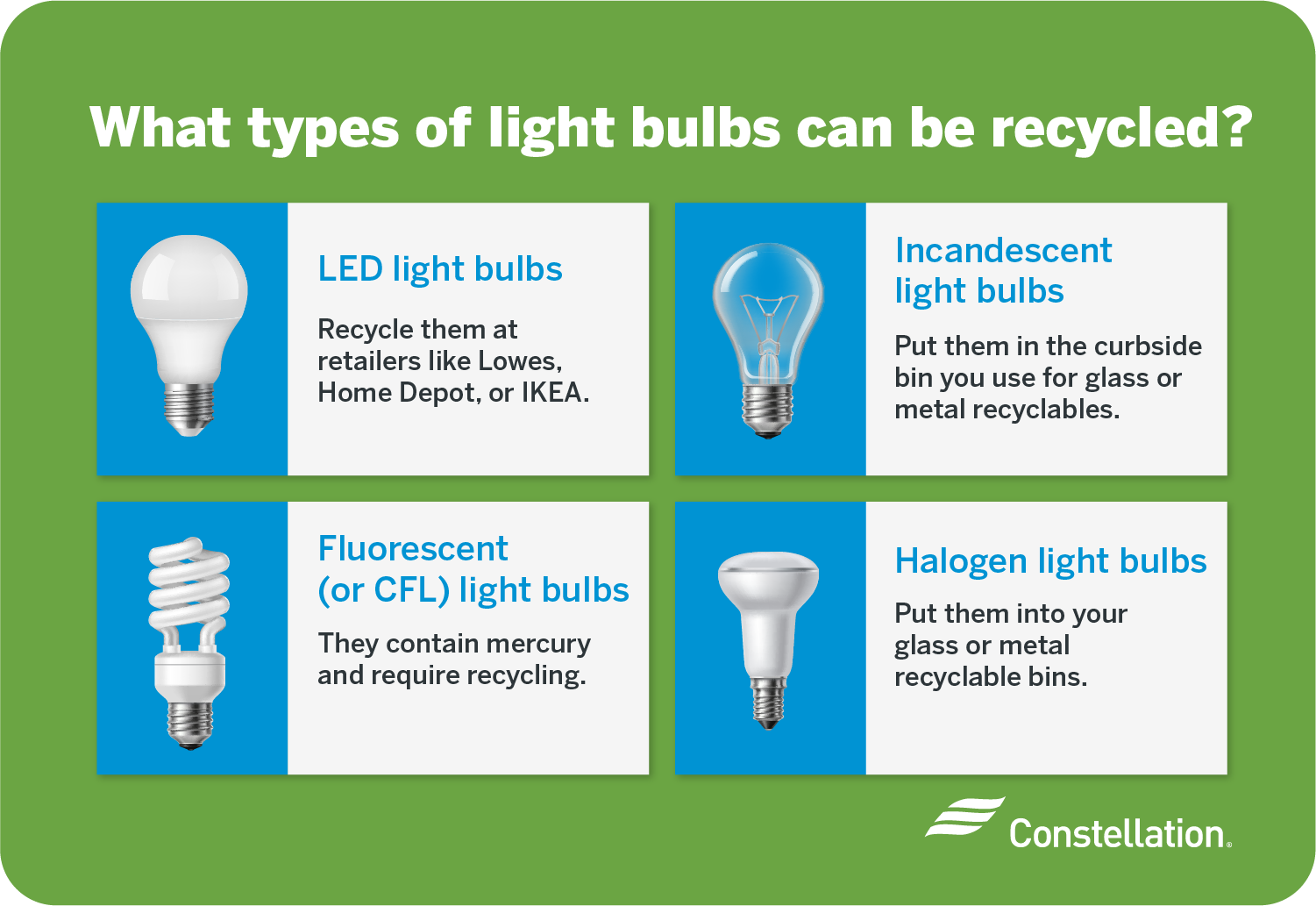
Image Source: blog.constellation.com
How Do I Dispose Of LED Light Bulbs Safely and Responsibly?
Can I just throw LED light bulbs in the trash? No, you should not throw LED light bulbs in your regular household trash or curbside recycling bin. While LEDs are more energy-efficient and last longer than traditional incandescent or CFL bulbs, they still contain small amounts of materials that require special handling for safe and responsible disposal. The primary concern is to prevent potentially harmful substances from entering landfills and to recover valuable components through LED bulb recycling.
Why Proper Disposal Matters for LEDs
LED bulbs have revolutionized lighting, offering significant energy savings and extended lifespans. However, like many modern electronics, they are complex devices containing various components. Understanding how to dispose of them properly is crucial for environmental protection and resource conservation.
The Composition of an LED Bulb
An LED bulb is more than just a light source. It’s a miniature electronic device with several key parts:
- Light-Emitting Diodes (LEDs): These are the semiconductors that produce light. While the amount of hazardous material within them is very small, they contain trace amounts of metals like gallium arsenide and indium.
- Driver Circuitry: This is the electronic component that regulates the power supplied to the LEDs. It contains small amounts of solder (which can include lead, though less common now), capacitors, and other electronic parts.
- Base: The screw-in part of the bulb, usually made of metal.
- Housing/Diffuser: Typically made of plastic or glass, often containing phosphors.
Hazardous Materials in LEDs: A Closer Look
While LEDs are generally considered safer than CFLs (which contain mercury), they are not entirely free of materials that warrant careful handling. The hazardous materials in LEDs are present in very small quantities, but responsible e-waste disposal practices ensure these materials are managed correctly.
- Lead: Found in solder on the driver circuit board. While regulations have reduced the amount of lead in electronics, it can still be present.
- Phosphors: These chemicals are used to convert the blue light from the LED chip into white light. While not acutely toxic, they can contain small amounts of rare earth elements that should be recovered.
- Other Trace Metals: Various metals used in the electronic components can be present in small quantities.
The concern isn’t that a single LED bulb will contaminate a landfill, but rather the cumulative effect of millions of bulbs being disposed of improperly. Furthermore, failing to recycle these bulbs means valuable materials are lost.
Navigating LED Bulb Recycling Options
The good news is that LED bulb recycling is increasingly accessible. Because they fall under the umbrella of e-waste disposal, specialized facilities are equipped to handle them.
Where Can I Recycle LED Bulbs?
Finding electronics recycling near me is the first step. Several avenues exist for recycling your used LED bulbs:
Retail Take-Back Programs
Many electronics retailers and home improvement stores offer take-back programs for various types of bulbs, including LEDs. These programs often partner with specialized recycling companies.
- Home Improvement Stores: Stores like Home Depot and Lowe’s often have collection bins for used bulbs.
- Electronics Retailers: Larger electronics chains may also accept them as part of their broader electronics recycling initiatives.
Action Tip: Always check with the specific store before visiting to confirm they accept LED bulbs and if there are any quantity limits or specific requirements.
Local Waste Management and Municipal Programs
Your local waste management authority is a valuable resource. Many municipalities offer specific drop-off locations or collection events for household hazardous waste and electronics.
- Household Hazardous Waste (HHW) Facilities: These facilities are designed to accept a wide range of potentially harmful items, including electronics and certain types of bulbs.
- Special Collection Events: Keep an eye out for community-wide e-waste collection days.
Action Tip: Visit your city or county’s waste management website or call their office to inquire about local options for LED bulb recycling.
Specialized Recycling Centers
There are dedicated specialized recycling centers that focus on e-waste. These centers are best equipped to handle the dismantling and material recovery process for electronic items like LED bulbs.
- E-waste Processors: Companies that specialize in breaking down electronics for metal and component recovery.
- Manufacturer Take-Back Programs: Some LED bulb manufacturers may offer their own mail-in recycling programs. Check the manufacturer’s website for details.
Action Tip: Search online for “e-waste recycling centers” or “electronics recycling near me” to find facilities in your area.
Curbside Pickup for Electronics
In some areas, curbside pickup for electronics might be available, though this is less common for individual light bulbs. Often, this service is for larger electronics like televisions or computers. However, it’s worth checking with your local waste management provider to see if they offer any provisions for small electronics or bulbs.
What Happens During LED Bulb Recycling?
The process at a specialized recycling facility is designed to safely extract valuable materials and manage any potentially hazardous components.
- Sorting: Bulbs are initially sorted by type.
- Dismantling: Trained technicians carefully dismantle the bulbs. This often involves automated processes for breaking down the glass or plastic housing and separating the internal components.
- Material Recovery:
- Metals: Precious metals and other metals from the circuit boards and bases are recovered.
- Glass and Plastic: These are processed and prepared for reuse or disposal according to landfill regulations.
- LED Components: The actual LED chips and driver circuitry are further processed to recover materials.
- Safe Disposal: Any residual materials that cannot be recycled are disposed of in accordance with strict environmental regulations.
Best Practices for Handling and Storing Used LED Bulbs
Before you can recycle your LED bulbs, you’ll need to handle and store them safely.
Storing Used Bulbs for Recycling
- Keep them Intact: Avoid breaking LED bulbs, as this increases the risk of exposure to the small amounts of trace metals.
- Use Original Packaging (if possible): If you still have the original cardboard packaging, it’s a good way to store and transport them without them bumping into each other.
- Secure Container: If you don’t have original packaging, use a sturdy box or container to prevent breakage. You can also wrap individual bulbs in newspaper or bubble wrap for extra protection.
- Dry Location: Store them in a dry place away from moisture.
When an LED Bulb Breaks
Accidents happen. If an LED bulb breaks:
- Ventilate the Area: Open windows and doors to air out the room.
- Wear Gloves: Put on rubber gloves to avoid direct contact with the bulb fragments and internal components.
- Sweep or Pick Up Carefully: Use a broom and dustpan to gently sweep up larger pieces. For small shards, you can use damp paper towels or sticky tape to pick them up. Avoid using a vacuum cleaner, as this can disperse fine particles into the air.
- Contain the Debris: Place all broken pieces and cleaning materials into a sealable plastic bag or container.
- Dispose of Safely: Treat the sealed bag as household hazardous waste and take it to your nearest HHW drop-off facility. Do not put it in your regular trash or recycling bin.
Common Misconceptions About LED Disposal
It’s important to clarify some common misunderstandings about how to dispose of LED bulbs.
Myth vs. Reality
- Myth: LEDs are completely harmless and can go anywhere.
- Reality: While significantly safer than CFLs, LEDs contain small amounts of metals that require proper e-waste disposal to prevent environmental contamination and to facilitate resource recovery.
- Myth: You can put all light bulbs in the same recycling bin.
- Reality: Most municipal recycling programs are not equipped to handle light bulbs of any kind, including LEDs, incandescent, or halogen bulbs. They require specialized processing.
- Myth: Throwing them in the trash is fine because they don’t contain mercury.
- Reality: The absence of mercury is a significant improvement, but other materials in the electronic components still necessitate responsible disposal.
Understanding Local Regulations and Compliance
Landfill regulations vary by region, but the trend is towards stricter controls on electronic waste. Improper disposal of electronics, including LED bulbs, can lead to fines or penalties.
Why Ignoring Proper Disposal is Problematic
- Environmental Impact: Even small amounts of metals can leach into the soil and water over time if disposed of in landfills.
- Resource Waste: Valuable materials like copper, aluminum, and rare earth elements are lost when bulbs are not recycled.
- Legal Consequences: Many jurisdictions have specific laws regarding e-waste disposal.
Making Responsible Choices for a Greener Future
Choosing to recycle your LED bulbs is a small action with a significant collective impact. By following these guidelines, you contribute to a healthier environment and a more sustainable economy.
The Benefits of Recycling
- Conserves Natural Resources: Recycling reduces the need to mine for new raw materials.
- Reduces Pollution: Proper disposal prevents the release of potentially harmful substances into the environment.
- Saves Energy: Recycling processes often use less energy than manufacturing new products from raw materials.
- Supports a Circular Economy: It helps close the loop by returning valuable materials back into the production cycle.
Frequently Asked Questions (FAQ)
Q1: Can I put LED bulbs in my regular curbside recycling bin?
A1: No, you should not. Most municipal recycling programs are not equipped to process light bulbs. They require specialized handling.
Q2: Do LED bulbs contain mercury?
A2: No, unlike CFLs, LED bulbs do not contain mercury. This makes them safer for handling than CFLs, but they still require responsible disposal due to other components.
Q3: What are the primary hazardous materials in LED bulbs?
A3: While present in very small amounts, LEDs can contain trace amounts of lead (in solder), phosphors, and other metals in their electronic components.
Q4: Where can I find electronics recycling near me for LED bulbs?
A4: You can look for retail take-back programs at electronics or home improvement stores, check with your local waste management for HHW drop-off sites or special collection events, or find dedicated specialized recycling centers for e-waste.
Q5: What should I do if an LED bulb breaks?
A5: If an LED bulb breaks, ventilate the area, wear gloves, carefully sweep or pick up the pieces with damp paper towels or tape, place all debris in a sealed bag, and dispose of it as household hazardous waste at an appropriate facility.
Q6: Are there any programs for curbside pickup for electronics that include LED bulbs?
A6: While less common for individual bulbs, some municipalities offer curbside pickup for electronics. It’s best to check with your local waste management provider to see if they have such services for small electronics or bulbs.
Q7: What happens to LED bulbs when they are recycled?
A7: During LED bulb recycling, bulbs are dismantled, and materials like metals, glass, and plastic are separated for recovery and reuse. Any residual hazardous materials are disposed of safely according to landfill regulations.
By actively participating in responsible disposal and recycling, we can ensure that the benefits of LED lighting continue to contribute to a sustainable future.