
Image Source: cdn.shopify.com
How Do You Adjust The Carburetor On A Poulan Chainsaw: Simple Steps & Tips
Can you adjust a Poulan chainsaw carburetor? Yes, you absolutely can adjust the carburetor on your Poulan chainsaw to ensure it runs smoothly and efficiently. This process, often referred to as Poulan chainsaw carb adjustment, is crucial for maintaining optimal performance, whether you’re tackling small yard work or clearing larger areas. Adjusting your Poulan chainsaw fuel mixture correctly can prevent common issues like stalling, poor acceleration, or an uneven idle speed Poulan chainsaw.
Why Adjust Your Poulan Chainsaw Carburetor?
Chainsaws, like any engine, require precise fuel and air delivery to function correctly. The carburetor is the component responsible for mixing fuel and air in the right proportions. Over time, or due to changes in altitude, temperature, or fuel quality, this mixture can become imbalanced.
Here’s why carburetor tuning Poulan is essential:
- Optimal Power: A correctly adjusted carburetor ensures your saw has the power it needs to cut through wood efficiently.
- Fuel Efficiency: Proper tuning can improve your chainsaw’s fuel economy, saving you money on gas.
- Engine Longevity: An incorrectly mixed fuel-air ratio can lead to engine damage, such as overheating or premature wear.
- Smooth Operation: It eliminates sputtering, stalling, and rough running, making your chainsaw a pleasure to use.
- Reduced Emissions: A well-tuned engine burns fuel more cleanly, producing fewer harmful emissions.
Locating the Carburetor and Adjustment Screws
Before you can begin adjusting, you need to know where to look. The carburetor on most Poulan chainsaws is usually located beneath the air filter cover.
Identifying the Adjustment Screws
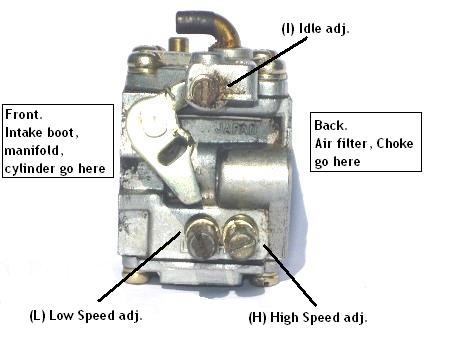
Once you’ve located the carburetor, you’ll need to find the adjustment screws. Most Poulan carburetors have at least two, and sometimes three, adjustment screws. These are typically small, brass-colored screws.
- Idle Speed Screw (Often marked ‘T’ or simply a larger screw): This screw controls the engine’s speed when the throttle is not engaged.
- Mixture Screws (Often marked ‘H’ for high speed and ‘L’ for low speed): These screws control the fuel-air mixture at different engine speeds. Some older or simpler models might only have an idle mixture screw or a single mixture screw.
Important Note: Some modern Poulan carburetors have sealed adjustment screws that are not intended for user adjustment. If you cannot locate distinct ‘H’ and ‘L’ screws, or if they have plastic caps, your carburetor might be non-adjustable or require specialized tools and knowledge. In such cases, it’s best to consult your Poulan chainsaw’s manual or a qualified service center.
Tools You’ll Need for Adjustment
Gathering the right tools before you start will make the process much smoother.
- Flathead Screwdriver: You’ll likely need a small, flathead screwdriver that fits the adjustment screws snugly. A set of precision screwdrivers is ideal.
- Tachometer (Optional but Recommended): A tachometer allows you to accurately measure the engine’s RPMs, which is crucial for precise adjustments, especially for the idle speed.
- Poulan Chainsaw Owner’s Manual: Always refer to your specific model’s manual for any unique instructions or screw types.
- Clean Rags: For wiping away any spilled fuel.
- Protective Eyewear: Safety first!
The Carburetor Adjustment Process: Step-by-Step
Adjusting a chainsaw carburetor requires patience and a systematic approach. We’ll break this down into two main parts: setting the idle and then adjusting the high-speed mixture.
Step 1: Initial Settings (The Baseline)
Before making any adjustments, it’s good practice to set the screws to a baseline. This helps if you get lost during the tuning process.
- Clean the Air Filter: A dirty air filter restricts airflow and can mimic carburetor issues. Ensure it’s clean or replaced.
- Set Mixture Screws: Gently turn both the ‘L’ and ‘H’ mixture screws clockwise until they lightly seat. Do not overtighten, as this can damage the carburetor. Once seated, back them out (turn counter-clockwise) a specific number of turns. A common starting point is 1 ½ turns for both screws, but always check your Poulan chainsaw manual for the recommended baseline for your model.
Step 2: Setting the Idle Speed and Idle Mixture
This is the first crucial adjustment. A properly set idle speed ensures the saw doesn’t stall when you release the throttle.
- Start the Chainsaw: Ensure the chain brake is engaged. Start your Poulan chainsaw and let it warm up for a few minutes.
- Locate the Idle Speed Screw: Identify the larger screw, often on the carburetor body or throttle linkage, that controls idle speed.
- Adjust the Idle Speed:
- If the engine is running too fast or tries to engage the clutch at idle, turn the idle speed screw counter-clockwise to slow it down.
- If the engine is stalling or sounds like it’s struggling at idle, turn the idle speed screw clockwise to speed it up.
- The goal is a steady idle without the chain moving.
- Adjust the Idle Mixture Screw (‘L’ Screw): Now, focus on the ‘L’ screw (low-speed mixture).
- With the engine idling, slowly turn the ‘L’ screw clockwise until the engine speed starts to decrease or the engine begins to sound rough (this indicates a lean mixture Poulan chainsaw).
- Now, slowly turn the ‘L’ screw counter-clockwise until the engine speed increases slightly and then begins to sound rough again (this indicates a rich mixture Poulan chainsaw).
- The ideal setting is in the middle of these two points, where the engine idles smoothest and at its highest RPM for that range.
- Re-adjust Idle Speed: After adjusting the ‘L’ screw, the idle speed might have changed. Re-adjust the idle speed screw as needed to achieve a steady idle with the chain stationary.
- Test the Transition: Gently squeeze the throttle trigger. The saw should accelerate smoothly without bogging down or sputtering. If it hesitates, you might need to slightly enrich the ‘L’ mixture (turn it counter-clockwise a tiny bit). If it bogs as if it’s getting too much fuel, you might need to lean it out slightly (turn clockwise a tiny bit).
Step 3: Setting the High-Speed Mixture
This adjustment affects how your Poulan chainsaw performs under load and at full throttle. The high-speed adjustment chainsaw ensures sufficient power and prevents engine damage.
- Wipe and Brace: Make sure the area around the carburetor is clean. Brace the chainsaw securely.
- Locate the High-Speed Mixture Screw (‘H’ Screw): Identify the ‘H’ screw.
- Full Throttle Test:
- With the engine running and warm, slowly open the throttle to its maximum speed.
- Listen to the engine’s sound.
- If the engine sounds like it’s “four-stroking” or is hesitant to reach full RPM, it’s likely running too rich. Turn the ‘H’ screw clockwise (leaner mixture) in small increments (1/8 to 1/4 turn at a time) and test again.
- If the engine sounds like it’s “screaming” or is very rough at full throttle, or if it starts to bog down as if it’s running out of fuel, it’s likely running too lean. Turn the ‘H’ screw counter-clockwise (richer mixture) in small increments (1/8 to 1/4 turn at a time) and test again.
- The Sweet Spot: The ideal setting is where the engine reaches its maximum, smoothest RPM without any hesitation or roughness. When you briefly rev the engine, it should accelerate crisply.
- Re-check Idle: After adjusting the ‘H’ screw, it’s good practice to re-check and fine-tune the idle speed and ‘L’ mixture if necessary, as adjustments to one can affect the other.
Step 4: Final Testing and Fine-Tuning
Once you’ve made your adjustments, it’s time for a real-world test.
- Engage and Cut: With the chain brake off, carefully engage the throttle and begin cutting into a piece of wood.
- Observe Performance:
- Does the saw cut smoothly and powerfully?
- Does it maintain RPMs under load?
- Does it transition smoothly from idle to full throttle and back down?
- Iterative Adjustments: If you notice any issues, repeat the relevant adjustment steps. It might take a few passes to get it just right. For example, if you adjusted the ‘H’ screw, you might need to re-check the idle.
Common Poulan Chainsaw Carburetor Problems and How to Fix Them
Even with proper adjustment, carburetors can develop issues. Here are some common problems and how adjusting chainsaw carburetor can help.
1. Chainsaw Stalls When Cold or Warm
- Cause: Incorrect idle speed or idle mixture. A lean mixture Poulan chainsaw at idle will cause it to stall.
- Solution: Adjust the idle speed screw and the ‘L’ mixture screw as described in Step 2.
2. Chainsaw Lacks Power or Bogs Down
- Cause: Incorrect high-speed mixture. A lean mixture at high speeds can cause overheating and lack of power. A rich mixture can cause the engine to run roughly and lose power.
- Solution: Adjust the ‘H’ mixture screw as described in Step 3.
3. Chainsaw Sputters or Runs Rough
- Cause: This can be a symptom of either a rich or lean mixture, or an incorrectly set idle.
- Solution: Fine-tune both the ‘L’ and ‘H’ mixture screws and the idle speed screw. If the problem persists, consider a clogged fuel filter or carburetor.
4. Chainsaw Idles Too Fast or Chain Moves
- Cause: Idle speed screw is set too high.
- Solution: Turn the idle speed screw counter-clockwise.
5. Chainsaw Doesn’t Accelerate Properly
- Cause: Usually an issue with the low-speed mixture (‘L’ screw) or a vacuum leak.
- Solution: Adjust the ‘L’ screw to achieve a smooth transition. Check all fuel lines and intake gaskets for leaks.
Advanced Tips and Considerations for Poulan Chainsaw Carb Tuning
- Altitude and Temperature: Changes in altitude and ambient temperature can significantly affect the optimal fuel-air mixture. You may need to make slight adjustments when operating in vastly different conditions. Higher altitudes generally require a leaner mixture.
- Fuel Quality: Stale gasoline or a high ethanol content can impact carburetor performance. Always use fresh, high-quality fuel mixed with the correct oil ratio.
- Carburetor Cleaning: If adjustments don’t resolve your chainsaw’s issues, the carburetor itself might be dirty or clogged. Cleaning a carburetor involves disassembling it, using carburetor cleaner spray, and reassembling. This is a more involved process and requires care. If you’re uncomfortable with this, seek professional help.
- Primer Bulb Issues: A faulty primer bulb can prevent fuel from reaching the carburetor, mimicking carburetor problems. Ensure the primer bulb is not cracked and functions correctly.
- Spark Plug: A fouled or worn spark plug can also cause poor running. Check and replace the spark plug if necessary.
Table: Common Carburetor Adjustment Symptoms
| Symptom | Likely Cause | Adjustment Action |
|---|---|---|
| Stalls when decelerating | Idle speed too high/low mix too lean | Turn idle speed screw counter-clockwise. Adjust ‘L’ screw richer (counter-clockwise). |
| Engine runs rough at idle, stalls | Idle speed too low/mix too lean | Turn idle speed screw clockwise. Adjust ‘L’ screw richer (counter-clockwise). |
| Engine surges or runs erratically at idle | Idle mixture too rich | Adjust ‘L’ screw leaner (clockwise). |
| Hesitates or bogs when accelerating | Idle mixture too lean | Adjust ‘L’ screw richer (counter-clockwise). |
| Four-strokes or lacks power at high speed | High-speed mixture too rich | Adjust ‘H’ screw leaner (clockwise). |
| Engine runs hot, loses power at high speed | High-speed mixture too lean | Adjust ‘H’ screw richer (counter-clockwise). |
| Chain moves at idle | Idle speed too high | Turn idle speed screw counter-clockwise. |
Frequently Asked Questions (FAQ)
Q1: How often should I adjust my Poulan chainsaw carburetor?
A: It’s not a routine maintenance item like changing the air filter. You should adjust it when you notice performance issues such as stalling, poor acceleration, or reduced power. If you operate your saw in significantly different altitudes or temperatures, you might need occasional fine-tuning.
Q2: Can I adjust the carburetor on my Poulan chainsaw without a tachometer?
A: Yes, you can, but it’s more challenging to achieve precise settings. You’ll rely on your ear to determine the smoothest running RPMs and the best transitions. A tachometer makes the process much more accurate and repeatable.
Q3: What happens if I adjust the carburetor too lean?
A: A lean mixture means there’s too much air or not enough fuel. This can cause the engine to run hot, lose power, overheat, and potentially damage the piston or cylinder due to excessive heat. It can also lead to hard starting and a rough running engine, especially at higher speeds.
Q4: What happens if I adjust the carburetor too rich?
A: A rich mixture means there’s too much fuel or not enough air. This can cause the engine to run poorly, sputter, hesitate during acceleration, produce black smoke from the exhaust, and potentially foul the spark plug. It also results in lower power output and reduced fuel efficiency.
Q5: My Poulan chainsaw has small, capped screws on the carburetor. Can I still adjust it?
A: If the adjustment screws have plastic caps, they are often factory-set and not intended for user adjustment. Tampering with them might void your warranty. Some professionals have specialized tools to remove these caps, but if you’re not experienced, it’s best to consult your manual or a service center.
Q6: Is it safe to adjust the carburetor on a Poulan chainsaw?
A: Yes, as long as you follow safety precautions. Ensure the chainsaw is on a stable surface, the chain brake is engaged when starting, and you wear protective eyewear. Be careful when handling fuel.
By following these steps and tips, you can effectively adjust the carburetor on your Poulan chainsaw and keep it running at its best. Remember, patience and a methodical approach are key to successful carburetor tuning.