
Can you add a 30 amp circuit breaker yourself? Yes, if you have sufficient electrical knowledge and follow all safety precautions and local electrical codes. However, for most homeowners, hiring a qualified electrician is the safest and most recommended approach for adding a 30 amp circuit breaker. This guide provides detailed information for those with the necessary skills, but remember, electrical work can be dangerous, and mistakes can lead to fires or serious injury.
Adding a 30 amp circuit breaker is a common task when you need to power larger appliances or tools. This might include a dedicated circuit for an electric oven, a high-powered workshop tool, an electric vehicle charger, or even an air conditioning unit. Whether you’re adding a 30 amp circuit breaker to your existing panel or considering a subpanel 30 amp breaker installation, careful planning and adherence to safety are paramount. This guide will walk you through the process, covering essential steps, tools, and safety considerations for a successful 30 amp circuit installation.
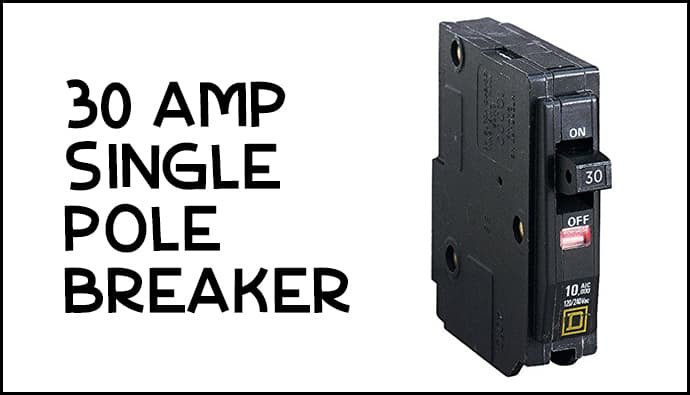
Image Source: cdn.shopify.com
Deciphering Your Electrical Needs
Before you start installing a new breaker, it’s crucial to determine why you need the 30 amp circuit and what appliance or equipment it will serve.
Common Applications for 30 Amp Circuits:
- Electric Ranges and Ovens: Many modern electric ovens and ranges require a 30 amp, 240-volt circuit.
- Electric Water Heaters: Larger electric water heaters often need a dedicated 30 amp circuit.
- Central Air Conditioners: Some smaller to medium-sized central air conditioning units are designed for 30 amp service.
- Electric Vehicle (EV) Chargers: Level 2 EV chargers commonly use a 30 amp circuit.
- Workshop Equipment: Heavy-duty tools like table saws, welders, or large dust collectors might need a 30 amp dedicated line.
- Hot Tubs and Spa Heaters: These high-demand appliances frequently require a 30 amp circuit, often with GFCI protection.
Important Note: Always check the manufacturer’s specifications for your appliance. This will tell you the exact amperage and voltage requirements. Never assume a 30 amp breaker is appropriate without verifying.
Prerequisites and Safety First!
Working with electricity is inherently dangerous. If you are not comfortable or experienced with electrical work, do not attempt this yourself. Hire a licensed electrician. Safety is non-negotiable.
Essential Safety Precautions:
- Turn Off Power: Always, always, always turn off the main power to your electrical panel before starting any work. This means flipping the main breaker to the “OFF” position.
- Verify Power is Off: Use a non-contact voltage tester or a multimeter to confirm that there is no power at the panel and at the location where you will be working. Test the tester on a known live circuit first to ensure it’s working correctly.
- Wear Protective Gear: Always wear safety glasses and work with insulated tools. Consider wearing rubber-soled shoes and avoid loose clothing.
- Know Your Panel: Be familiar with your electrical panel’s layout and how breakers are installed.
- Follow Electrical Codes: Adhere strictly to local and national electrical codes (NEC – National Electrical Code in the US). These codes are designed to ensure safety.
- Never Work Alone: If possible, have someone else present who can assist or call for help if needed.
Tools and Materials You’ll Need:
- 30 Amp Circuit Breaker: Ensure it’s compatible with your electrical panel brand and type.
- Appropriate Gauge Wire: For a 30 amp circuit, you’ll typically need 10-gauge copper wire (NM-B cable for residential wiring). This is usually a two-conductor wire plus a ground wire (10/2). For 240-volt applications without a neutral, you might use 10/2 with ground, or for 120/240V, you’ll need 10/3 with ground.
- Circuit Breaker Panel (or Subpanel): A modern panel with available slots and the correct amperage rating.
- Wire Strippers and Cutters: For preparing the wire.
- Screwdrivers: Phillips and flathead, insulated handles are best.
- Non-Contact Voltage Tester: To confirm power is off.
- Multimeter: For more precise voltage testing.
- Wire Connectors (Wire Nuts): Appropriately sized for the wire gauge.
- Cable Clamps: To secure the new cable to the panel and junction boxes.
- Fish Tape (Optional): For pulling wire through conduit or walls.
- Drill and Drill Bits: For making holes for wire routing.
- Electrical Tape: For insulating connections and marking wires.
- GFCI Outlet/Breaker (if required): For specific applications like hot tubs or outdoor circuits.
- Conduit and Fittings (if required): For protecting wires in certain installations.
- Labels: To clearly mark the new circuit on the panel.
Planning Your 30 Amp Circuit Installation
A well-thought-out plan is essential for a safe and compliant installation.
1. Assessing Your Electrical Panel Capacity:
- Check the Main Breaker: Determine the total amperage of your main service (e.g., 100 amps, 200 amps).
- Evaluate Available Space: Look inside your panel for empty breaker slots. Many panels have a limited number of slots. A double-pole breaker (required for 240-volt circuits like most 30 amp applications) takes up two slots.
- Calculate Load: You need to ensure your panel and service can handle the additional load. Overloading a panel can cause it to overheat or trip the main breaker frequently. An electrical panel upgrade might be necessary if your current capacity is insufficient. Consult an electrician to perform a load calculation if you’re unsure.
2. Determining the Wire Run and Routing:
- Identify the Appliance Location: Where will the appliance or equipment be located?
- Plan the Path: Map out the shortest and safest route for the wire from the panel to the appliance. Avoid sharp bends, heat sources, and potential physical damage.
- Consider Wall and Ceiling Access: You might need to open up walls or ceilings. If so, plan for repairs afterward.
- Conduit Requirements: Check local codes. Some installations, especially in unfinished basements, garages, or outdoors, may require running wires in conduit for protection.
3. Understanding 240 Volt Breaker Wiring:
Most 30 amp circuits are 240 volts. A 240-volt circuit uses two “hot” wires and a ground wire.
- Double-Pole Breaker: A 240-volt appliance requires a double-pole breaker. This breaker connects to two adjacent bus bars in the panel, providing 240 volts across them. It occupies two slots in the panel.
- Wire Gauge: For a 30 amp circuit, 10-gauge wire is standard. You’ll typically use 10/2 NM-B wire (two insulated conductors and a bare ground wire) for 240V if no neutral is required for the appliance. If the appliance also requires 120V (like some EV chargers), you’ll need 10/3 NM-B wire (three insulated conductors plus ground).
4. Choosing the Right Breaker:
- Panel Compatibility: Breakers are brand-specific. Ensure the new 30 amp breaker is designed for your panel’s brand (e.g., Square D, Siemens, GE, Eaton).
- Type of Breaker: Standard, GFCI (Ground Fault Circuit Interrupter), or AFCI (Arc Fault Circuit Interrupter) breakers. GFCI protection is often required for wet locations or specific appliances like hot tubs. AFCI protection might be required for certain living areas.
Step-by-Step Guide to Installing a 30 Amp Breaker
Disclaimer: This guide is for informational purposes only. If you are not comfortable with any step, stop and call a qualified electrician.
Step 1: Turn Off Power to the Panel
This is the most critical step. Locate your main electrical panel. Flip the main breaker to the “OFF” position. Verify that all power is off using your voltage tester.
Step 2: Open the Electrical Panel
Remove the panel cover. This usually involves unscrewing a few screws. Keep the screws in a safe place.
Step 3: Install the New Circuit Breaker
- Identify a Suitable Location: Find two adjacent empty slots in your panel. These slots are where the double-pole breaker will connect to the bus bars.
- Connect the Breaker: Clip the breaker onto the bus bar. The two lugs on the breaker should straddle the bus bar. Ensure it’s firmly seated. Some breakers also have a clip that attaches to the neutral or ground bus bar.
Step 4: Run the New Circuit Wire
- Drill Holes: Drill holes through studs, joists, or fire blocks as needed to route the 10-gauge wire from the panel to the appliance location. Use a fish tape if necessary.
- Secure the Cable: Use cable clamps to secure the wire where it exits the panel and at intervals as required by code to prevent it from sagging or being damaged.
- Route Carefully: Avoid running the wire directly across sharp metal edges or near heat sources.
- Install Outlet or Junction Box: At the appliance end, install an appropriate outlet (e.g., a 30 amp receptacle for an oven or dryer) or a junction box if the appliance will be hardwired directly. Ensure the box is properly sized and mounted.
Step 5: Wire the Breaker and Connect to the Appliance
This is where the 30 amp breaker wiring diagram becomes crucial.
Wiring the Breaker (inside the panel):
- Ground Wire: Connect the bare copper ground wire from your new cable to the ground bus bar in the panel.
- Hot Wires:
- For a 240V circuit (no neutral needed for the appliance): Connect the two insulated “hot” wires (usually black and red in 10/2 wire) to the two screw terminals on the newly installed double-pole breaker.
- For a 120/240V circuit (e.g., some EV chargers needing neutral): If using 10/3 wire, connect one hot wire (e.g., black) to one terminal on the breaker, the other hot wire (e.g., red) to the other terminal on the breaker. The neutral wire (white) connects to the neutral bus bar, and the ground wire (bare) to the ground bus bar.
- Tighten Connections: Ensure all wire connections are secure.
Wiring the Outlet or Junction Box (at the appliance end):
- Outlet Wiring:
- Connect the ground wire to the green ground screw on the outlet.
- Connect the two hot wires to the two brass or dark-colored terminal screws on the 30 amp receptacle.
- Junction Box Wiring (for hardwired appliances):
- Connect the ground wire to the appliance’s ground terminal or to the ground wire of the appliance.
- Connect the two hot wires to the appropriate terminals on the appliance according to the manufacturer’s instructions.
Step 6: Reassemble and Test
- Secure the Breaker: Ensure the breaker is properly seated and secure.
- Replace Panel Cover: Carefully put the panel cover back on and secure it with screws.
- Turn On Power: Go back to the main breaker and turn it ON.
- Test the New Circuit: Flip the new 30 amp breaker to the ON position.
- Test the Appliance: Plug in or connect your appliance and test its functionality. Use your multimeter to verify voltage at the outlet or connection point if the appliance doesn’t seem to work correctly.
Step 7: Label the New Circuit
Using a label maker or a permanent marker, clearly label the new breaker on the panel directory with the appliance or circuit it serves (e.g., “Oven,” “EV Charger,” “Workshop Saw”).
Special Considerations for 30 Amp Circuit Installation
Adding a Dedicated Circuit:
When adding a dedicated circuit, especially for high-draw appliances, it’s essential that this circuit is not shared with other outlets or lights unless the appliance manufacturer specifies otherwise. A dedicated circuit ensures the appliance receives consistent power without being affected by other loads on the same circuit.
30 Amp Breaker Replacement:
If you are performing a 30 amp breaker replacement, the process is similar but simpler. Ensure you turn off the main power. Remove the old breaker by releasing its clip from the bus bar and then detaching it from the panel’s mounting clip. Install the new breaker, ensuring it’s the correct type and brand, and then reconnect the wires. Always verify the new breaker’s amperage rating matches the circuit’s intended use and wire gauge.
Electrical Panel Upgrade:
In some cases, electrical panel upgrade might be necessary before you can add a 30 amp circuit. This is common in older homes with outdated panels or when the existing panel is already at or near its maximum capacity. An upgrade involves replacing the entire panel and potentially the main service wires, a complex task best left to professionals.
Subpanel 30 Amp Breaker Installation:
If your main panel is full, or if you’re extending power to a detached garage or a specific area of your home, installing a subpanel 30 amp breaker is an option. A subpanel is a smaller electrical panel fed from the main panel by a larger breaker. You would install a double-pole breaker in the main panel to feed the subpanel, and then breakers within the subpanel can be installed as needed, including a 30 amp breaker. This is a more advanced installation and typically requires professional expertise.
Common Mistakes to Avoid
- Using the Wrong Wire Gauge: Using wire that is too small for the amperage (e.g., 12-gauge for a 30 amp circuit) is a fire hazard. Always use 10-gauge for 30 amps.
- Incorrect Breaker Type: Using a single-pole breaker for a 240-volt circuit or a breaker not rated for your panel brand.
- Loose Connections: Poorly made connections can overheat, causing arcing and potential fires.
- Not Turning Off Power: This is the most dangerous mistake and can lead to electrocution.
- Overloading the Panel: Adding circuits without considering the overall capacity of your service.
- Ignoring Codes: Failing to comply with local electrical codes can lead to safety issues and problems during home inspections.
When to Call a Professional Electrician
- If you are unsure about any step of the process.
- If your panel is old, outdated, or shows signs of damage.
- If your panel is at full capacity or you suspect it might be overloaded.
- If the wire run requires extensive work, such as cutting through multiple walls or ceilings.
- If you need to install a subpanel.
- If local codes require a licensed electrician for the work.
- If you are uncomfortable working with electricity at any point.
Hiring an electrician ensures the job is done safely, correctly, and in compliance with all regulations. While DIY can save money, the cost of a mistake can be astronomical in terms of property damage, injury, or even loss of life.
Frequently Asked Questions (FAQ)
Q1: What size wire do I need for a 30 amp circuit?
A1: For a 30 amp circuit, you must use 10-gauge copper wire (NM-B 10/2 or 10/3).
Q2: Can I use a 20 amp breaker on a 30 amp circuit?
A2: No, you should never use a breaker with a lower amperage rating than the circuit is designed for. However, you can use a breaker with the same amperage rating as the wire gauge requires. Using a lower amperage breaker would mean the circuit is protected for less than its capacity, which is generally not the goal when installing a 30 amp circuit. You must match the breaker to the wire gauge and the appliance’s needs.
Q3: What is the difference between 10/2 and 10/3 wire?
A3: 10/2 wire contains two insulated conductors (typically black and red) and a bare ground wire. It’s used for 240-volt circuits where a neutral wire is not needed. 10/3 wire contains three insulated conductors (typically black, red, and white) and a bare ground wire. It’s used for 120/240-volt circuits where both voltages are needed, or a neutral wire is required, such as for some electric ranges or EV chargers.
Q4: Do I need GFCI protection for a 30 amp circuit?
A4: It depends on the location and application. GFCI protection is typically required for circuits in wet or damp locations (like bathrooms, kitchens, outdoors, garages), and for specific appliances like hot tubs and spa heaters. Always check local electrical codes for specific requirements.
Q5: Can I replace a 20 amp breaker with a 30 amp breaker?
A5: Only if the existing wiring is rated for 30 amps. If the wiring is 12-gauge (typically for 20 amp circuits), you must upgrade the wiring to 10-gauge before installing a 30 amp breaker. Installing a 30 amp breaker on 12-gauge wire is a serious fire hazard.
Q6: What does a 240 volt breaker wiring diagram typically show?
A6: A 240 volt breaker wiring diagram will show a double-pole breaker connecting to two hot bus bars in the panel. It will illustrate how the two hot wires from the circuit connect to the two terminals on the double-pole breaker, and how the ground wire connects to the ground bus bar. For circuits that also require a neutral, the diagram would show the neutral wire connecting to the neutral bus bar.
Q7: How do I know if I need an electrical panel upgrade?
A7: Signs you might need an electrical panel upgrade include frequently tripping breakers, flickering lights, discolored outlets, a panel that feels warm to the touch, or if your home’s electrical needs have increased significantly (e.g., adding new large appliances). A load calculation performed by an electrician is the definitive way to know.
Q8: What is the purpose of a subpanel?
A8: A subpanel 30 amp breaker or other breakers can be installed in a subpanel to distribute power to specific areas of a property, like a detached garage, an addition, or a workshop, without overloading the main panel. It acts as a secondary distribution point.
By following this comprehensive guide and prioritizing safety, you can gain a solid foundation for understanding the process of adding a 30 amp circuit breaker. Remember, when in doubt, always consult a qualified electrician.