
Can you sharpen a crosscut saw at home? Yes, you absolutely can sharpen a crosscut saw at home with the right tools and a little patience. This guide will walk you through the entire process, making your saw cut like new. Sharpening a crosscut saw is a fundamental skill for any woodworker who values precision and efficiency. A dull saw is not only frustrating but can also lead to ragged cuts and increased effort. This comprehensive guide will equip you with the knowledge and steps needed to bring your crosscut saw back to its peak performance.
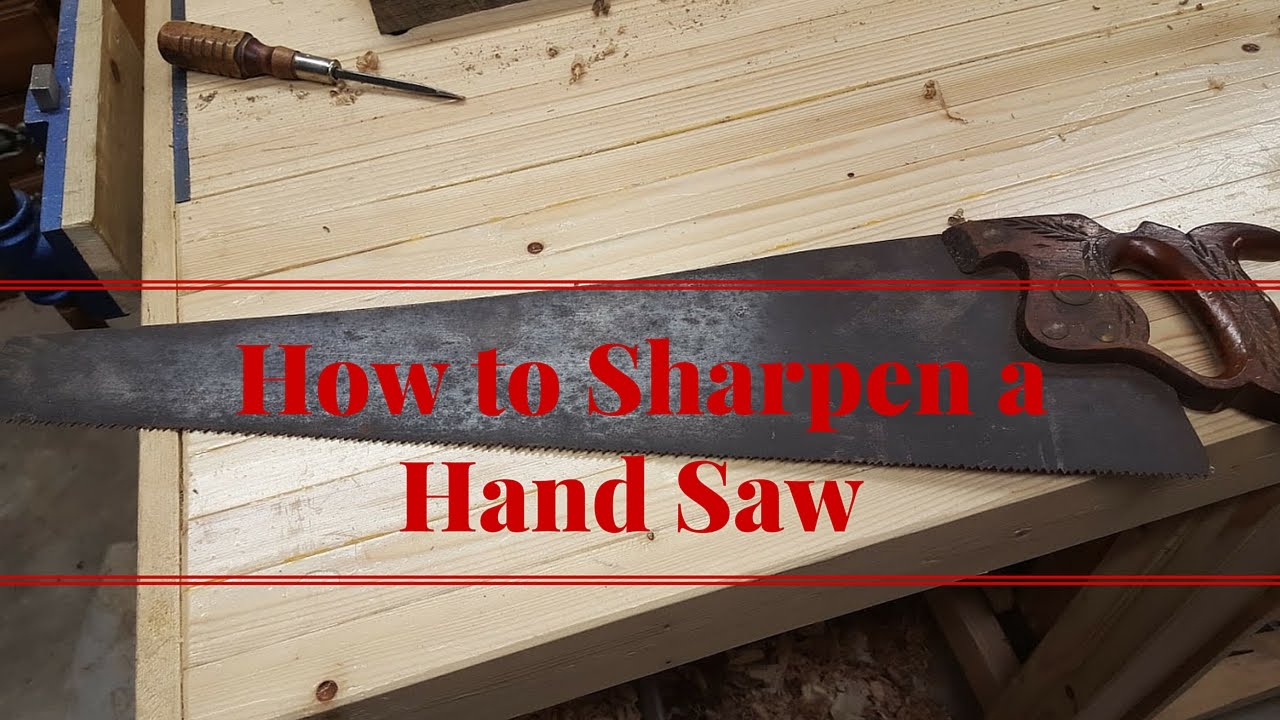
Image Source: i.ytimg.com
Why Sharpen Your Crosscut Saw?
A sharp saw makes woodworking a joy. A dull saw, on the other hand, can lead to a host of problems:
- Increased effort: You’ll have to push much harder, leading to fatigue.
- Poor cut quality: Ragged edges, tear-out, and splintering are common.
- Saw wandering: The saw can drift off your intended cut line.
- Safety risks: A dull saw is more likely to bind or kick back.
- Damage to wood: Inaccurate cuts can ruin your project.
Essential Tools for Saw Sharpening
Before you start, gather these crucial items. Having everything ready ensures a smooth and efficient sharpening session.
The Right File: Your Crosscut Saw File
The most important tool is the correct crosscut saw file. These files are specifically designed for sharpening saw teeth.
- Type: Look for a triangular or “three-square” file.
- Cut: A “bastard cut” file is generally too coarse for most hand saw teeth. A “mill file” or a file specifically labeled for saw sharpening is ideal.
- Size: The size of the file depends on the size of your saw teeth. For typical hand saws, a 6-inch or 8-inch file with a fine cut is usually appropriate. Check your saw’s tooth size and the file manufacturer’s recommendations.
Other Necessary Equipment
- Saw Sharpening Guide: While not strictly mandatory for experienced users, a saw sharpening guide can be incredibly helpful, especially when you’re starting out. These guides help maintain a consistent angle for filing.
- Bench Vise: A sturdy vise is essential for holding the saw blade securely while you work. A saw vise, designed specifically for holding saw blades, is ideal.
- Jointer Stone: A jointer stone is used to level the tops of the teeth. This is a crucial step before you start filing each tooth individually.
- Setting Hammer and Anvil (or Saw Tooth Set): You’ll need to set the teeth, meaning bending them slightly outwards to create a kerf wider than the blade. A specialized saw tooth set or a hammer and anvil can be used for this.
- Magnifying Glass: To inspect your work and ensure each tooth is sharpened correctly.
- Rags: For cleaning the saw blade.
- Safety Glasses: Always protect your eyes.
- Gloves: To protect your hands from sharp edges and keep the blade clean.
- Marking Crayon or Chalk: To help keep track of which teeth you’ve filed.
Preparing Your Crosscut Saw for Sharpening
Proper preparation is key to a successful sharpening job. Don’t skip these steps.
Cleaning the Saw Blade
First, remove any dirt, pitch, or rust from the saw blade. Use a clean rag and a mild degreaser or mineral spirits. A clean blade allows for precise filing and better adhesion of any marking aids.
Inspecting the Teeth
Examine the teeth closely. Look for:
- Damage: Bent or broken teeth.
- Wear: Teeth that are significantly blunted.
- Irregularities: Teeth that are not uniform in shape or size.
Leveling the Teeth with a Jointer Stone
This step is vital for saw blade maintenance. Before you file each tooth individually, you need to ensure all the teeth are at the same height.
- Secure the Saw: Clamp the saw blade firmly in your vise.
- Use the Jointer Stone: Gently draw the jointer stone across the tops of the teeth. Apply light pressure. The goal is to create a uniform plane across all the tooth points. You’ll notice the stone removing metal from the higher teeth until all points are level. This creates a consistent starting point for filing.
Setting the Saw Teeth
Setting the teeth involves bending them slightly outward, alternating directions. This creates the “kerf” – the channel the saw blade cuts. A wider kerf prevents the blade from binding in the wood.
How to Set Saw Teeth:
- Secure the Saw: Clamp the saw blade in your vise, with the teeth extending just enough to allow access for setting.
- Using a Saw Tooth Set:
- Place the set on the first tooth, ensuring the plunger is positioned to bend the tooth outwards.
- Squeeze the handles of the set to bend the tooth.
- Move to the next tooth and bend it in the opposite direction.
- Continue this pattern down the entire length of the blade.
- Using a Hammer and Anvil:
- Place the saw blade on a suitable anvil or block of wood.
- Position the hammer’s peen (the rounded or tapered end) against the side of a tooth, near the gullet (the space between teeth).
- Tap gently with the hammer to bend the tooth outward.
- Work down the saw, alternating the direction of the set for each tooth.
Tooth Set Gauge
It’s important to have a consistent set. A saw tooth set often has an adjustable anvil or screw to control the amount of set. Aim for a set that is just enough to clear the blade. A common guideline is that the width of the kerf should be about twice the thickness of the saw blade. Too much set can lead to a rough cut.
The Saw Tooth Filing Process
This is the core of sharpening. Precision is key here.
Determining the Saw Sharpening Angle
The correct saw sharpening angle is crucial for an effective cut. For crosscut saws, the typical filing angle is around 60 degrees for the face of the tooth and 45 degrees for the back of the tooth, relative to the gullet. However, this can vary slightly depending on the saw’s intended use and the specific tooth pattern.
- Crosscut Teeth: These teeth are designed to cut across the wood grain. They have a more angled, chisel-like shape.
- Rip Teeth: These teeth are designed to cut with the grain and have a more square, chopping action.
Important Note: Always file from the inside of the tooth (near the gullet) towards the tip.
The Filing Sequence
- Mark Your Starting Point: Use a crayon or chalk to mark the first tooth you will sharpen. This helps you keep track.
- Position the File: Place the crosscut saw file in the gullet of the first tooth. The file should be held so that it engages the cutting edge of the tooth at the correct angle.
- Angle of Attack: For a standard crosscut saw, aim to file the front of the tooth at approximately 60 degrees and the back at approximately 45 degrees.
- Face Filing: Position the file so it cuts into the front face of the tooth.
- Back Filing: Re-angle the file to cut into the back face of the tooth.
- The Filing Stroke:
- Apply firm, consistent pressure on the forward stroke.
- Lift the file on the return stroke to avoid dulling the cutting edge.
- Aim for a smooth, even filing motion.
- Consistency is Key: Aim to make the same number of strokes on each tooth. Typically, 2-4 strokes per tooth is sufficient, depending on how dull the saw is. The goal is to remove just enough metal to create a sharp edge without altering the tooth’s shape significantly.
- Follow the Pattern: Work your way down the saw blade, filing each tooth in the same manner. Always file from the inside of the gullet to the tip.
- Switching Directions: When you reach the end of the saw, you’ll typically reverse direction for the teeth on the other side.
- Teeth Pointing Left: File the front face of these teeth.
- Teeth Pointing Right: File the back face of these teeth.
- The Swap: At some point, the teeth will switch direction. You’ll then file the back face of teeth pointing left and the front face of teeth pointing right. This is where a saw sharpening jig can be very helpful for maintaining the correct angles.
Using a Saw Sharpening Jig
A sharpening jig holds the file at a consistent angle, ensuring uniformity across all teeth. These jigs typically have adjustable clamps for the file and can be slid along the saw blade. They are invaluable for achieving professional results, especially for beginners. Follow the jig manufacturer’s instructions for setup.
Refining the Teeth
After the initial filing, inspect each tooth. You’re looking for a fine burr or wire edge along the cutting edge.
- Light Strokes: Make a few very light, finishing strokes on each tooth with the file.
- Filing Direction: Again, always file from the inside of the gullet towards the tip.
Honing the Saw Teeth
Honing crosscut saw teeth is the final sharpening step to remove any remaining burrs and create a razor-sharp edge.
- Removing the Burr: After filing, there will likely be a small burr on the cutting edge of each tooth.
- Fine Honing: Use a smooth, fine-cut mill file or a sharpening stone (like a slip stone) to lightly hone the face and back of each tooth.
- Hold the file or stone at the same angles you used for filing.
- Make only one or two very light strokes per tooth. The goal is to “true up” the edge, not to remove significant metal.
- This process removes the burr and leaves a very sharp cutting edge.
Checking Your Work
Once you’ve finished filing and honing, take a close look at your work.
Visual Inspection
- Are all the teeth the same height? (The jointer stone should have ensured this).
- Do the teeth have a consistent shape?
- Are the cutting edges sharp and free from burrs?
- Is the set on the teeth still consistent?
The Paper Test
A simple way to check sharpness is to try cutting a piece of paper held vertically. A sharp saw should slice through the paper cleanly.
When Bench Grinders Should Be Used (and When Not To)
While a bench grinder saw sharpening approach is faster for shaping and heavy repair, it’s generally not recommended for hand saw teeth.
- Heat Generation: Grinders generate heat, which can easily overheat and “draw the temper” from the steel. This makes the teeth brittle and prone to breaking.
- Metal Removal: Grinders remove metal much faster than files, making it easy to remove too much material and alter the tooth shape and pitch.
- Lack of Control: It’s very difficult to maintain the precise angles needed for hand saw teeth on a bench grinder.
Exception: A bench grinder can be useful for shaping severely damaged teeth or for initial coarse removal of material before finishing with files, but extreme caution and expertise are required. For routine sharpening of a crosscut saw, stick to files.
Saw Blade Maintenance Tips
Regular maintenance ensures your saw stays sharp and performs well.
- Clean After Use: Always wipe down your saw blade after each use to remove sap and moisture.
- Store Properly: Store your saw in a dry place, ideally in a saw guard or sheath, to protect the teeth from damage.
- Sharpen Regularly: Don’t wait until your saw is completely dull. Regular touch-ups will keep it in prime condition and make the sharpening process easier.
Troubleshooting Common Saw Sharpening Issues
- Uneven Teeth: If teeth are still uneven after filing, you might have missed some during the jointer phase, or your filing technique is inconsistent. Re-joint and re-file.
- Broken Teeth: If a tooth is badly damaged, you may need to reshape it carefully with a file or even skip filing that particular tooth if it’s too far gone.
- Over-filing: If you remove too much material, the teeth will become too small, and the saw will cut poorly. You may need to reshape the teeth or consider replacing the saw if it’s severely compromised.
Frequently Asked Questions (FAQ)
Q1: How often should I sharpen my crosscut saw?
A1: This depends on how much you use it and the type of wood you’re cutting. A good rule of thumb is to sharpen it when you notice a decline in cutting performance. For occasional use, sharpening once or twice a year might be sufficient. For frequent use, you might need to sharpen it every few months.
Q2: What is the difference between sharpening a crosscut saw and a rip saw?
A2: The primary difference lies in the tooth shape and the filing angles. Crosscut saw teeth are angled to cut across the grain, resembling a chisel. Rip saw teeth are more square and designed for cutting with the grain. The filing angles for the face and back of the teeth will differ between the two types of saws.
Q3: Can I use a sharpening stone to sharpen a crosscut saw?
A3: While a fine sharpening stone (like a slip stone) can be used for honing the final edge, it’s generally not effective for the primary sharpening of crosscut saw teeth. Files are designed to remove metal efficiently and shape the teeth properly.
Q4: My saw teeth are bent. What should I do?
A4: If teeth are only slightly bent, you can try to straighten them using your saw tooth set or a gentle tap with a hammer and anvil before filing. If teeth are severely bent or broken, you may need to reshape them significantly during the filing process or consider replacing the saw.
Q5: What happens if I don’t set the teeth?
A5: If the teeth are not set, the kerf will be too narrow. This means the blade will bind in the wood, making it difficult to cut and potentially causing the blade to warp or break. The cut surface will also be rough.
By following these steps, you can effectively sharpen your crosscut saw and enjoy the benefits of a precise, efficient cutting tool. Happy woodworking!