
Can you adjust a chainsaw carburetor yourself? Yes, you can adjust a chainsaw carburetor yourself with the right tools and a bit of patience. Proper chainsaw carburetor adjustment is crucial for your saw to run at its best. It ensures the correct amount of fuel and air mix, leading to optimal power, smooth operation, and better fuel efficiency. If your chainsaw is chainsaw running rough, bogging down, or not reaching full power, a misadjusted carburetor is often the culprit. This guide will walk you through the process of tuning your chainsaw carb for peak performance.
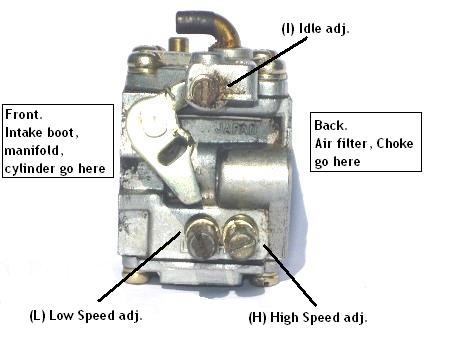
Image Source: cdn.shopify.com
Why Carburetor Tuning Matters
A chainsaw’s carburetor is its engine’s heart. It precisely mixes air and fuel. Too much fuel (rich mixture) and the saw might run smoky, load up, or bog down. Too little fuel (lean mixture) and it can overheat, lose power, and even suffer engine damage. Getting the chainsaw fuel mixture just right is key.
Signs Your Carburetor Needs Adjustment
- Chainsaw running rough: The engine sputters, misses, or runs unevenly at idle or under load.
- Chainsaw bogging down: The engine loses power or stalls when you engage the chain or apply throttle.
- Difficulty starting: The saw struggles to start or requires a lot of priming.
- Poor acceleration: The saw hesitates or takes a long time to reach full speed.
- Excessive smoke: A rich mixture can cause blue or black smoke from the exhaust.
- Engine overheating: A lean mixture can lead to dangerously high engine temperatures.
- High idle speed: The chain spins even when the throttle is not engaged.
Essential Tools for Carburetor Tuning
Before you start, gather these tools. Having the right equipment makes the job much easier and safer.
- Screwdrivers: You’ll likely need specialized “splined” or “D-shaped” screwdrivers to adjust the mixture screws on modern chainsaws. Standard screwdrivers might not fit.
- Tachometer: A digital tachometer is highly recommended for accurately setting idle and high-speed RPMs. This takes the guesswork out of the process.
- Safety Glasses: Always protect your eyes.
- Gloves: To keep your hands clean and protect them.
- Shop Rags/Paper Towels: For cleaning up any spilled fuel or oil.
- Owner’s Manual: Your chainsaw’s manual will have specific chainsaw carb settings and procedures for your model. This is your most important reference.
Deciphering the Carburetor Controls
Most modern chainsaws use a carburetor with two main adjustment screws:
- Low-Speed (L) Mixture Screw: Controls the fuel mixture at idle and low throttle speeds.
- High-Speed (H) Mixture Screw: Controls the fuel mixture at full throttle and under load.
There might also be an idle speed adjustment screw. This screw doesn’t affect the fuel mixture but rather the throttle plate’s opening, thus controlling the engine’s idle RPM.
Locating the Adjustment Screws
The chainsaw mixture screws are typically found on the side of the carburetor. They are usually brass and have a slot for a screwdriver. You might see “L” and “H” stamped near them. If you can’t find them, consult your owner’s manual.
The Tuning Process: Step-by-Step
Chainsaw carburetor tuning is a delicate balance. It’s best done in a well-ventilated area with the saw secured.
Step 1: Initial Screw Settings (Resetting the Carburetor)
This is a crucial starting point. It ensures you’re not starting from a completely unknown position.
- Locate the L and H screws.
- Gently turn the L screw clockwise until it lightly seats. Do not overtighten! This can damage the screw or the carburetor.
- Back the L screw out counter-clockwise 1.5 to 2 full turns. This is a common starting point.
- Gently turn the H screw clockwise until it lightly seats. Again, do not overtighten.
- Back the H screw out counter-clockwise 1.5 to 2 full turns. This is also a standard starting position.
Note: Some newer carburetors, especially on EPA-compliant saws, have limiter caps on these screws. If you can’t turn them, you may need to remove these caps. Check your manual.
Step 2: Setting the Idle Speed
The chainsaw idle speed affects how smoothly the saw runs when you’re not throttling.
- Start the chainsaw. Allow it to warm up for a few minutes. It should run reasonably well with the initial screw settings.
- Locate the idle speed screw. It’s usually a larger screw that contacts a part of the throttle linkage.
- Adjust the idle speed screw.
- If the engine stalls or runs too slowly at idle, turn the idle speed screw clockwise to increase the idle RPM.
- If the chain is spinning at idle (too high an idle speed), turn the idle speed screw counter-clockwise to decrease the idle RPM.
- Aim for a steady idle without the chain engaging. Your manual will specify the correct idle RPM for your saw.
Step 3: Adjusting the Low-Speed (L) Mixture Screw
This affects how the chainsaw runs at idle and during initial throttle response.
- Ensure the saw is idling smoothly.
- Slowly turn the L screw clockwise (leaner mixture). Listen for changes in engine RPM. If the RPM increases and the engine sounds smoother, you’re leaning it out.
- Continue turning clockwise until the engine RPM begins to drop or the engine sounds like it’s “four-stroking” (a rough, lopey sound). This means it’s too lean.
- Now, slowly turn the L screw counter-clockwise (richer mixture) until the engine RPM begins to drop again or the engine sounds like it’s loading up (a duller sound). This is too rich.
- Find the sweet spot. The ideal setting is usually about halfway between the lean-surge point and the rich-surge point. The engine should be running at its highest, smoothest idle RPM.
- Briefly blip the throttle. When you blip the throttle, the engine should accelerate cleanly and quickly without hesitation or bogging down. If it hesitates or bogs, it might be slightly too lean. If it sputters and dies, it might be too rich. Make tiny adjustments (1/8 to 1/4 turn) until you get a crisp acceleration.
Step 4: Adjusting the High-Speed (H) Mixture Screw
This is for when the chainsaw is under full load, like when cutting wood.
- Use your tachometer. This is where a tachometer becomes indispensable. Set it to measure the engine’s RPM.
- Set the idle speed again. After adjusting the L screw, the idle speed might have changed. Re-adjust the idle speed screw if necessary.
- Full throttle test. With the saw running, quickly move the throttle to full speed.
- Listen and observe.
- If the engine sounds like it’s “four-stroking” or sputtering at full throttle, the mixture is too rich.
- If the engine sounds like it’s “screaming” or “surging” (a rough, ragged sound), the mixture is too lean.
- Adjust the H screw.
- If it’s too rich, turn the H screw clockwise (leaner) in small increments (1/8 to 1/4 turn).
- If it’s too lean, turn the H screw counter-clockwise (richer) in small increments.
- Check the RPM. Your owner’s manual will specify the maximum RPM your engine should achieve under load. Adjust the H screw to reach this RPM. Be careful not to over-rev the engine, as this can cause damage.
- The optimal setting is when the engine reaches its maximum rated RPM, sounds smooth and powerful, and doesn’t surge or bog down.
Step 5: Final Adjustments and Testing
After adjusting both screws, it’s time for a final check.
- Re-check idle. Start the saw, let it warm up, and verify the idle speed is still correct and the chain isn’t spinning.
- Test under load. Take the chainsaw out and make some cuts. It should perform smoothly, accelerate well, and maintain power without bogging down. Listen for any unusual sounds.
- Fine-tuning. If the saw still isn’t running perfectly, make very small adjustments to the L and H screws. Remember, small changes have a big impact.
- If it bogs down when you first apply throttle, the L screw might need to be slightly richer (turn counter-clockwise).
- If it bogs down when cutting hard, the H screw might need to be slightly richer (turn counter-clockwise) or the L screw slightly leaner (turn clockwise) if it’s affecting low-end power.
- If it sounds rough at idle, the L screw might be too lean (turn counter-clockwise) or the idle speed screw needs adjustment.
Troubleshooting Common Issues
Even with careful tuning, you might encounter problems.
Chainsaw Bogging Down
If your chainsaw is chainsaw bogging down when you engage the throttle or cut, this is often a fuel mixture issue.
- At low speeds/initial throttle: Likely an L screw issue. Try turning the L screw slightly counter-clockwise (richer) or ensure the idle speed isn’t set too high.
- At full throttle/under load: Likely an H screw issue. Turn the H screw slightly counter-clockwise (richer). If it’s still bogging, check your air filter and fuel filter; a clogged air filter can restrict airflow, making the mixture effectively rich.
Chainsaw Running Rough
A chainsaw running rough can be caused by a few things:
- Idle: Check the idle speed screw first. If the idle speed is correct, adjust the L screw. Too lean (clockwise) or too rich (counter-clockwise) can cause rough idling.
- Under load: If it’s rough at higher RPMs, adjust the H screw. Lean (clockwise) or rich (counter-clockwise) can both cause roughness.
- Other factors: Don’t forget other potential culprits like a dirty air filter, clogged fuel filter, old fuel, spark plug issues, or a vacuum leak in the fuel lines or intake manifold.
Too High Idle Speed
If the chain spins when the saw is idling, you need to adjust the chainsaw idle speed. Turn the idle speed screw counter-clockwise to lower the RPM. If lowering the idle speed causes the engine to stall or run rough, you might have a lean low-speed mixture setting that needs adjustment (L screw).
Too Low Idle Speed
If the engine stalls when you release the throttle, you need to increase the idle speed. Turn the idle speed screw clockwise. If increasing the idle speed doesn’t help, the low-speed mixture might be too lean (L screw too far clockwise).
Advanced Tuning and Considerations
Environmental Factors
Chainsaw carb settings can be affected by altitude and temperature.
- High Altitude: At higher altitudes, the air is thinner. Your chainsaw will need a leaner fuel mixture. You’ll typically need to turn both the L and H screws clockwise (leaner) compared to sea level settings.
- Cold Weather: In colder weather, denser air might require a slightly richer mixture. You might need to turn the L and H screws slightly counter-clockwise (richer).
- Humidity: High humidity can also affect air density.
Ethanol in Fuel
Ethanol in gasoline can cause issues over time. It can absorb moisture and corrode fuel system components. Always use fresh fuel with the correct oil-to-gas ratio. If your saw sits for extended periods, use a fuel stabilizer or drain the fuel system.
Carburetor Types
- Diaphragm Carburetors: Found on most chainsaws, these use diaphragms to pump fuel.
- Float Carburetors: Less common in chainsaws, more in other small engines. The tuning principles are similar but the internal mechanisms differ.
When to Seek Professional Help
While chainsaw carburetor tuning is a DIY-friendly task, there are times when you should take your saw to a professional:
- If you’ve tried all the adjustments and the saw still runs poorly.
- If you suspect a clogged carburetor or damaged internal parts.
- If you’re uncomfortable with the process or lack the necessary tools.
- If your saw has a complex, non-adjustable carburetor (some modern saws have them where the factory sets them and you can’t adjust them, requiring replacement if issues arise).
Frequently Asked Questions (FAQ)
Q: How many turns out should chainsaw carburetor screws be?
A: As a starting point, both the L and H screws are typically set 1.5 to 2 full turns counter-clockwise from a lightly seated position. However, the final optimal setting will vary depending on your specific chainsaw model, engine condition, and environmental factors. Always use this as a starting point and tune according to your saw’s performance.
Q: What happens if my chainsaw carburetor is too lean?
A: A lean fuel mixture means there’s too much air and not enough fuel. This can cause your chainsaw to run hot, lose power, hesitate under acceleration, surge at high RPMs, and in severe cases, lead to engine damage like piston seizure due to overheating.
Q: What happens if my chainsaw carburetor is too rich?
A: A rich fuel mixture means there’s too much fuel and not enough air. This can result in the chainsaw running rough, sputtering, bogging down easily, having poor acceleration, producing excessive smoke, and potentially fouling the spark plug. The engine may also be sluggish.
Q: Do I need a tachometer to tune my chainsaw carburetor?
A: While you can make basic adjustments by ear, a tachometer is highly recommended for accurate chainsaw carburetor tuning, especially for setting the high-speed adjustment. It allows you to precisely reach the manufacturer’s specified RPMs, ensuring optimal performance and preventing engine damage from over-revving or running too lean.
Q: Can I adjust my chainsaw carburetor with a regular screwdriver?
A: Many modern chainsaws use specialized splined or D-shaped screwdrivers for their mixture screws. A regular flathead screwdriver may not fit correctly, and forcing it can damage the screw head or the carburetor. It’s best to get the correct type of screwdriver for your chainsaw model.
Q: How often should I tune my chainsaw carburetor?
A: It’s good practice to check and potentially tune your chainsaw carburetor at the beginning of each cutting season or if you notice performance issues. Regular maintenance, including cleaning or replacing the air filter and checking the spark plug, can also help maintain proper carburetor function and reduce the need for frequent tuning.
Conclusion
Mastering chainsaw carburetor tuning can significantly extend the life of your saw and enhance its cutting performance. By carefully following these steps, using the right tools, and listening to your engine, you can achieve that perfect chainsaw fuel mixture for peak power and smooth operation. Remember to always prioritize safety and consult your owner’s manual for model-specific guidance. A well-tuned chainsaw is a more efficient, more powerful, and more enjoyable tool.