
Can you change a bandsaw blade yourself? Yes, absolutely! With the right guidance and a few simple steps, changing a bandsaw blade is a straightforward maintenance task that anyone can master. This guide will walk you through the entire process, from selecting the right blade to properly tensioning and tracking it.
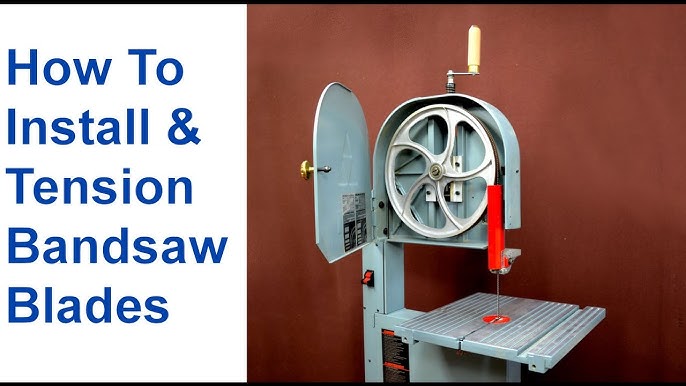
Image Source: i.ytimg.com
Preparing for Your Bandsaw Blade Replacement
Before you dive into changing a bandsaw blade, a little preparation goes a long way. This ensures your bandsaw blade installation is safe and effective.
What You’ll Need: Essential Tools and Supplies
Gathering the right items before you start bandsaw maintenance will make the process smooth and efficient.
- New Bandsaw Blade: Ensure it’s the correct length and type for your bandsaw and the material you’ll be cutting.
- Gloves: Protect your hands from sharp teeth and potential splinters.
- Safety Glasses: Essential for protecting your eyes from flying debris.
- Blade Brush: To clean any dust or resin off the blade guides and the saw’s interior.
- Wrench or Allen Key: To adjust the blade tension and guide posts. This is usually included with your bandsaw.
- Clean Rags: For wiping down parts of the saw.
Selecting the Right Bandsaw Blade
Choosing the correct bandsaw blade types is crucial for both performance and safety. Different blades are designed for different tasks.
Blade Tooth Count (TPI – Teeth Per Inch)
- Low TPI (e.g., 2-3 TPI): Best for rough cuts on thicker materials like hardwoods and softwoods. The fewer teeth mean each tooth is larger and can remove more material quickly.
- Medium TPI (e.g., 4-6 TPI): Versatile for general-purpose cutting of wood, plywood, and some plastics.
- High TPI (e.g., 8-14 TPI): Ideal for fine, smooth cuts on thinner materials, metals, and plastics where a clean finish is paramount.
Blade Width
- Wide Blades: Offer greater stability for straight cuts and resawing. They are less prone to deflection.
- Narrow Blades: Allow for intricate curved cuts and tight turns.
Blade Material
- Carbon Steel: Common and affordable. Good for general woodworking.
- Bi-Metal: Combines a flexible carbon steel back with hardened high-speed steel (HSS) teeth. More durable and can cut harder materials like metal and denser plastics.
- Carbide-Tipped: Offer the longest lifespan and best performance for very hard materials or high-volume cutting.
Blade Hook Angle
- Hooked Teeth: Feature a pronounced “hook” for aggressive material removal. Best for softwoods and general woodworking.
- Skip-Tooth: Have wider spacing between teeth and a flatter tooth face. Excellent for cutting resins, softwoods, and materials that tend to clog teeth.
- Regular Tooth: Have a more standard tooth shape and spacing, good for a variety of materials.
A quick reference for bandsaw blade types and their common uses:
| Blade Type | TPI | Best For |
|---|---|---|
| General Purpose | 4-6 | Plywood, hardwoods, softwoods, general cutting |
| Resawing | 3 | Thick hardwoods and softwoods, ripping |
| Scroll Cutting | 8-14 | Intricate curves, tight turns, thin materials |
| Metal Cutting | 14-24 | Ferrous and non-ferrous metals (requires specific metal-cutting blades) |
| Plastic Cutting | 6-10 | Plywood, plastics, laminates |
| Skip Tooth | 3-6 | Resins, softwoods, materials that clog easily |
Safety First: Essential Bandsaw Safety Precautions
Bandsaw safety is paramount, especially when dealing with a sharp, moving blade. Always prioritize safety.
- Unplug the Bandsaw: Before starting any bandsaw maintenance or blade change, disconnect the power to prevent accidental startup.
- Wear Safety Gear: Always wear safety glasses and gloves.
- Clear the Work Area: Ensure no obstructions are around the bandsaw.
- Familiarize Yourself with Your Saw: Know where the guards, tensioning mechanism, and blade guides are located on your specific model.
The Step-by-Step Guide to Changing a Bandsaw Blade
Now that you’re prepared, let’s get to the core of changing a bandsaw blade.
Step 1: Power Down and Clear the Area
As mentioned in safety, the absolute first step is to ensure the bandsaw is unplugged from its power source. Double-check that no one is using the saw. Clear any scrap materials or tools from the immediate vicinity of the bandsaw. This will give you ample room to work and prevent accidents.
Step 2: Lower the Bandsaw Table (If Applicable)
Some bandsaws have tables that can be tilted or lowered. If yours does, it can be helpful to lower the table to its lowest position. This often provides better access to the lower blade guard and the blade itself. Consult your owner’s manual for specific instructions on adjusting your table.
Step 3: Access the Blade Compartments
Bandsaws have two main compartments that house the blade:
- Upper Blade Guard/Housing: This usually opens with a latch or a knob. It provides access to the upper wheel, blade guides, and tensioning mechanism.
- Lower Blade Cover: This is typically a panel at the base of the saw that needs to be removed, often secured by screws or clips. This gives you access to the lower wheel and the lower blade guide assembly.
Open both compartments carefully. You’ll see the blade running around two large wheels.
Step 4: Release the Bandsaw Blade Tension
This is a critical step for a successful bandsaw blade replacement. Over-tensioning can damage the blade or the saw, while under-tensioning can lead to poor cuts and blade wandering.
- Locate the Tensioning Handwheel: This is usually found at the top of the saw, near the upper wheel assembly.
- Turn the Handwheel: Turn the handwheel counter-clockwise. You will see the blade start to loosen. Continue turning until there is significant slack in the blade. You should be able to push the blade sideways with your finger, and it should move freely.
- Observe the Tension Indicator (if present): Many modern bandsaws have a visual indicator that shows the tension level. Ensure this indicator is at or near the “off” or “loose” mark.
Step 5: Remove the Old Bandsaw Blade
With the tension released, the blade should be slack enough to be maneuvered off the wheels.
- Guide the Blade Off the Wheels: Carefully lift the blade off the upper and lower wheels. It’s often easiest to guide it off the upper wheel first, then let it hang down.
- Carefully Slide the Blade Out: Once off the wheels, carefully slide the blade out of the guide assemblies and the saw’s frame. Be mindful of the sharp teeth. It’s a good idea to coil the blade gently as you remove it to keep it contained.
Step 6: Clean the Bandsaw Interior
Before installing the new blade, take this opportunity for some essential bandsaw maintenance.
- Brush Away Debris: Use your blade brush to clean dust, wood chips, and resin from the wheels, the blade brush assemblies (if present), and the interior surfaces of the saw. A clean saw operates more efficiently and safely.
- Wipe Down Surfaces: Use a clean rag to wipe down any dusty or sticky areas.
Step 7: Install the New Bandsaw Blade
This is the core of the bandsaw blade installation process.
- Orient the Blade Correctly: Bandsaw blades have teeth that are angled in one direction. When you’re looking at the blade from the front of the saw (where you’ll be feeding material), the teeth should be pointing away from you, towards the back of the saw. This ensures the teeth cut on the downstroke of the blade as it travels towards you. If you’re unsure, a quick test (with power OFF!) is to gently push the blade against your finger; you want to feel the resistance from the teeth, not the smooth back of the blade.
- Place the Blade on the Wheels: Carefully place the new blade onto the upper and lower wheels. Start by looping it around the lower wheel, then guiding it up and over the upper wheel. Make sure the blade is centered on the width of the wheels.
- Thread the Blade Through Guides: Guide the blade through the upper and lower blade guide assemblies.
Step 8: Apply Bandsaw Blade Tension
Now it’s time to set the correct bandsaw blade tension. This is crucial for accurate cuts and preventing blade breakage.
- Turn the Tensioning Handwheel: Slowly turn the handwheel clockwise.
- Watch the Tension Indicator: If your saw has a tension indicator, bring the blade tension to the recommended setting for the type of blade you are using. If it doesn’t have an indicator, you’ll need to gauge the tension.
- Gauging Tension (No Indicator): A general rule of thumb is to tension the blade until it is taut but not overly tight. You should be able to deflect the blade slightly (about 1/4 inch or 6mm) with firm finger pressure midway between the wheels. The blade should feel snug and not flap around. Over-tensioning can cause premature wear on the blade and the saw’s bearings and tires. Under-tensioning can lead to blade wander and poor cuts. Consult your blade manufacturer’s recommendations or your bandsaw manual for specific tensioning guidelines.
Step 9: Adjust Bandsaw Blade Tracking
Bandsaw blade tracking ensures the blade runs centered on the wheels. This is vital for blade longevity and cut accuracy.
- Locate the Tracking Adjustment Knob/Screw: This is usually near the upper wheel assembly.
- Turn the Upper Wheel: Slowly turn the upper wheel by hand. The blade should run smoothly on the center of the wheel’s tire.
- Adjust Tracking:
- If the blade drifts towards the front edge of the wheel, turn the tracking knob slightly to bring the blade back towards the rear of the wheel.
- If the blade drifts towards the rear edge of the wheel, turn the tracking knob slightly to move the blade towards the front of the wheel.
- Check Tracking with Blade Running (Carefully!): Once you’ve made initial adjustments, plug in the saw briefly and let the blade run. Observe the tracking. Then, unplug the saw again. Make fine adjustments to the tracking knob until the blade runs perfectly centered on the wheels. The back edge of the blade should be just kissing the rear guide post, and the blade should not be trying to climb off the wheels.
Step 10: Adjust the Bandsaw Blade Guides
The blade guides provide support to the blade during cutting. Proper adjustment prevents blade deflection and ensures accurate cuts. Bandsaw blade guides typically consist of thrust bearings and side guide blocks.
- Side Guide Blocks:
- Positioning: The side guide blocks should be adjusted so they are very close to the blade (about the thickness of a piece of paper or 0.010 inches) but not touching it when the saw is running.
- Adjustment: Loosen the lock screws for the side guides and move them closer to the blade until you achieve the desired gap. Then, retighten the lock screws.
- Thrust Bearing:
- Purpose: The thrust bearing is located behind the blade and prevents it from being pushed backward during a cut.
- Positioning: The thrust bearing should be adjusted so it is just barely touching the back edge of the blade. It should not rub constantly.
- Adjustment: Loosen the lock screw for the thrust bearing and move it until it makes light contact with the back of the blade. Then, retighten the lock screw.
A table summarizing guide adjustments:
| Guide Type | Optimal Position | Adjustment |
|---|---|---|
| Side Guides | ~0.010″ (thickness of paper) from blade sides | Loosen lock screws, move guides, retighten. |
| Thrust Bearing | Lightly touching the back edge of the blade | Loosen lock screw, move bearing, retighten. |
Step 11: Final Checks and Test Cut
Before you start your project, a few final checks are necessary.
- Recheck Tension and Tracking: Make sure everything is still aligned correctly.
- Close and Secure Guards: Ensure both the upper blade guard and the lower blade cover are securely closed and fastened.
- Perform a Test Cut: Take a small piece of scrap material that is similar to what you intend to cut. Make a cut. Observe the cut quality and listen for any unusual noises from the saw. If the cut is wavy or the blade is wandering, you may need to re-adjust the blade guides or tracking.
Bandsaw Blade Speed Considerations
While not directly part of changing a bandsaw blade, bandsaw blade speed is an important factor that can be influenced by blade choice and can affect cutting performance. Many bandsaws have variable speed settings.
- Lower Speeds: Generally used for harder materials like metal or dense plastics.
- Higher Speeds: Suitable for softer woods and faster cutting.
If you’ve changed to a blade designed for a different material, you might need to adjust the bandsaw blade speed accordingly. Always refer to your bandsaw’s manual for recommended speed settings for different materials and blade types.
Frequently Asked Questions (FAQ)
Q: How often should I change my bandsaw blade?
A: The frequency of bandsaw blade replacement depends on usage and the type of material you cut. For general woodworking, a blade might last for many hours of use. If you notice dullness (difficulty cutting, burning wood, wavy cuts), it’s time for a change. Cutting abrasive materials will wear blades out faster.
Q: Can I use a different length blade than the original?
A: No, it’s crucial to use the correct length bandsaw blade specified for your bandsaw. Using a blade that is too short or too long can cause it to slip off the wheels, damage the saw, or lead to blade breakage. Always check your owner’s manual for the exact length required.
Q: My new blade keeps slipping off the wheels. What could be wrong?
A: This is usually due to incorrect bandsaw blade tension or improper bandsaw blade tracking. Ensure the blade is adequately tensioned and that the tracking is adjusted so the blade is centered on the wheels. Also, check that the guide blocks are set correctly and not too far from the blade.
Q: What does it mean if my blade is “wandering” during a cut?
A: Blade wandering, or deflection, is commonly caused by insufficient bandsaw blade tension, incorrect bandsaw blade guide adjustment, or a dull blade. Check your tension first. Then, ensure the side guides are set close enough to the blade and the thrust bearing is making light contact.
Q: Is there a difference between a wood cutting blade and a metal cutting blade?
A: Yes, there is a significant difference. Wood cutting blades typically have fewer teeth per inch (TPI) with a more aggressive tooth shape (like a hook or skip tooth) designed for efficient material removal. Metal cutting blades have a much higher TPI (often 14-24 TPI or more) with finer, harder teeth designed to cut through dense materials without excessive heat buildup or clogging. Always use the appropriate bandsaw blade types for the material you are cutting.
By following these steps carefully, you can confidently perform bandsaw blade replacement and ensure your bandsaw remains a reliable tool for all your cutting needs. Proper bandsaw maintenance, including regular blade changes and adjustments, is key to achieving optimal performance and safety.