
What is the correct way to measure bra size? Measuring your bra size accurately is the first and most crucial step to finding a bra that fits well. This guide will walk you through exactly how to use a tape measure to determine your perfect bra size, ensuring comfort and proper support.
Image Source: lookaside.fbsbx.com
Why Your Bra Size Matters
Wearing the correct bra size is more than just about looking good; it’s essential for your comfort, posture, and even breast health. An ill-fitting bra can cause a range of problems, from uncomfortable digging and strap slippage to back pain and skin irritation. When a bra fits correctly, it provides optimal support, distributes weight evenly, and enhances your natural shape. This bra measurement guide will help you achieve that perfect fit every time.
The Two Key Measurements: Band Size and Bust Size
To determine your bra size, you need to take two primary measurements: your band size and your bust size. These two numbers work together to give you your complete bra size, such as a 34C.
Measuring Your Band Size
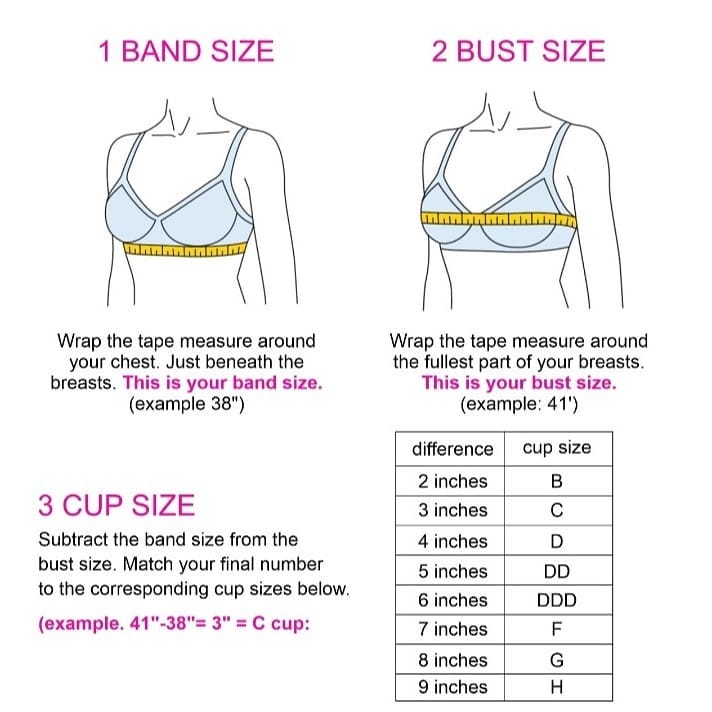
Your band size is the measurement around your ribcage, directly under your breasts. This is the part of the bra that provides the most support. Getting this measurement right is paramount.
Step-by-Step Guide to Measuring Your Band Size:
- Find the Right Tape Measure: Use a flexible fabric tape measure. Avoid using a metal tape measure as it’s too rigid and won’t give an accurate reading.
- Position the Tape: Wrap the tape measure around your body, directly under your bust. Ensure the tape is snug but not tight. It should feel firm, similar to how a bra band should feel when worn on the loosest hook.
- Keep the Tape Level: Make sure the tape measure is parallel to the floor all the way around your torso. It shouldn’t dip in the back or bunch up anywhere.
- Read the Measurement: Look at the number where the tape measure overlaps. This is your raw band measurement.
- Add Inches (The Traditional Method): In traditional bra sizing, you often add 4-5 inches to your raw band measurement to get your band size. For example, if your raw band measurement is 30 inches, you would add 4 inches to get a band size of 34. If your raw measurement is 31 inches, you’d also round up to 34. This addition accounts for the stretch of the bra band and provides a comfortable fit.
- Considerations: Some modern bra fitting methods suggest using the raw measurement or adding a smaller amount. However, the “+4” method is still widely used and often yields good results, especially for those with a softer ribcage. The goal is for the band to be snug, allowing you to fit two fingers underneath comfortably.
Interpreting Your Band Measurement Results:
Let’s say you measured your ribcage under your bust and got 30 inches.
- Raw Measurement: 30 inches
- Add 4 Inches: 30 + 4 = 34 inches
- Your Band Size: 34
If your measurement falls between two numbers, it’s generally best to round up to the nearest even number for your band size. For instance, if your raw measurement is 29 inches, adding 4 inches gives you 33 inches. In this case, you would likely try a 34 band size.
Measuring Your Bust Size
Your bust size is the measurement around the fullest part of your bust, usually across your nipples. This measurement helps determine your cup size.
Step-by-Step Guide to Measuring Your Bust Size:
- Wear a Non-Padded Bra: For the most accurate bra measurement, wear a well-fitting, non-padded, or minimizing bra. This ensures your natural bust shape is measured without any added volume.
- Position the Tape: Wrap the tape measure around the fullest part of your bust. Again, ensure the tape is snug but not tight, and that it lies flat against your body.
- Keep the Tape Level: Make sure the tape measure is parallel to the floor.
- Read the Measurement: Note the number where the tape measure overlaps. This is your raw bust measurement.
Calculating Your Cup Size:
Your cup size is determined by the difference between your bust measurement and your band measurement.
- Subtract Band from Bust: Take your bust measurement and subtract your band measurement from it.
-
Determine Cup Size: Each inch of difference typically corresponds to a cup size.
- 1 inch difference: A cup
- 2 inch difference: B cup
- 3 inch difference: C cup
- 4 inch difference: D cup
- 5 inch difference: DD cup (sometimes called E)
- 6 inch difference: DDD cup (sometimes called F)
- 7 inch difference: G cup (and so on)
Example of Calculating Cup Size:
Let’s continue with our example:
- Band Size Measurement (under bust): 30 inches (which we rounded up to 34 for the band size)
- Bust Size Measurement (fullest part): 36 inches
Now, we subtract the band size from the bust size:
- Bust Measurement – Band Measurement: 36 inches – 34 inches = 2 inches
According to the chart, a 2-inch difference corresponds to a B cup.
Therefore, your estimated bra size is 34B.
Using a Bra Size Calculator
While measuring with a tape measure is fundamental, many online resources offer a bra size calculator. These tools can be helpful, but it’s important to remember they rely on the accuracy of the measurements you input. Always use the manual measurement method first to ensure you have the correct numbers to plug into a calculator. A good bra measurement guide will always emphasize the importance of accurate measurements, regardless of the tool used.
When to Re-Measure
Your body can change over time due to various factors, affecting your bra size. It’s recommended to re-measure your bra size:
- At least once a year: This is a good general rule.
- After significant weight fluctuations: Gaining or losing a substantial amount of weight can alter your bust and band measurements.
- During pregnancy or after breastfeeding: Hormonal changes and the growth of breast tissue mean your bra size will likely change.
- If your current bras feel uncomfortable or ill-fitting: This is the most important indicator. If your existing bras are too tight, too loose, digging in, or not providing adequate support, it’s time to remeasure.
Common Bra Fitting Issues and How Measurements Help
Understanding how to measure bra size is key to avoiding common fitting problems.
Band Riding Up
If your bra band rides up your back, it usually means the band is too loose. You might need to go down a band size. For example, if you wear a 36 band and it rides up, try a 34 band. When you decrease the band size, you typically need to increase the cup size to maintain the same volume of breast tissue. So, a 36B that rides up might be better as a 34C.
Straps Digging In
Straps digging into your shoulders indicate that the band is not providing enough support, and your straps are compensating. This often means the band is too large, or the bra is simply not the right style for your shape. Ensure your band is snug, and adjust the straps so they lie flat without digging.
Spillage or Gaping
- Spillage (over the top or sides of the cups): This suggests your cup size is too small. You’ll need to increase your cup size. If you are wearing a 34B and spilling out, try a 34C.
- Gapping (in the top of the cups): This usually means your cup size is too large. You may need to decrease your cup size. If you have a 34C and there’s a gap, try a 34B.
Center Gore Not Lying Flat
The center gore (the part between the cups) should lie flat against your sternum. If it’s not lying flat, it could mean your cups are too small, or the band is too large.
The Difference Between Band Size and Bust Size in Finding Your Correct Bra Size
It’s crucial to grasp that band size and bust size are equally important. Many people focus only on the bust measurement and end up wearing the wrong band size.
- Too Large Band: Leads to riding up, poor support, and discomfort.
- Too Small Band: Causes digging, restriction, and can affect circulation.
- Too Small Cups: Results in spillage, discomfort, and lack of shape.
- Too Large Cups: Leads to gaping, shifting, and ineffective support.
Mastering the bra measurement tape technique ensures you get both numbers right.
Factors Beyond Measurement for Finding Your Bra Size
While precise measurements are the foundation, several other factors influence bra fitting:
Bra Style
Different bra styles are designed for different shapes and needs. A plunge bra will fit differently than a full-coverage or a sports bra, even in the same size.
- Full Coverage: Offers maximum support and coverage.
- Balconette: Lifts and separates, often with wider-set straps.
- Plunge: Features a low center gore for low-cut tops.
- Sports Bras: Designed for high-impact activities, providing maximum support and minimizing bounce.
Bra Construction
The way a bra is constructed – the underwire, the cup shape, the strap placement, and the fabric – all play a role in how it fits.
Fabric and Stretch
The amount of stretch in a bra’s fabric can affect the fit. A bra with more stretch might feel comfortable at a slightly different measurement than one with less stretch.
Brand Variations
Bra sizing can vary significantly between brands. A 34C in one brand might be a 34D or a 32D in another. This is why trying on bras is always recommended if possible.
What to Look For When Trying on a Bra
Once you have your measurements, they serve as a starting point. When trying on bras:
- Band: The band should be snug and parallel to the floor. You should be able to fit two fingers comfortably underneath.
- Cups: Your breasts should be fully enclosed in the cups without any spillage or gaping. The center gore should lie flat against your sternum.
- Straps: The straps should stay in place without digging into your shoulders.
- Underwire: If the bra has underwire, it should encase your entire breast tissue and lie flat against your ribcage, not on your breast tissue.
Bra Measurement Guide: A Quick Reference Table
Here’s a simple table to help you quickly convert your measurements into a potential bra size:
| Under Bust Measurement (inches) | Band Size | Bust Measurement (inches) | Difference (Bust – Under Bust) | Cup Size | Estimated Bra Size |
|---|---|---|---|---|---|
| 27-29 | 30 | 28-30 | 1 | A | 30A |
| 29-31 | 2 | B | 30B | ||
| 30-32 | 3 | C | 30C | ||
| 29-31 | 32 | 30-32 | 1 | A | 32A |
| 31-33 | 2 | B | 32B | ||
| 32-34 | 3 | C | 32C | ||
| 33-35 | 4 | D | 32D | ||
| 31-33 | 34 | 32-34 | 1 | A | 34A |
| 33-35 | 2 | B | 34B | ||
| 34-36 | 3 | C | 34C | ||
| 35-37 | 4 | D | 34D | ||
| 36-38 | 5 | DD/E | 34DD/E | ||
| 33-35 | 36 | 34-36 | 1 | A | 36A |
| 35-37 | 2 | B | 36B | ||
| 36-38 | 3 | C | 36C | ||
| 37-39 | 4 | D | 36D | ||
| 38-40 | 5 | DD/E | 36DD/E | ||
| 39-41 | 6 | DDD/F | 36DDD/F |
Note: This table uses the traditional “+4” method for band size calculation. Always use your specific measurements to find your starting point.
Frequently Asked Questions (FAQ)
Can I measure my bra size without a tape measure?
While a tape measure is the most accurate tool for measuring bra size, you can try to estimate. However, this is not recommended for achieving a truly precise fit. A string and a ruler can be used as a makeshift substitute, but the flexibility of a fabric bra measurement tape is superior.
How often should I check my bra size?
It’s advisable to check your bra size at least once a year, and whenever you notice changes in your body or your current bras no longer fit well.
My size seems to have changed. Why?
Changes in weight, hormonal shifts (like during pregnancy or menopause), muscle development, and even aging can affect your breast size and the surrounding tissue, leading to a change in bra size.
What is “sister sizing” in bras?
Sister sizing refers to the concept that if you go down a band size, you should go up a cup size, and vice versa, to maintain the same cup volume. For example, if a 36C fits well in the cup but the band is too loose, a 34D would be its sister size. This is a crucial part of finding your bra size and making adjustments.
How do I know if my bra fits properly?
A properly fitting bra will have a snug band that stays parallel to the floor, cups that fully contain your breasts without spillage or gaping, straps that don’t dig in, and a center gore that lies flat against your skin. The band should provide most of the support.
What if my measurements suggest different sizes for each breast?
This is very common, as most women have slightly asymmetrical breasts. In such cases, always fit the larger breast first. You can then often adjust the straps or use inserts in the cup for the smaller breast to achieve a better fit.
Is there a difference between international bra sizes?
Yes, bra sizing can vary significantly between countries. For example, a UK 34E might be a US 34DD. Always be aware of the sizing system you are using, especially when shopping online or internationally.
What does “band size” mean in bra fitting?
The band size refers to the measurement around your rib cage, just below your breasts. This part of the bra is critical for providing the majority of the support. A properly fitted band should be snug and feel like a second skin.
What does “bust size” mean?
The bust size is the measurement around the fullest part of your chest. This measurement, when compared to your band size, helps determine your cup size.
How can a bra measurement guide help me?
A bra measurement guide provides the step-by-step instructions and the necessary charts and formulas to accurately determine your initial bra size. It empowers you to make informed decisions when shopping for lingerie.
Should I use a bra size calculator?
A bra size calculator can be a helpful tool to estimate your size, but it should ideally be used in conjunction with manual measurements. The accuracy of a calculator depends entirely on the accuracy of the measurements you input. Measuring yourself first ensures you have the correct data to use.