
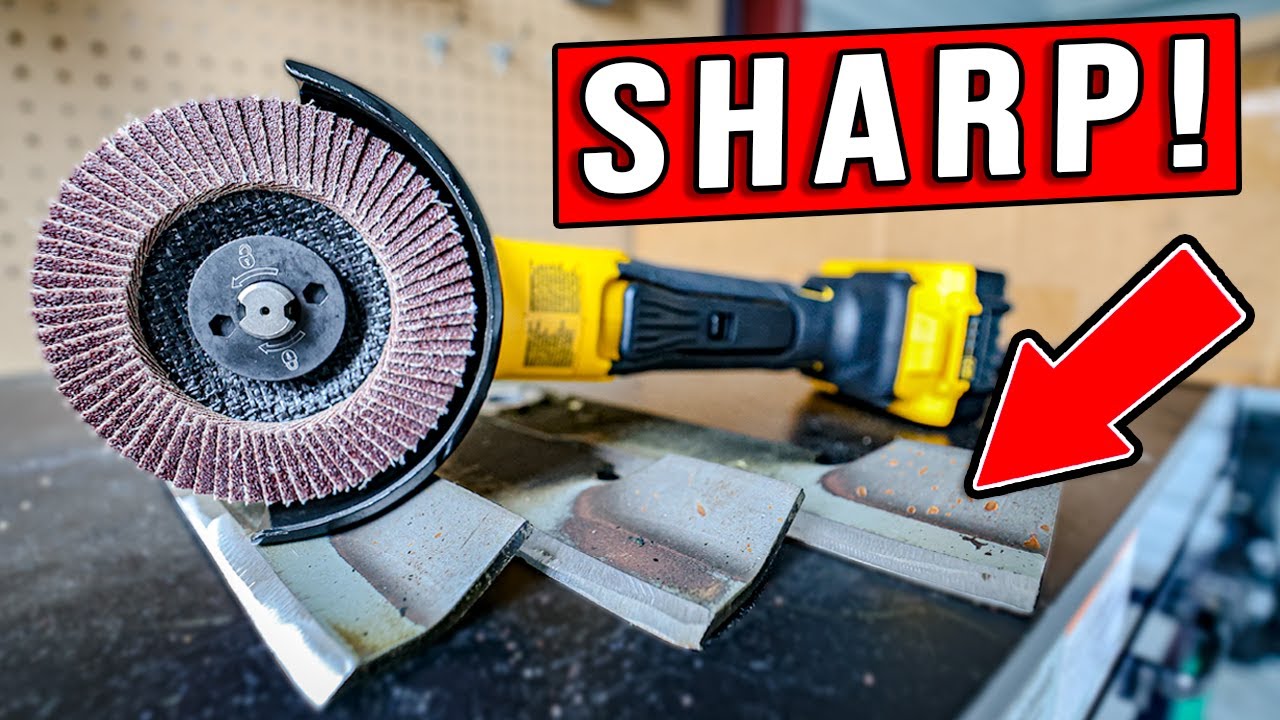
Image Source: i.ytimg.com
Pro Tips: How To Sharpen Lawn Mower Blades With Angle Grinder
Can you sharpen a lawn mower blade with an angle grinder? Yes, you can sharpen a lawn mower blade with an angle grinder, but it requires caution and the right approach. This guide will show you the pro tips for lawn mower blade sharpening using this powerful tool. We’ll cover safety, technique, and what you need to know for effective DIY mower blade sharpening.
When your lawn mower starts to struggle, cutting grass unevenly, or even tearing it instead of slicing it cleanly, it’s often a sign that the blades are dull. This isn’t just bad for your lawn’s appearance; it can also stress the grass, making it more susceptible to disease and pests. While there are various sharpening tools for lawn mowers, using an angle grinder lawn mower setup can be a fast and effective way to restore sharpness, provided you do it correctly. This isn’t the only method for sharpening mower blades, but it’s a popular one for those who want a robust solution.
Why Sharpen Your Mower Blades?
A sharp blade is crucial for a healthy lawn. Here’s why:
- Clean Cuts: Sharp blades slice through grass blades cleanly. This promotes faster healing for the grass and reduces stress.
- Healthier Lawn: Dull blades tear grass. This ragged edge is a gateway for diseases and insect infestations.
- Easier Mowing: Sharp blades require less power from your mower, meaning less strain on the engine and easier pushing for you.
- Better Appearance: A lawn cut with sharp blades looks neat and tidy. Dull blades leave behind brown, tattered tips.
Is an Angle Grinder the Best Way to Sharpen Mower Blades?
For many, yes. The best way to sharpen mower blades often comes down to speed and effectiveness. An angle grinder, with the correct attachments, can quickly remove dull metal and restore a sharp edge to your lawn mower blade sharpening. It’s a powerful tool that can handle the job efficiently. However, it’s important to note that this method requires precision to avoid removing too much metal or overheating the blade. If you’re looking for the most precise, albeit slower, method, a bench grinder or filing system might be preferred by some. But for a quick, robust sharpening, the angle grinder is a top contender.
What You’ll Need for Angle Grinder Sharpening
Before you begin, gather these essential items. Safety is paramount when working with an angle grinder, so don’t skip any of these.
- Angle Grinder: A standard corded or cordless angle grinder will work.
- Grinding Wheel or Flap Disc: A thin metal cut-off wheel (around 1/16 inch) or a flap disc (around 40-60 grit) is ideal. These are specific types of angle grinder grinding wheel attachments.
- Safety Glasses or Face Shield: Essential to protect your eyes from sparks and debris.
- Work Gloves: To protect your hands from sharp edges and heat.
- Hearing Protection: Angle grinders can be loud.
- Long-Sleeved Shirt and Long Pants: Protect your skin from sparks and metal shards.
- Sturdy Footwear: Protect your feet.
- Blade Holder or Vise: To securely hold the mower blade while you work. A bench vise is excellent for this.
- Wire Brush: To clean the blade before and after sharpening.
- Bench Grinder (Optional but Recommended): For removing larger amounts of material and getting the basic angle right, especially if the blade is very dull or damaged.
- File (Optional): For fine-tuning the edge or touching up after grinding.
- Balancing Tool or Nail: To ensure the blade is balanced after sharpening.
- Bucket of Water: For cooling the blade if it gets too hot.
- Cleaning Rags: For wiping down the blade.
- Torque Wrench: To properly reinstall the blade on the mower.
- Owner’s Manual: Consult your mower’s manual for specific blade removal and reinstallation instructions.
Preparing the Workspace and the Blade
Proper preparation is key for both safety and efficiency.
Step 1: Safety First!
This is the most crucial step when dealing with safe angle grinder use.
- Clear the Area: Ensure your workspace is free of flammable materials. Sparks can fly from the grinder.
- Wear All Safety Gear: No exceptions. Eye protection, gloves, and sturdy clothing are non-negotiable.
- Disconnect the Spark Plug: Before removing the blade, always disconnect the spark plug wire to prevent accidental starting. This is a vital safety step for sharpening mower blades.
- Secure the Mower: Make sure the mower is on a stable, level surface. You might want to block the wheels.
Step 2: Removing the Mower Blade
This can be tricky and requires care.
- Locate the Blade: Tip the mower onto its side, preferably with the carburetor facing upwards to prevent fuel or oil leakage. Identify the blade attachment hardware (bolt and washer).
- Secure the Blade: Use a block of wood or a specialized blade locking tool to prevent the blade from spinning while you loosen the bolt. A sturdy piece of wood wedged against the mower deck can also work to stop the blade.
- Loosen the Bolt: Use a socket wrench that fits the bolt head. Remember, the bolt is typically “righty-tighty, lefty-loosey” but sometimes mower manufacturers use reverse threads. Check your manual if unsure. You might need a breaker bar for stubborn bolts.
- Remove Hardware: Carefully remove the bolt, washer(s), and any other components holding the blade. Keep these organized, perhaps in a small container.
- Remove the Blade: Gently pull the blade away from the mower deck. Be mindful of the sharp edges.
Step 3: Cleaning the Blade
A clean blade makes it easier to see the cutting edge and assess its condition.
- Use a Wire Brush: Thoroughly scrub away all grass, dirt, and debris from both sides of the blade.
- Inspect for Damage: Look for any nicks, bends, or cracks. Minor damage can often be ground out, but severely damaged blades should be replaced. If the blade is significantly bent, it’s best to replace it.
Sharpening the Lawn Mower Blade with an Angle Grinder
Now for the core of the process: how to sharpen rotary mower blades using your angle grinder.
Step 4: Securing the Blade for Grinding
The blade needs to be held steady.
- Use a Vise: The best method is to clamp the blade securely in a vise. Clamp it by the flat, non-cutting part of the blade, ensuring the cutting edge is accessible. If you don’t have a vise, you can use a blade holder or even temporarily bolt the blade to a sturdy workbench, but be extremely cautious.
- Angle of Grind: You want to maintain the original angle of the blade’s cutting edge. Look at the existing bevel. Most mower blades have a bevel of around 30-45 degrees. You’re aiming to grind along this existing bevel, not create a new one.
Step 5: Grinding the Blade
This is where the angle grinder lawn mower action happens.
- Choose Your Wheel: For general sharpening, a flap disc is often easier to control than a grinding wheel, as it’s more forgiving and less likely to remove too much material too quickly. A thin cut-off wheel can also work but requires a lighter touch.
- Start Grinding:
- Hold the angle grinder firmly with both hands.
- Position the grinding wheel against the cutting edge at the existing bevel angle.
- Use light, consistent pressure. Let the tool do the work.
- Move the grinder in the direction of the blade’s rotation when it’s on the mower. This means grinding from the base of the blade towards the tip. This helps prevent the blade from catching and digging into the grinder.
- Grind one side at a time. Aim to remove metal from the dull edge to create a new, sharp bevel. Work your way along the entire length of the cutting edge.
- Cool the Blade: Metal heats up quickly when ground. Dip the blade in water frequently (every 10-15 seconds of grinding) to prevent overheating. Overheating can harden the metal (tempering) and make it brittle, which is counterproductive.
- Grind Both Sides: After sharpening one side, flip the blade over and repeat the process for the other side.
- Check Progress: Periodically stop and inspect the edge. You’re looking for a thin, consistent sharp edge. You don’t need to remove a lot of metal, just enough to bring back the sharpness. The goal is sharpening mower edges effectively.
Step 6: Refining the Edge (Optional but Recommended)
For an even keener edge, you can refine it.
- Using a File: After grinding, you can use a metal file to smooth out any rough spots or burrs left by the grinder. Use long, smooth strokes following the angle of the bevel. This step also helps in sharpening mower edges to a finer point.
- Using a Sharpening Stone: A sharpening stone can be used for a final polish.
Step 7: Balancing the Blade
This is a critical step that many DIYers overlook. An unbalanced blade will cause excessive vibration, potentially damaging your mower and making it uncomfortable to use.
- Use a Balancing Tool: The easiest way is with a dedicated blade balancer, which you can buy at most hardware stores.
- Improvised Balance Check: You can also try balancing it on a nail or the shaft of a screwdriver. Place the center hole of the blade on the tip of the nail.
- If one side of the blade drops down, it’s heavier.
- You need to remove a small amount of metal from the heavier side to achieve balance.
- Important: Remove metal from the side of the blade that is opposite the dull edge, if possible, to avoid altering your sharpening angle. If you grind a bit off the thicker part of the heavier side, it will help.
- Repeat until Balanced: Grind a little, recheck. Repeat until the blade remains level on the balancer.
Reinstalling the Blade
Putting the blade back on correctly is as important as sharpening it.
Step 8: Reinstalling the Blade
- Clean the Mower Deck: While the blade is off, take the opportunity to clean the underside of the mower deck.
- Position the Blade: Place the blade back onto the mower spindle. Ensure it’s oriented correctly. Most blades have an indicator like “This side up” or a specific curve that should face the deck. Refer to your mower’s manual.
- Reinstall Hardware: Put the washer(s) and the bolt back in place.
- Tighten Securely: Use your torque wrench to tighten the bolt to the manufacturer’s specified torque. Overtightening can strip the bolt or damage the spindle. Undertightening is dangerous as the blade could come loose. A common torque setting might be around 50-75 ft-lbs, but always check your manual.
- Reconnect Spark Plug: Don’t forget to reconnect the spark plug wire.
Tips for a Better Sharpening Experience
Here are some pro tips for improving your lawn mower blade sharpening process.
- Don’t Over-Grind: Remove only the minimum amount of metal needed to restore a sharp edge. Excessive grinding shortens the life of your blade and can weaken it.
- Maintain the Angle: Consistently holding the original bevel angle is key to proper cutting.
- Work in Sections: If the blade is very dull, work in small sections, grinding a few inches, then cooling, then moving to the next section.
- Consider the Grit: A coarser grit (like a 40-60 grit flap disc) is good for aggressive sharpening or fixing minor damage. A finer grit or a file is better for refining the edge.
- Practice Makes Perfect: Your first few attempts might not be perfect. Don’t get discouraged! The more you practice DIY mower blade sharpening, the better you’ll become.
- Know When to Replace: If your blade is bent, cracked, has large chunks missing, or is excessively thin from previous sharpenings, it’s time to buy a new one. Safety and effectiveness are paramount.
Angle Grinder vs. Other Sharpening Tools
Let’s compare the angle grinder method to other common sharpening tools for lawn mowers:
| Tool | Pros | Cons | Best For |
|---|---|---|---|
| Angle Grinder | Fast, powerful, efficient for removing metal. | Requires extreme care to avoid overheating, removing too much metal, or losing the correct angle. High risk if not used with proper safe angle grinder use protocols. | Quick sharpening, blades with minor damage, users comfortable with power tools. |
| Bench Grinder | Fast, provides a stable platform, good for establishing an angle. | Can quickly remove too much metal if not careful. Risk of overheating. | Getting a good initial bevel angle, removing moderate damage, users with a stable bench setup. |
| File | Precise, low risk of overheating or removing too much metal. | Slow, requires physical effort, can be difficult to maintain a consistent angle over the entire blade. | Fine-tuning an edge after grinding, touching up lightly dulled blades, users who prioritize control and precision. |
| Sharpening Disc/Kit | Specifically designed for mower blades, often guides angle. | Can be slower than grinders, may not remove significant damage as effectively. | Most users, as they offer a good balance of speed, control, and ease of use for general lawn mower blade sharpening. |
For how to sharpen rotary mower blades, the angle grinder offers speed, but it’s essential to respect its power. If you’re just starting with sharpening mower blades, you might consider a file or a dedicated sharpening kit first to build confidence before moving to a more aggressive tool like an angle grinder.
Frequently Asked Questions (FAQ)
Q1: How often should I sharpen my lawn mower blades?
A: It depends on how often you mow and the conditions. For a well-maintained lawn, sharpening once or twice a season is usually sufficient. If you frequently mow through tough weeds or uneven terrain, you might need to sharpen them more often. A good rule of thumb is to sharpen them if you notice your grass is being torn, not cut cleanly.
Q2: Can I sharpen my mower blade while it’s still on the mower?
A: While some very small trimmers might allow this, it’s generally not recommended for standard lawn mowers. Removing the blade provides better access, allows for cleaning, inspection, and proper balancing, and is much safer than trying to grind near your mower’s engine and deck components.
Q3: What’s the best angle to sharpen a mower blade?
A: Most lawn mower blades are designed with a bevel of around 30-45 degrees. The key is to match the original angle. You’re essentially resharpening the existing bevel, not creating a new one.
Q4: How do I know if my blade is balanced?
A: Use a blade balancer or an improvised method like a nail. If one side consistently drops when you try to balance it, it’s heavier. You need to grind off small amounts of metal from the heavier side until it balances evenly.
Q5: Is it safe to use an angle grinder for this task?
A: Yes, it can be safe if you strictly adhere to safe angle grinder use principles. Always wear all recommended safety gear, ensure the blade is securely clamped, and work in a clear, well-ventilated area. Never rush the process.
Sharpening your lawn mower blades with an angle grinder is a rewarding DIY task that can significantly improve your mower’s performance and the health of your lawn. By following these pro tips and prioritizing safety, you can achieve sharp, well-balanced blades with this powerful tool. Remember, a sharp blade is a happy blade, and a happy blade makes for a happy lawn!