
Image Source: i.ytimg.com
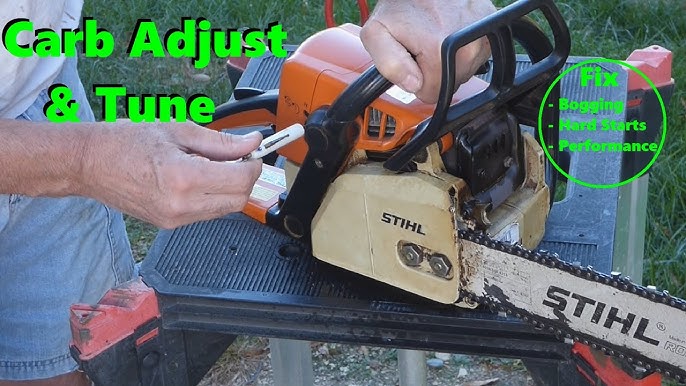
How To Set Carburetor On Stihl Chainsaw Step-by-Step
Can I adjust my Stihl chainsaw carburetor myself? Yes, you can adjust your Stihl chainsaw carburetor yourself by following these step-by-step instructions. This guide will help you with Stihl chainsaw carb adjustment and tuning your Stihl chainsaw carburetor for optimal performance.
A well-tuned carburetor is the heart of a powerful and reliable Stihl chainsaw. When your chainsaw sputters, lacks power, or idles erratically, a misadjusted carburetor is often the culprit. This in-depth guide will walk you through the process of setting your Stihl chainsaw carburetor, from basic adjustments to more involved tuning, helping you achieve peak Stihl chainsaw performance. We’ll also touch upon related topics like Stihl trimmer carburetor setting, adjusting chainsaw fuel mixture, Stihl chainsaw idle speed, Stihl chainsaw high speed adjustment, carburetor rebuild Stihl, Stihl chainsaw carburetor problems, Stihl carburetor cleaning, and Stihl chainsaw performance tuning.
Why Carburetor Adjustment is Crucial
The carburetor mixes fuel and air in the correct ratio for combustion. Environmental factors like altitude and temperature, wear and tear on engine components, or even using the wrong fuel mix can throw off this delicate balance. Proper Stihl chainsaw carb adjustment ensures your saw runs smoothly, efficiently, and powerfully. It’s also vital for preventing engine damage. A lean fuel mixture (too much air, not enough fuel) can cause overheating and internal damage, while a rich mixture (too much fuel, not enough air) leads to poor performance, fouled spark plugs, and increased emissions.
Signs Your Stihl Chainsaw Carburetor Needs Adjustment
Before diving into the adjustment process, it’s good to recognize the symptoms that indicate a carburetor issue.
- Poor Idling: The chainsaw idles too high, too low, stalls when idling, or idles unevenly.
- Hesitation or Stumbling: The engine bogs down or hesitates when you squeeze the throttle.
- Lack of Power: The chainsaw feels weak and struggles to cut through wood.
- Overheating: The engine runs hotter than normal.
- Excessive Smoke: Black smoke from the exhaust often indicates a rich fuel mixture.
- Fuel Leaks: While not always a carburetor issue, it can be related to improper settings or damaged gaskets.
Tools and Supplies You’ll Need
To successfully perform tuning Stihl chainsaw carburetor, you’ll need a few specific tools:
- Screwdriver Set: You’ll primarily need a flathead screwdriver with a small tip, specifically designed for carburetor adjustment screws. Some Stihl models might use a Torx or Allen key for certain covers.
- Tachometer (Optional but Recommended): A digital tachometer allows for precise setting of idle and high-speed RPMs, which is crucial for optimal performance.
- Clean Rags: For wiping down the carburetor and surrounding areas.
- Compressed Air (Optional): Useful for cleaning debris around the carburetor.
- Spark Plug Wrench: To remove and inspect the spark plug.
- Safety Glasses: Always protect your eyes.
- Gloves: To keep your hands clean and for better grip.
- Owner’s Manual: Your Stihl chainsaw’s manual will have specific information about its carburetor and recommended settings.
Locating the Carburetor Adjustment Screws
Most Stihl chainsaws have a carburetor with typically two, and sometimes three, adjustment screws. These screws control the fuel-air mixture.
- Low-Speed (L) Screw: This screw primarily affects the idle speed and the transition from idle to acceleration.
- High-Speed (H) Screw: This screw controls the fuel-air mixture at full throttle.
- Idle Speed Screw (if separate): Some carburetors have a separate idle speed screw that physically adjusts the throttle plate opening, rather than the fuel mixture. This is often a small metal screw that presses against a stop on the throttle linkage.
The screws are usually located on the side or bottom of the carburetor. They are often marked with “L” and “H”. If you can’t find them, consult your owner’s manual.
General Stihl Chainsaw Carburetor Adjustment Procedure
The goal of adjustment is to achieve the correct fuel-air mixture for optimal engine performance across all operating speeds. The general process involves setting the low-speed screw and then the high-speed screw.
Important Note: Always ensure you are using the correct fuel-oil mixture for your Stihl chainsaw. Using straight gasoline or the wrong oil ratio can damage your engine and affect carburetor performance.
Step 1: Prepare Your Chainsaw
- Safety First: Ensure the chainsaw is on a stable, flat surface. Turn off the engine completely and allow it to cool down if it has been running.
- Remove the Air Filter Cover: This typically involves unscrewing a few screws or releasing latches.
- Remove the Air Filter: Carefully take out the air filter. Inspect it for damage or excessive dirt. If dirty, clean or replace it. A clogged air filter can mimic carburetor problems.
- Inspect the Spark Plug: Remove the spark plug and check its condition. A fouled, worn, or damaged spark plug can cause poor running. Clean or replace it as needed. Reinstall the spark plug, but do not connect the ignition wire yet.
Step 2: Setting the Low-Speed (L) Screw and Idle
The low-speed adjustment is critical for smooth idling and good acceleration.
- Initial Setting: Turn the low-speed (L) screw gently clockwise until it lightly seats. Then, back it out 1 to 1.5 turns. This is a starting point.
- Start the Engine: Reconnect the spark plug wire. Ensure the chain brake is engaged. Carefully pull the starter cord to start the engine. It may take a few pulls.
- Warm Up the Engine: Let the engine run for a few minutes to warm up.
- Adjusting for Idle Speed:
- If the engine idles too fast, turn the idle speed screw (if present) counter-clockwise slightly. If there is no separate idle speed screw, you’ll adjust the L screw later for idle quality.
- If the engine stalls or runs rough at idle, you’ll need to adjust the L screw.
- Fine-Tuning the L Screw:
- With the engine idling, slowly turn the L screw counter-clockwise (richer mixture) until the engine speed starts to increase.
- Then, slowly turn the L screw clockwise (leaner mixture) until the engine speed starts to decrease or the engine begins to labor (sputter).
- The ideal setting is usually halfway between these two points, where the engine idles smoothly and revs cleanly when you blip the throttle.
- Setting the Idle Speed (if no separate screw): After finding the best mixture with the L screw, you might need to adjust the actual idle speed.
- Turn the L screw slightly in either direction (leaner or richer) until the engine idles at its highest, smoothest RPM without bogging.
- Then, use the idle speed screw (if present) to set the desired idle RPM. If there isn’t a separate idle speed screw, you might need to slightly turn the L screw back in the direction that lowers the RPM until you reach the desired idle speed. Consult your manual for the specified idle RPM. A common range is 2,500-3,000 RPM, but this varies by model.
Step 3: Setting the High-Speed (H) Screw
This adjustment is for full-throttle performance.
- Initial Setting: Turn the high-speed (H) screw gently clockwise until it lightly seats. Then, back it out 1 to 1.5 turns.
- Test at Full Throttle: With the engine warm and idling at the correct speed, carefully and briefly engage the throttle to wide-open. Listen to the engine.
- Adjusting for High Speed:
- If the engine bogs down immediately when you open the throttle: The mixture is too lean. Turn the H screw counter-clockwise (richer) in small increments (1/8 to 1/4 turn at a time).
- If the engine sputters or “four-strokes” (sounds like it’s running unevenly) at high RPM: The mixture is too rich. Turn the H screw clockwise (leaner) in small increments.
- The Goal: You want the engine to accelerate smoothly and reach its maximum power without sputtering or bogging. The ideal setting will allow the engine to rev freely and sound “crisp” at full throttle.
- Using a Tachometer (Recommended):
- If you have a tachometer, set it to measure RPM.
- Hold the throttle wide open and read the RPM.
- Adjust the H screw to achieve the RPM specified in your owner’s manual.
- Typically, you’ll adjust the H screw slightly leaner (clockwise) until the engine begins to falter, then back it out (counter-clockwise) just enough to make the engine run smoothly again. This is often referred to as “lean best idle” or “lean best power.”
Step 4: Final Checks and Adjustments
- Re-check Idle: After adjusting the high-speed screw, the idle speed might have changed. Re-check and adjust the idle speed screw (or L screw) as needed.
- Test Performance: Engage the chain brake, and briefly rev the engine. Listen for any hesitation or sputtering. Test the saw under a light load if possible.
- Reassemble: Once you’re satisfied with the performance, reattach the air filter and air filter cover securely.
Advanced Stihl Chainsaw Performance Tuning
For those looking to optimize their saw beyond basic adjustments, further Stihl chainsaw performance tuning might involve different carburetor models or more precise adjustments.
- Carburetor Tuning for Altitude: At higher altitudes, the air is thinner, requiring a leaner fuel mixture. At lower altitudes, a slightly richer mixture is often preferred. If you frequently move between vastly different altitudes, you may need to adjust your carburetor accordingly.
- Aftermarket Carburetors: Some enthusiasts opt for high-performance aftermarket carburetors, which might have different adjustment ranges or require specialized tuning.
- Modifications: Engine modifications can significantly alter the air/fuel requirements, necessitating custom carburetor tuning.
Common Stihl Chainsaw Carburetor Problems and Solutions
Understanding common Stihl chainsaw carburetor problems can save you time and frustration.
- Clogged Carburetor: This is very common. Ethanol in gasoline can degrade rubber and plastic components, leaving deposits that clog the small fuel passages.
- Solution: Stihl carburetor cleaning is often the first step. This involves disassembling the carburetor, cleaning all passages with carburetor cleaner, and replacing any worn or damaged gaskets and diaphragms. A carburetor rebuild Stihl kit provides these parts.
- Stuck Adjustment Screws: Corrosion can cause adjustment screws to seize.
- Solution: Apply a penetrating oil and let it soak. Gently try to turn them. If they still won’t move, you may need to carefully drill them out or replace the carburetor.
- Worn Gaskets or Diaphragms: These flexible components can harden, crack, or become damaged, leading to leaks or improper fuel delivery.
- Solution: Replace them. A carburetor rebuild Stihl kit is the best way to address this.
- Incorrect Fuel Mixture: Using old fuel, the wrong oil ratio, or contaminated fuel will cause poor running.
- Solution: Drain the old fuel and replace it with fresh, properly mixed fuel. Clean the fuel filter in the fuel tank.
Carburetor Rebuild Stihl: When and How
A carburetor rebuild Stihl is a more involved process than simple adjustment. It’s necessary when cleaning isn’t enough, or when you suspect internal damage or wear.
When to Rebuild:
- After prolonged storage, especially with old fuel.
- If the saw runs poorly and adjustments don’t help.
- If you find sticky residue or corrosion inside the carburetor.
- If fuel leaks from the carburetor body itself.
- As part of general maintenance every few years, depending on usage.
The Rebuild Process:
- Remove the Carburetor: Carefully detach the carburetor from the chainsaw. Note the linkages and fuel lines attached.
- Disassemble: Lay out the parts on a clean surface in order. Take pictures if needed. Remove adjustment screws, diaphragms, gaskets, and any other components.
- Clean: Thoroughly clean all metal parts with a dedicated carburetor cleaner. Use compressed air to blow out all passages and orifices. A fine wire or carb cleaning tool might be needed for stubborn clogs, but be gentle.
- Inspect: Check all parts for wear, damage, or hardening. Look at the needle valve and seat if accessible.
- Reassemble: Use a carburetor rebuild Stihl kit. These kits typically include new diaphragms, gaskets, and sometimes a new needle valve and seat. Follow the instructions in the kit carefully. Ensure all parts are installed in the correct orientation.
- Reinstall: Mount the rebuilt carburetor back onto the chainsaw.
- Adjust: Perform the full Stihl chainsaw carb adjustment procedure as outlined in this guide.
Stihl Trimmer Carburetor Setting
The principles for Stihl trimmer carburetor setting are very similar to chainsaws. Trimmers also have L and H adjustment screws (or sometimes a single mixture screw on very basic models) and an idle speed screw. The process involves warming up the engine, adjusting the L screw for smooth transition, adjusting the H screw for full-throttle power, and finally setting the idle speed. Always refer to your specific trimmer’s manual for exact procedures and specifications.
Adjusting Chainsaw Fuel Mixture: Key Considerations
- Fuel Quality: Always use fresh, high-quality gasoline and the correct Stihl-branded 2-stroke oil mixed at the specified ratio.
- Ethanol: Be aware that ethanol in gasoline can attract moisture and degrade fuel system components over time. Consider using ethanol-free fuel if available, especially for seasonal equipment.
- Environmental Conditions: As mentioned, altitude and ambient temperature affect air density. You may need to adjust your mixture slightly depending on these conditions.
- Listen to Your Engine: Your engine is your best indicator. A healthy engine runs smoothly, accelerates cleanly, and produces good power without any unusual noises or excessive smoke.
Stihl Chainsaw Idle Speed: The Right Balance
Setting the Stihl chainsaw idle speed is crucial for usability and engine longevity.
* Too High: The chain can spin at idle, posing a safety hazard. It can also cause excessive wear on the clutch and chain brake.
* Too Low: The engine may stall when you let off the throttle, or it might not pick up speed smoothly when you accelerate.
The correct idle speed ensures the chain remains stationary when the throttle is released but allows for quick and smooth engagement when the throttle is applied.
Stihl Chainsaw High Speed Adjustment: Reaching Peak Power
The Stihl chainsaw high speed adjustment is all about extracting maximum power from your engine. An incorrectly set high-speed mixture can lead to:
* Lean (too little fuel): Overheating, loss of power, engine damage.
* Rich (too much fuel): Fouled spark plugs, poor acceleration, reduced power, increased emissions.
Achieving the “lean best power” setting is the goal for optimal Stihl chainsaw performance tuning.
Common Stihl Chainsaw Carburetor Problems (Recap)
To summarize, the most frequent Stihl chainsaw carburetor problems stem from:
1. Clogging: Due to old fuel, debris, or fuel system degradation.
2. Wear: Diaphragms and gaskets hardening or cracking.
3. Misadjustment: Environmental factors or improper prior adjustments.
4. Fuel Issues: Contaminated fuel or incorrect fuel-oil mix.
Regular Stihl carburetor cleaning and using the correct fuel are your best defenses.
Frequently Asked Questions (FAQ)
Q1: How often should I adjust my Stihl chainsaw carburetor?
A1: You don’t need to adjust it regularly unless you notice symptoms of poor performance. However, it’s a good idea to check and potentially adjust it annually, especially before the main cutting season or if you store your saw for extended periods.
Q2: My Stihl chainsaw won’t start, could it be the carburetor?
A2: It could be, but it could also be a spark plug issue, ignition problem, clogged fuel filter, or an empty fuel tank. Check the spark plug and fuel first. If those are fine, the carburetor may need cleaning or adjustment.
Q3: What is the difference between the L and H screws on my Stihl chainsaw carburetor?
A3: The L screw controls the fuel mixture at idle and low speeds. The H screw controls the fuel mixture at high speeds and full throttle.
Q4: Can I use a regular screwdriver to adjust my Stihl chainsaw carburetor?
A4: It’s best to use a screwdriver specifically designed for carburetors, usually a small flathead with a particular tip size. Using the wrong screwdriver can damage the adjustment screws.
Q5: My Stihl chainsaw bogs down when I accelerate, what should I do?
A5: This typically indicates a lean fuel mixture at low speeds or a restriction in the fuel delivery. Try richening the L screw slightly. Also, check your fuel filter and air filter. If problems persist, the carburetor may need cleaning or a rebuild.
Q6: My Stihl chainsaw runs rough at high speed and sounds like it’s going to stall, what’s wrong?
A6: This usually means the fuel mixture is too rich at high speed. You need to lean it out by turning the H screw clockwise in small increments.
By following these steps and paying attention to your Stihl chainsaw’s performance, you can keep it running smoothly and powerfully for years to come. Regular maintenance, including proper Stihl carburetor cleaning and timely Stihl chainsaw carb adjustment, is key to a long-lasting and efficient machine.