
Can you replace a 15 amp circuit breaker yourself? Yes, with the right precautions and knowledge, a homeowner can safely replace a 15 amp circuit breaker. This DIY guide will walk you through the process, emphasizing safety every step of the way. Replacing a circuit breaker is a common aspect of electrical panel maintenance and can help resolve issues with a circuit breaker tripped. This guide is specifically for replacing a standard 15 amp single pole breaker.
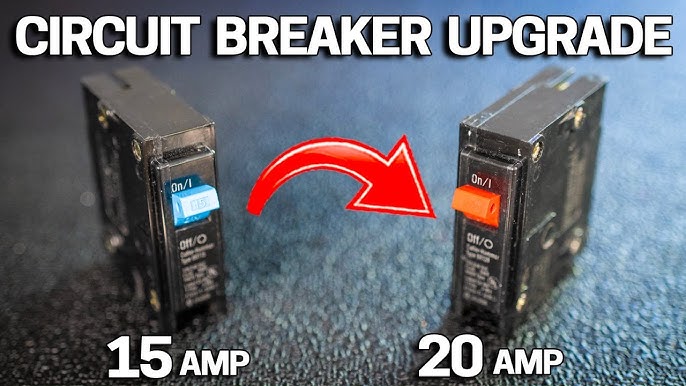
Image Source: i.ytimg.com
Why Replace a 15 Amp Circuit Breaker?
Circuit breakers are the unsung heroes of your home’s electrical system. They protect your wiring from damage by shutting off power when there’s too much electrical flow. If a breaker repeatedly trips, or if it’s old and showing signs of wear, replacing it is often the best solution. Troubleshooting circuit breaker issues can sometimes lead to the need for a replacement.
Common Reasons for Breaker Replacement:
- Frequent Tripping: If a 15 amp circuit breaker keeps tripping even with normal use, it might be faulty or the circuit is overloaded.
- Breaker Not Resetting: Some breakers can become stuck or fail to reset properly after tripping.
- Physical Damage: Signs of overheating, melting, or physical damage to the breaker itself indicate a need for replacement.
- Age: Like any component, circuit breakers have a lifespan. Old breakers may not function as reliably.
- Upgrades: Sometimes, you might upgrade an appliance on a circuit that requires a different amperage breaker, though this is less common for a simple 15 amp replacement and often involves more significant electrical work.
Safety First: Essential Precautions
Working with electricity is dangerous. Always prioritize your safety. If you’re not comfortable or unsure about any step, stop immediately and call a qualified electrician.
Essential Safety Measures:
- Turn Off Power: This is the MOST CRITICAL step. You must de-energize the entire electrical panel before working on any breaker.
- Use Insulated Tools: Employ tools with insulated handles to protect against electric shock.
- Wear Safety Glasses: Protect your eyes from flying debris or sparks.
- Work in a Dry Area: Ensure the area around the electrical panel is completely dry.
- Never Rush: Take your time and follow each step carefully. Rushing leads to mistakes.
- Know Your Limits: If you are unsure, consult a professional. This guide is for informative purposes; your safety is paramount.
- Avoid Disturbing Other Breakers: Be careful not to accidentally knock other breakers on or off while working.
- Use a Non-Contact Voltage Tester: Before touching any wires or components, use this tester to confirm that the power is indeed off.
Tools and Materials You’ll Need
Gathering the right tools before you start makes the process smoother and safer.
Necessary Tools:
- Screwdrivers: Phillips and flathead screwdrivers, preferably with insulated handles.
- Wire Strippers/Cutters: To prepare any wires if needed.
- Needle-Nose Pliers: Useful for gripping and manipulating wires.
- Non-Contact Voltage Tester: Essential for confirming power is off.
- Replacement 15 Amp Circuit Breaker: Ensure it’s the correct type and rating for your panel.
- New Circuit Breaker: This should be a 15 amp, single-pole breaker compatible with your electrical panel brand (e.g., Square D, GE, Siemens). Check the existing breaker or your panel for brand information.
- Gloves (Optional but Recommended): For added protection.
- Headlamp or Flashlight: To illuminate the inside of the panel.
Step-by-Step Guide to Replacing a 15 Amp Circuit Breaker
Let’s get started with the actual process of replacing a household circuit breaker.
Step 1: Identify the Faulty Breaker
First, you need to pinpoint which 15 amp circuit breaker needs replacing. This is often indicated by the breaker being in a “tripped” position (partially between ON and OFF) or a breaker that won’t stay in the ON position. You might have noticed a specific appliance or area of your home losing power, which helps in identifying the correct breaker.
Step 2: Turn Off Power to the Entire Panel
This is the most crucial safety step. Locate your main electrical panel, typically found in a basement, garage, utility room, or hallway closet.
- Open the panel door.
- Find the main breaker. This is usually the largest breaker at the top or side of the panel.
- Flip the main breaker to the OFF position. This will shut off power to every circuit in your house.
Step 3: Verify Power is Off
After flipping the main breaker, it’s imperative to confirm that all power is truly off.
- Use your non-contact voltage tester.
- Carefully touch the tester to the terminals of various breakers (without touching any metal). If the tester lights up or beeps, power is still present, and you must re-check your main breaker.
- You can also test a wall outlet on a circuit you know is usually powered to confirm it’s dead.
Step 4: Remove the Panel Cover
With the main power off, you can now remove the cover of the electrical panel.
- You’ll typically find screws holding the cover in place.
- Carefully unscrew them and lift the cover away. Keep the screws in a safe place so you don’t lose them.
Step 5: Locate the Breaker to Be Replaced
Observe the layout of your electrical panel. You’ll see rows of circuit breakers. The breaker you need to replace will be clearly identifiable by its position and the amperage rating (15A).
Step 6: Disconnect the Wire
Each breaker is connected to a wire that brings power to the circuit.
- Identify the Wire: Find the wire connected to the top terminal of the breaker you are replacing.
- Loosen the Terminal Screw: Using the appropriate screwdriver (usually Phillips), loosen the screw holding the wire in place.
- Remove the Wire: Gently pull the wire out from under the screw terminal. Ensure no other wires are accidentally loosened or disconnected.
Step 7: Remove the Old Breaker
Circuit breakers are typically clipped onto a bus bar within the panel.
- Unclip the Breaker: Most breakers clip onto the bus bar at the bottom. You might need to push the breaker upwards or slightly to the side to disengage the clip.
- Pull the Breaker Out: Once unclipped, gently pull the old breaker straight down and away from the bus bar.
Table: Common Breaker Types and Their Connections
| Breaker Type | Connection Point | How it Attaches to Panel |
|---|---|---|
| Single Pole | Top terminal screw | Clips onto bus bar |
| Double Pole | Top terminal screws (2) | Clips onto bus bar |
| GFCI/AFCI | Top terminal screw, often neutral wire connection | Clips onto bus bar, sometimes requires extra connection |
Note: This table covers the most common types. Always verify your specific panel and breaker.
Step 8: Install the New Breaker
Now it’s time to put in the new 15 amp circuit breaker.
- Align the New Breaker: Position the new breaker so its clip aligns with the bus bar where the old one was.
- Clip it In: Push the breaker firmly onto the bus bar until it clicks into place. Ensure it’s securely seated.
- Connect the Wire: Take the wire you disconnected from the old breaker.
- Secure the Wire: Place the wire under the terminal screw on the new breaker and tighten the screw firmly, but do not overtighten. The wire should be snug and not pull out easily.
Step 9: Reinstall the Panel Cover
Once the new breaker is securely in place and wired, you can put the panel cover back on.
- Align the cover over the panel.
- Reinsert and tighten all the screws you removed earlier.
Step 10: Restore Power
This is the moment of truth!
- Go back to the main electrical panel.
- Flip the main breaker back to the ON position.
- Return to the breaker you replaced.
- Flip the new 15 amp breaker to the ON position.
Step 11: Test the Circuit
Check if the circuit is now functioning correctly.
- Go to the area or plug controlled by the new breaker.
- Try plugging in a lamp or small appliance.
- If everything works as expected, congratulations! You’ve successfully replaced your circuit breaker.
Troubleshooting Common Issues After Replacement
Sometimes, things don’t go perfectly the first time. Here are a few common issues and how to address them.
Breaker Trips Immediately
- Possible Cause: The circuit is still overloaded, or there’s a short circuit in the wiring or the appliance being used.
- Solution: Disconnect all appliances on the circuit. Turn the breaker on. If it stays on, plug in appliances one by one to find the culprit. If it still trips with nothing plugged in, there might be a wiring issue, and you should call an electrician.
Breaker Doesn’t Turn On
- Possible Cause: The breaker isn’t seated correctly on the bus bar, or the main breaker wasn’t fully engaged.
- Solution: Turn off the main breaker again. Re-check that the new breaker is firmly clipped onto the bus bar and that the wire terminal is tight. Ensure the main breaker is fully ON.
Flickering Lights
- Possible Cause: Loose connections at the breaker, at the outlet, or a faulty breaker.
- Solution: If the flickering is on the newly replaced circuit, re-check the connections at the breaker. If the problem persists, it might indicate a loose connection elsewhere on that circuit, requiring a professional inspection.
Electrical Panel Maintenance Tips
Regular electrical panel maintenance ensures the safety and efficiency of your home’s electrical system.
Regular Maintenance Practices:
- Annual Inspections: Consider having a qualified electrician inspect your panel annually.
- Keep it Clean: Dust and debris can build up in the panel, posing a fire hazard. Keep the area around the panel clean and clear.
- Labeling: Ensure all your breakers are clearly labeled. This makes troubleshooting and turning off specific circuits much easier. You can do this with a label maker or a permanent marker on the panel’s labeling strip.
- Avoid Overloading: Be mindful of how many high-draw appliances you run on a single circuit, especially those protected by 15 amp breakers.
- Address Tripping Promptly: Don’t ignore a circuit breaker that trips repeatedly. Investigate the cause or have it inspected.
When to Call a Professional Electrician
While this DIY guide provides the steps for replacing a 15 amp circuit breaker, there are situations where professional help is essential.
Situations Requiring an Electrician:
- Unfamiliarity: If you feel uncomfortable or uncertain at any stage of the process.
- Old or Damaged Panel: If your electrical panel is old, corroded, or shows signs of significant damage, it’s best to have it inspected and potentially replaced by a professional.
- Aluminum Wiring: If your home has aluminum wiring, it requires special connectors and techniques. Attempting to work with it without expertise can be dangerous.
- Repeated Tripping or Electrical Issues: If replacing a breaker doesn’t solve the problem, or if you experience other electrical issues like flickering lights or burning smells, it’s time to call a pro.
- Complex Panel: If your electrical panel is complex, has many circuits, or you’re unsure about the main breaker’s function, seek professional assistance.
- Burn Marks or Discoloration: If you see any burn marks or discoloration on the old breaker or the panel itself, this indicates a serious problem that requires immediate professional attention.
Frequently Asked Questions (FAQ)
Q1: Can I replace a 20 amp breaker with a 15 amp breaker?
Yes, you can generally replace a higher amperage breaker with a lower amperage one (like replacing a 20 amp with a 15 amp). This is often done to protect older wiring that can’t handle the higher amperage. However, you cannot replace a lower amperage breaker with a higher one, as this could overload and damage the wiring, creating a fire hazard.
Q2: What does it mean when a circuit breaker tripped?
A circuit breaker tripped means it automatically shut off the power to a specific circuit. This happens when the amount of electricity flowing through the circuit exceeds the breaker’s rated capacity (in this case, 15 amps) or if there’s a short circuit. It’s a safety mechanism to prevent overheating and fires.
Q3: How do I switch a breaker that has tripped?
To switch a tripped breaker back on, you usually need to push it firmly to the OFF position first, then flip it back to the ON position. This “resets” the breaker. If it trips again immediately, there’s an underlying problem.
Q4: What is the difference between a single-pole and a double-pole breaker?
A single-pole breaker controls one 120-volt circuit and takes up one slot in your electrical panel. A double-pole breaker controls a 240-volt circuit and takes up two adjacent slots in the panel, often used for larger appliances like air conditioners or electric dryers. This guide is for single-pole breaker replacement.
Q5: Do I need to replace the entire electrical panel if one breaker is bad?
Not necessarily. If only one or a few breakers are faulty, you can often replace them individually as part of electrical panel maintenance. However, if the panel is very old, outdated, or shows signs of extensive wear and tear, an electrician might recommend replacing the entire panel.
Q6: How do I know if I have the correct replacement breaker?
Ensure the new breaker has the same amperage rating (15 amps) and is designed for your electrical panel brand and model. The physical shape and connection mechanism (how it clips onto the bus bar) must match.
Q7: What are some general electrical safety tips for DIY work?
Always turn off power at the main breaker before working. Use insulated tools. Wear safety glasses. Never work in wet conditions. Use a voltage tester to confirm power is off. If you’re ever unsure, stop and call a qualified electrician.
By following these steps and prioritizing safety, you can confidently tackle the task of replacing a 15 amp circuit breaker as part of your household circuit breaker maintenance. Remember, when in doubt, always consult a professional electrician.