
Image Source: content.instructables.com
How To Replace Chainsaw Blade Safely and Easily: A Step-by-Step DIY Guide
Can you replace a chainsaw blade yourself? Yes, you absolutely can! Replacing a chainsaw blade, or more accurately, the chainsaw chain and guide bar, is a common and manageable DIY task that’s essential for maintaining your chainsaw’s performance and ensuring your safety. This guide will walk you through the process of a chainsaw chain replacement, detailing everything you need to know to change chainsaw chain with confidence. We’ll cover the entire process, from identifying the right chainsaw parts to the final checks.
This guide is designed to be comprehensive, covering not just the physical replacement but also the importance of proper chainsaw maintenance, including when to consider a chainsaw bar and chain replacement. We’ll also touch upon chainsaw sharpening and basic chainsaw troubleshooting that might lead you to needing a new chain. Even if you have an electric chainsaw blade replacement, many of the core principles apply.
Why You Might Need to Replace Your Chainsaw Chain
Chainsaw chains don’t last forever. They wear out, get dull, and can even break. Here are the most common reasons you’ll need to perform a chainsaw chain replacement:
- Dullness: A dull chain cuts slowly, requires more force, and can make the saw “work” harder, putting a strain on the engine or motor. You might notice this if you’re constantly pushing the saw into the wood rather than letting the chain do the work. This often indicates it’s time for chainsaw sharpening, but if the chain is severely damaged or worn, replacement is necessary.
- Damage: Teeth can chip, break, or bend due to hitting rocks, metal, or other hard objects. Damaged teeth reduce cutting efficiency and are a significant safety hazard.
- Wear: Over time, the metal in the chain will wear down. The cutters will become smaller, and the drive links and cutters can stretch, leading to a loose chain even when tensioned correctly.
- Breakage: Chains can snap, especially under heavy load or if they are not properly maintained and tensioned.
- Chain Pitch and Gauge Mismatch: If you’re changing the guide bar, you must ensure your new chain has the correct pitch and gauge to match the bar and the saw’s drive sprocket.
What You’ll Need for a Chainsaw Chain Replacement
Before you begin, gather all the necessary tools and supplies. Having everything ready makes the process smoother and safer.
Essential Tools:
- Combination Wrench or Screwdriver: Most chainsaws use a specific tool that comes with the saw for adjusting tension and removing bar nuts. If you’ve lost it, a standard wrench or screwdriver that fits the nuts will work.
- Gloves: Heavy-duty work gloves are crucial for protecting your hands from sharp chain teeth and the guide bar.
- Safety Glasses or Goggles: Always wear eye protection to prevent sawdust or metal fragments from getting into your eyes.
- Rag or Shop Towel: For wiping down parts and keeping things clean.
- Wire Brush: Useful for cleaning debris from the guide bar groove and around the drive sprocket.
Optional but Recommended:
- Bar Groove Cleaner: A specialized tool for effectively cleaning the groove in the guide bar.
- Torque Wrench: For ensuring bar nuts are tightened to the manufacturer’s specifications (if applicable to your model).
- New Chainsaw Chain: Ensure you have the correct chain for your saw (we’ll discuss how to find this below).
- New Guide Bar: If your current bar is also worn or damaged.
Identifying the Correct Chainsaw Chain and Bar
Getting the right chainsaw parts is critical. A chain that doesn’t fit your saw can cause damage, be unsafe, or simply not work.
Chain Specifications:
There are three main specifications you need to know for your chainsaw chain:
- Pitch: This refers to the distance between the drive links. It’s measured from the first rivet to the third rivet, divided by two. Common pitches are .325”, 3/8”, and .404”.
- Gauge: This is the thickness of the drive link that sits in the guide bar groove. Common gauges are .050” and .063”.
- Drive Links: This is the number of drive links on the chain that fit into the guide bar groove.
How to Find Your Saw’s Specifications:
- Check the Saw’s Manual: The owner’s manual is the best source for this information.
- Look on the Guide Bar: The pitch and gauge are usually stamped onto the guide bar itself, often near the base where it attaches to the saw.
- Inspect the Old Chain: The pitch and gauge are also often stamped on the top or bottom of the drive links.
- Contact the Manufacturer or Retailer: If you’re still unsure, contact the chainsaw manufacturer or the retailer where you purchased the saw with your model number.
Important Note: When performing a chainsaw bar and chain replacement, ensure both the new bar and the new chain have compatible specifications.
Step-by-Step Guide to Changing Your Chainsaw Chain
Here’s how to safely and easily change chainsaw chain:
Step 1: Safety First! Prepare Your Workspace and Chainsaw
- Turn Off the Chainsaw: Ensure the engine is off and the ignition is disconnected (for gas saws) or the power cord is unplugged (for electric saws).
- Cool Down: If you’ve been using the chainsaw, let the engine and chain cool down. The chain and bar can get very hot.
- Stable Surface: Place the chainsaw on a stable, flat surface.
- Wear Protective Gear: Put on your gloves and safety glasses.
Step 2: Access the Chain and Bar
- Locate the Bar Nuts: Most gas chainsaws have two nuts that secure the guide bar to the saw’s body. These are usually located under a cover plate.
- Remove the Clutch Cover: Use your combination wrench or screwdriver to loosen and remove the clutch cover nuts. Be careful not to lose the nuts or the washers. Set them aside in a safe place.
- Remove the Old Chain and Bar: Gently lift the clutch cover off. The guide bar should now be free from the saw body. You can now slide the old chain off the guide bar. For some models, you might need to loosen a chain tensioning screw first.
Step 3: Clean the Guide Bar and Drive Sprocket
This is a crucial step in chainsaw maintenance. A clean system ensures smooth operation and longevity.
- Clean the Bar Groove: Use a wire brush or a bar groove cleaner to remove any sawdust, wood chips, or old oil from the groove of the guide bar. This groove is where the drive links of the chain sit. If it’s clogged, the new chain won’t run smoothly.
- Clean the Sprocket: Inspect the drive sprocket (the star-shaped gear that engages the chain) for wear or damage. Clean any debris from around the sprocket. If the sprocket teeth are significantly worn or hooked, it’s a good time to replace it along with the chain and possibly the bar.
Step 4: Mount the New Chain onto the Guide Bar
- Position the Chain: Lay the new chain flat. Ensure the cutters are facing the correct direction. On the top of the chain, the cutters should face away from the saw body, towards the tip of the guide bar. On the bottom, they should face towards the saw body.
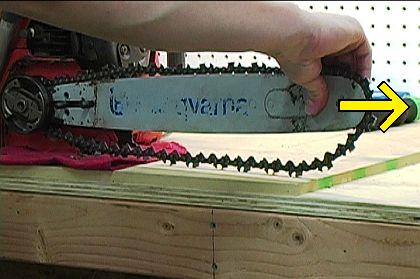
- Thread the Chain: Carefully thread the chain around the guide bar, starting at the nose sprocket and working your way around to the clutch sprocket. Ensure the drive links of the chain seat properly into the groove of the guide bar.
Step 5: Mount the Guide Bar and Chain Assembly onto the Chainsaw
- Align the Bar: Position the guide bar back onto the chainsaw. There are usually two studs that the guide bar fits onto. The drive sprocket will engage with the drive links of the new chain.
- Adjust Chain Tension (Initial): Before tightening the bar nuts, you’ll need to adjust the chain tension. Many chainsaws have an adjustment screw or knob, often located on the front or side of the clutch cover assembly or near the bar mounts.
- For external tensioners: Turn the tensioning screw clockwise to tighten the chain and counter-clockwise to loosen it.
- For internal tensioners (usually require the bar nuts to be slightly loose): You might need to use the adjustment screw on the side of the guide bar (often a small knob with a flathead slot) to initially snug up the chain.
- Setting Initial Tension: The goal here is to have the chain snug enough so it doesn’t sag off the bar, but loose enough that you can still move it by hand. The drive links should not be fully seated in the bar groove yet.
Step 6: Secure the Clutch Cover and Bar Nuts
- Re-attach the Clutch Cover: Place the clutch cover back over the guide bar and chain assembly. Ensure the studs on the saw body go through the holes in the cover.
- Hand-Tighten Bar Nuts: Put the bar nuts back on and hand-tighten them.
- Adjust Chain Tension Properly: Now, fine-tune the chain tension using the adjustment screw or knob.
- Correct Tension: The chain should be snug against the bar, but you should still be able to pull it around the bar by hand with gloves on. The chain should not sag off the bottom of the bar. The drive links should be seated in the bar groove.
- Too Tight: If the chain is too tight, it will bind and be difficult to move, putting excessive strain on the engine and components.
- Too Loose: If the chain is too loose, it can derail, causing damage to the saw and potential injury.
- Tighten Bar Nuts: Once the tension is correct, use your wrench to firmly tighten the bar nuts. Tighten them evenly, alternating between nuts, until they are secure.
Step 7: Final Checks and Testing
- Spin the Chain: With the bar nuts fully tightened, try spinning the chain by hand again. It should move freely, but with a slight resistance.
- Start the Saw: If it’s a gas saw, start the engine. For electric saws, plug them in and turn them on.
- Run the Chain: Let the chain run for a few seconds.
- Check for Sagging: Turn the saw off and let the chain cool slightly. Check the chain tension again. Chains often stretch slightly when new or after the first few minutes of use. You might need to make a minor adjustment. The chain should remain taut against the bar.
- Check for Looseness: Ensure the chain doesn’t sag off the bottom of the bar. If it does, repeat Step 6 to readjust tension and tighten the bar nuts.
Frequently Asked Questions (FAQ) about Chainsaw Chain Replacement
Q1: How often should I replace my chainsaw chain?
A1: The lifespan of a chainsaw chain depends on usage, maintenance (like chainsaw sharpening), and the type of wood you cut. A good rule of thumb is to replace it when the cutters become too short to sharpen effectively, when teeth are damaged, or when the chain stretches to a point where it can no longer be tensioned properly. Many DIYers replace their chain every few sharpening cycles or when they notice a significant drop in cutting performance.
Q2: Can I use a chain of a different pitch or gauge than the original?
A2: No, you should not use a chain with a different pitch or gauge. The pitch and gauge are precisely matched to the drive sprocket and the guide bar groove for optimal performance and safety. Using the wrong size can cause the chain to derail, damage your saw, or lead to accidents. Always use chainsaw parts that are specified for your model.
Q3: My electric chainsaw blade seems dull. How do I replace it?
A3: The process for an electric chainsaw blade replacement is very similar to a gas chainsaw. You’ll still need to remove the clutch cover (or equivalent housing), adjust chain tension, and mount the new chain and guide bar. The primary difference is the power source; ensure the saw is unplugged before you start. The principles of pitch, gauge, and drive links remain the same.
Q4: What are the signs that my guide bar also needs replacing along with the chain?
A4: You should consider a chainsaw bar and chain replacement together if you notice the following on your guide bar:
* Worn Rails: The edges of the guide bar where the chain runs can become worn, creating a rounded or uneven surface.
* Groove Wear: The groove can become wider or deeper than the chain’s gauge.
* Bent or Warped Bar: Dropping the saw or cutting into something very hard can bend the bar.
* Worn Nose Sprocket: If the nose sprocket is stiff, noisy, or the teeth are severely worn, it needs replacement. A worn nose sprocket will significantly shorten the life of a new chain.
Q5: How do I know if my chain needs sharpening or replacing?
A5: If your chainsaw is cutting slowly, making sawdust instead of chips, or if you have to force the saw into the wood, it’s likely dull. You can try chainsaw sharpening with a round file and guide. If the cutters are damaged (chipped, bent) or if they are too small to be sharpened effectively, then it’s time for a new chain.
Q6: What is “chain stretch,” and how do I fix it?
A6: “Chain stretch” is actually wear on the rivets and cutters of the chain. Over time, the metal wears down, making the chain effectively longer. You can’t “fix” worn-out rivets by simply tightening the chain. If the chain has stretched to the point where the rivets are visibly worn or the chain no longer holds proper tension, it needs to be replaced. Regular tension checks and proper lubrication are key to minimizing premature wear.
Maintaining Your Chainsaw for Longevity
Proper chainsaw maintenance goes beyond just changing the chain. Here are a few tips to keep your saw in top condition:
- Lubrication: Always ensure the chain oil reservoir is full. The bar and chain lubrication system is vital to reduce friction and heat, prolonging the life of both the chain and the guide bar.
- Sharpening: Learn how to sharpen your chainsaw chain correctly. A sharp chain cuts more efficiently, requires less effort, and is safer to use. Regularly check for sharpness and sharpen as needed.
- Tension: Always check and adjust chain tension before each use and periodically during extended use. A correctly tensioned chain is crucial for safety and performance.
- Cleaning: Keep your chainsaw clean. Remove sawdust and debris from the clutch cover, bar, chain, and engine cooling fins after each use.
By following these steps and tips, you can confidently perform a chainsaw chain replacement, ensuring your saw is always ready for the job and that you’re working as safely and efficiently as possible. Remember, proper maintenance, including knowing when to replace parts like the chain and guide bar, is key to the longevity and safety of your chainsaw.