
Can you tune a Stihl chainsaw yourself? Yes, you can tune a Stihl chainsaw yourself with a few basic tools and a good understanding of its components. This guide will walk you through the essential steps to ensure your Stihl chainsaw is running at its best. Proper tuning is key to maximizing your Stihl chainsaw’s engine performance, ensuring it cuts efficiently and reliably.
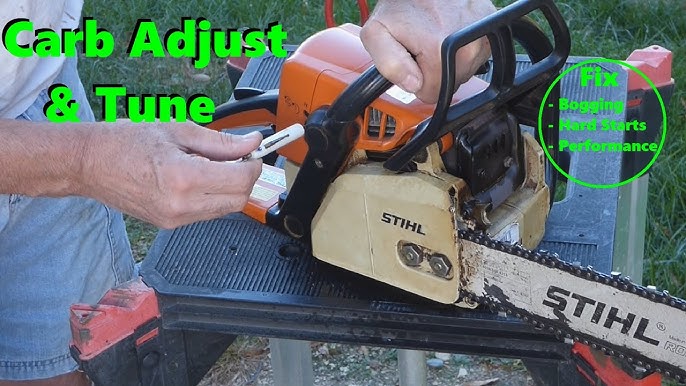
Image Source: i.ytimg.com
Essential Tools for Chainsaw Tuning
Before you begin tuning your Stihl chainsaw, gather these crucial tools:
- Screwdriver Set: You’ll need a flat-head screwdriver for carburetor adjustments and a Phillips head for other minor tasks.
- Spark Plug Wrench: Specifically designed to fit your chainsaw’s spark plug.
- Tachometer: A digital tachometer is ideal for accurately measuring engine RPMs.
- Small Wire Brush: For cleaning the spark plug and air filter.
- Compressed Air: For blowing away debris from the air filter and carburetor.
- Clean Rags: For wiping down parts and cleaning up spills.
- Owner’s Manual: Always refer to your specific Stihl chainsaw model’s manual for precise specifications.
Pre-Tuning Checks: Setting the Stage for Success
Before diving into adjustments, a thorough inspection is vital. This ensures you’re not trying to fix a problem that stems from a simple, overlooked issue.
1. Inspecting the Spark Plug
A fouled or worn spark plug is a common culprit for poor engine performance.
- Removal: Use your spark plug wrench to carefully remove the spark plug.
- Examination: Check for signs of wear, damage, or fouling (black soot, oil residue). A healthy spark plug electrode should be a light tan or greyish color.
- Cleaning: If slightly fouled, you can clean the spark plug with a wire brush and ensure it’s dry. If it’s heavily damaged or worn, it’s best to replace it.
- Gap Adjustment: Refer to your owner’s manual for the correct Stihl chainsaw spark plug gap. Use a feeler gauge to set the gap precisely. A gap that’s too wide or too narrow can cause ignition problems.
2. Assessing the Air Filter
A clogged air filter restricts airflow, leading to a rich fuel mixture and reduced power.
- Access: Locate and remove the air filter cover. The method varies by model, but it usually involves clips or a simple knob.
- Cleaning:
- Paper Filters: Gently tap the filter to dislodge loose debris. If it’s heavily soiled or oily, it’s time for a replacement. Do not wash paper filters.
- Felt/Nylon Filters: Wash these in warm, soapy water. Rinse thoroughly and let them air dry completely before reinstalling. You can also use compressed air to blow out debris.
- Inspection: Check for tears or damage. A damaged filter won’t protect your engine.
3. Checking the Fuel System
The quality of your fuel and the cleanliness of your fuel system are paramount.
- Fuel Mixture: Always use fresh fuel mixed with the correct Stihl-specific 2-stroke oil at the recommended ratio (usually 50:1). Old fuel can degrade and cause starting issues. Ensure you are using the correct Stihl chainsaw fuel mixture.
- Fuel Filter: Locate the fuel filter inside the fuel tank (often attached to the fuel line). If it looks dirty or clogged, replace it. This is a small but critical component.
4. Inspecting the Chain and Bar
While not directly part of engine tuning, a dull chain or damaged bar can make the engine work harder, mimicking tuning issues.
- Sharpness: Ensure your chain is sharp. A dull chain will cause the engine to bog down.
- Tension: Check chain tension. It should be snug but still allow you to pull it around the bar by hand. Too loose, and it can derail; too tight, and it can damage the engine and bar.
- Bar Groove: Make sure the bar groove is clean and free of debris.
Stihl Chainsaw Carburetor Adjustment: The Heart of Tuning
The carburetor is responsible for mixing the correct amount of fuel and air for combustion. Stihl chainsaw carburetor adjustment is a critical step for optimal Stihl chainsaw engine performance. Most Stihl chainsaws use a Zama or Tillotson carburetor with three adjustment screws: Low, High, and Idle.
Identifying the Carburetor Adjustment Screws
Look for three screws on the side of the carburetor, usually marked with “L,” “H,” and “T” (or sometimes just “L” and “H” for high-performance models where idle is adjusted differently).
- L (Low Speed) Screw: Controls the fuel-air mixture at idle and low RPMs.
- H (High Speed) Screw: Controls the fuel-air mixture at high RPMs and under load.
- T (Idle Speed) Screw: This is a throttle stop screw that adjusts the engine’s idle speed (RPMs). It physically controls how far the throttle plate opens at idle.
The Carburetor Tuning Process
Important Note: Never tune a chainsaw while it’s cold. The engine needs to be at operating temperature for accurate adjustments.
Step 1: Initial Screw Settings
Before making any adjustments, it’s good practice to set the screws to their factory default or a baseline position.
- Gently turn the L and H screws clockwise until they lightly seat. Do not overtighten; this can damage the carburetor.
- Turn the L and H screws counter-clockwise 1.5 to 2 full turns. This is a common starting point.
- Turn the T screw (if present) clockwise until it lightly seats, then back it out about one turn.
Step 2: Adjusting the Low-Speed (L) Screw
The L screw affects idle stability and acceleration.
- Start the Chainsaw: Ensure the engine is warm.
- Set Idle Speed (Preliminary): Adjust the T screw (if applicable) so the engine idles smoothly without the chain engaging. If you don’t have a T screw, the L screw will have a secondary effect on idle speed.
- Adjust L Screw: Slowly turn the L screw clockwise or counter-clockwise to find the point where the engine runs fastest and smoothest at idle.
- Test Acceleration: Once you find the best idle setting, blip the throttle. The engine should accelerate cleanly without bogging down or sputtering. If it bogs, the L screw might be too lean (turn counter-clockwise slightly). If it hesitates or runs rough, it might be too rich (turn clockwise slightly). Aim for smooth, immediate acceleration.
Step 3: Adjusting the High-Speed (H) Screw
The H screw governs performance at full throttle. This is where you’ll need a tachometer for precision.
- Full Throttle: Squeeze the throttle trigger to full power.
- Listen Carefully: The engine should reach its maximum RPM without over-revving or sounding like it’s struggling (four-stroking).
- Setting with a Tachometer:
- Too Rich (Four-Stroking): The engine will sound like it’s laboring, like it’s getting too much fuel. The RPMs will be lower than the maximum specified in your manual. Turn the H screw clockwise (leaner) in small increments (1/8 to 1/4 turn) until the engine reaches its peak RPM and sounds crisp.
- Too Lean (Over-Revving): The engine will sound like it’s “screaming” or “whining” and may feel like it’s running away with itself. This can damage the engine. Turn the H screw counter-clockwise (richer) in small increments until the engine sounds smooth and powerful, but not overly high-pitched.
- Ideal Setting: The engine should reach its maximum rated RPM and sound crisp and responsive. Consult your manual for the correct Stihl chainsaw high speed adjustment (max RPMs).
Step 4: Fine-Tuning the Idle Speed (T) Screw
After adjusting L and H, the idle speed may need recalibration.
- Engine at Idle: Let the engine return to idle.
- Adjust T Screw: Turn the T screw clockwise to increase idle RPM or counter-clockwise to decrease it.
- Goal: The idle speed should be set so the engine runs smoothly and consistently without stalling, but critically, the chain should NOT engage or creep. If the chain starts to move, the idle is too high.
Table: Common Carburetor Adjustment Symptoms and Solutions
| Symptom | Possible Cause | Adjustment |
|---|---|---|
| Stalls when accelerating | Lean low-speed (L) | Turn L screw counter-clockwise slightly. |
| Bogging/sputtering on acceleration | Rich low-speed (L) | Turn L screw clockwise slightly. |
| Four-stroking at high RPM (laboring) | Rich high-speed (H) | Turn H screw clockwise slightly. |
| Over-revving/screaming at high RPM | Lean high-speed (H) | Turn H screw counter-clockwise slightly. |
| Chain engages at idle | Idle speed too high | Turn T screw counter-clockwise. |
| Engine stalls at idle | Idle speed too low | Turn T screw clockwise. |
| Engine runs rough at idle | Incorrect L adjustment | Adjust L screw for smoothest idle. |
| Poor acceleration from idle | Incorrect L adjustment | Adjust L screw for clean acceleration. |
| Loss of power under load | Lean H adjustment | Turn H screw counter-clockwise slightly. |
| Engine dies after running for a bit | Lean H adjustment | Turn H screw counter-clockwise slightly. |
| Engine dies when switching from high to idle | Lean L adjustment | Turn L screw counter-clockwise slightly, then reset idle |
Stihl Chainsaw Governor Adjustment: Maintaining Engine Speed
The governor is a mechanical or electronic device that automatically limits the engine’s maximum speed to prevent damage. While most modern Stihl chainsaws have internal, non-adjustable governors, some older models might have external adjustment screws. Stihl chainsaw governor adjustment is rarely needed on newer models, but if your engine consistently over-revs or struggles to reach full power despite carburetor tuning, it’s worth checking your manual. If your model does have adjustable governors, the procedure will be highly specific and found in your owner’s manual. Incorrect governor adjustment can lead to severe engine damage.
Stihl Chainsaw Ignition Timing: A Deeper Look
Stihl chainsaw ignition timing ensures the spark plug fires at the optimal moment in the combustion cycle. For most modern Stihl chainsaws with electronic ignition, the timing is pre-set and not adjustable by the user. If you suspect an ignition timing issue, it typically points to a faulty ignition module or flywheel key. These components usually require professional diagnosis and repair. A symptom of incorrect ignition timing can be hard starting, misfiring, or a complete lack of spark.
Stihl Chainsaw Troubleshooting: Common Issues and Solutions
Even with proper tuning, you might encounter issues. Here’s a guide to common Stihl chainsaw troubleshooting scenarios.
1. Hard Starting or Won’t Start
- No Spark: Check the spark plug (gap, cleanliness, connection), ignition module, and spark plug wire.
- Flooded Engine: If you smell a lot of gas, the engine is flooded. Open the choke, pull the starter cord a few times with the spark plug removed to clear excess fuel, then re-install the spark plug and try starting with the choke on.
- Incorrect Fuel Mixture: Ensure you’re using fresh fuel and the correct oil ratio.
- Clogged Fuel Filter or Lines: Check and replace as needed.
- Blocked Carburetor Passages: May require cleaning or rebuilding the carburetor.
- Faulty Primer Bulb: If your model has one, ensure it’s working and filling with fuel.
2. Poor Idle or Stalling
- Improper Idle Speed Setting: Adjust the T screw.
- Incorrect Low-Speed Carburetor Adjustment: Adjust the L screw.
- Dirty Air Filter: Clean or replace.
- Fuel Leaks: Inspect fuel lines and carburetor for leaks.
- Spark Plug Issues: Clean, gap, or replace.
3. Loss of Power or Bogging Down
- Dirty Air Filter: Clean or replace.
- Incorrect High-Speed Carburetor Adjustment: Adjust the H screw.
- Dull Chain or Damaged Bar: Sharpen or replace the chain, clean the bar.
- Fuel Issues: Old fuel or incorrect fuel mixture.
- Clogged Muffler: In rare cases, the muffler can become clogged with carbon, restricting exhaust flow.
4. Chain Not Moving at Idle
- Idle Speed Too High: Adjust the T screw counter-clockwise.
- Clutch Slipping: This is a mechanical issue with the clutch assembly and may require professional attention.
5. Engine Runs Hot
- Lean Fuel Mixture: Adjust the H screw counter-clockwise.
- Clogged Cooling Fins: Clean the engine’s cooling fins.
- Dull Chain: Causes the engine to work harder.
Maintaining Optimal Stihl Chainsaw Engine Performance: Beyond Tuning
Regular maintenance is crucial for sustained Stihl chainsaw engine performance.
- Regular Cleaning: Keep the air filter, cooling fins, and carburetor exterior clean.
- Fuel Storage: Use fuel stabilizers for stored fuel and never store fuel for more than 30 days without stabilizer.
- Chain Lubrication: Ensure the oiler is working and the chain is properly lubricated during use.
- Spark Arrestor Screen: Periodically clean the spark arrestor screen in the muffler to prevent it from becoming clogged, which can affect power.
- Annual Service: Consider having your chainsaw professionally serviced annually, especially if you use it heavily.
By following this comprehensive guide, you can effectively tune your Stihl chainsaw, ensuring it operates at peak efficiency, lasts longer, and performs reliably for all your cutting tasks. Regular maintenance and attention to detail are the keys to unlocking your chainsaw’s full potential.
Frequently Asked Questions (FAQ)
Q1: How often should I tune my Stihl chainsaw?
A1: It’s recommended to check and fine-tune your Stihl chainsaw’s carburetor at the beginning of each cutting season or after every 50 hours of use. However, if you notice any performance issues, it’s best to tune it sooner.
Q2: Can I use regular gasoline in my Stihl chainsaw?
A2: No, Stihl chainsaws are designed for 2-stroke engines and require a specific fuel mixture of gasoline and 2-stroke engine oil. Always use fresh, high-quality gasoline and the correct Stihl-branded or equivalent 2-stroke oil mixed at the manufacturer’s recommended ratio (typically 50:1).
Q3: My chainsaw is running rough, but I adjusted the carburetor. What else could be wrong?
A3: If carburetor adjustments don’t resolve rough running, consider other components. Check the Stihl chainsaw air filter cleaning status, ensure the Stihl chainsaw spark plug gap is correct, inspect the fuel filter, and look for any air leaks in the fuel system or intake. If these are all in order, an ignition problem or internal engine wear could be the cause.
Q4: What does it mean if my chainsaw chain engages at idle?
A4: If your Stihl chainsaw chain engages or creeps at idle, it means the idle speed is set too high. You need to adjust the idle speed screw (T screw, if present) counter-clockwise to lower the RPMs until the chain stops moving. This is a critical safety adjustment.
Q5: How do I know if my Stihl chainsaw fuel mixture is correct?
A5: The correct Stihl chainsaw fuel mixture is crucial. Using the wrong ratio can damage your engine. Always refer to your owner’s manual for the exact ratio (e.g., 50:1). If you’re unsure, use pre-mixed fuel specifically designed for 2-stroke engines. Signs of an incorrect mixture include poor running, excessive smoke, or engine damage.
Q6: What is the purpose of the governor adjustment on a Stihl chainsaw?
A6: Stihl chainsaw governor adjustment is designed to limit the maximum engine speed to prevent the engine from over-revving and sustaining damage. On most modern Stihl chainsaws, this is an internal, non-adjustable component. If your model has an external governor adjustment, it’s crucial to follow the owner’s manual precisely as incorrect adjustments can be detrimental.
Q7: My chainsaw starts but dies when I try to cut wood. What’s the issue?
A7: This typically indicates an issue with the high-speed fuel mixture or air supply. Ensure your Stihl chainsaw high speed adjustment (H screw) is set correctly for optimal performance under load. Also, double-check the Stihl chainsaw air filter cleaning status, as a dirty filter will restrict airflow at higher RPMs. A clogged exhaust can also cause this.
Q8: Can I adjust the ignition timing on my Stihl chainsaw?
A8: For most modern Stihl chainsaws, Stihl chainsaw ignition timing is pre-set by the manufacturer and not designed for user adjustment. If you suspect a timing issue, it usually points to a problem with the ignition module, flywheel, or crankshaft keyway, which requires professional diagnosis.
Q9: How do I perform Stihl chainsaw carburetor adjustment if I don’t have a tachometer?
A9: While a tachometer provides the most accurate Stihl chainsaw carburetor adjustment, you can perform a basic tune-up by ear. Focus on achieving the smoothest idle and the cleanest acceleration. For the high-speed adjustment, listen for the engine to reach its maximum smooth operating RPM without sounding strained or over-revving. Be conservative with lean adjustments to avoid engine damage. However, using a tachometer is highly recommended for precise and safe tuning.
Q10: What are signs of a faulty Stihl chainsaw governor adjustment?
A10: Signs of a faulty or misadjusted governor can include the engine revving uncontrollably high even when the throttle isn’t fully engaged, or conversely, the engine not reaching its proper maximum RPMs under load. If you suspect a governor issue and your model has adjustments, consult your manual or seek professional help.