
So, can you upgrade your circuit breaker box yourself, and who should do it? While some minor electrical tasks are doable for the determined DIYer, upgrading a circuit breaker box, also known as a service panel upgrade or electrical panel replacement, is a complex and potentially dangerous job. It is strongly recommended that this work be performed by a licensed electrician. Attempting this as an amateur electrician can lead to serious injury, electrocution, fire hazards, and voided insurance policies. This guide aims to educate you about the process, not to encourage unsupervised DIY electrical work.
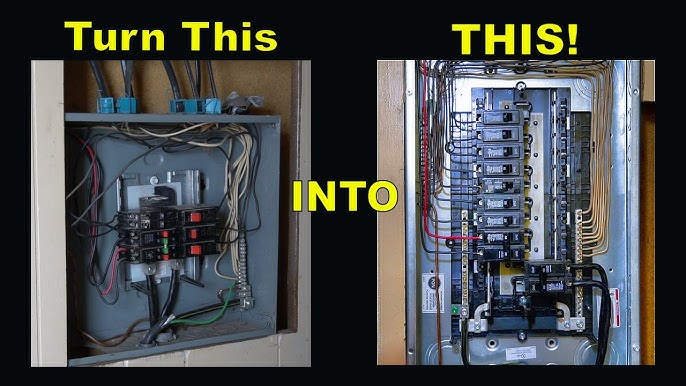
Image Source: i.ytimg.com
Why Upgrade Your Circuit Breaker Box?
Your electrical panel is the heart of your home’s electrical system. Over time, it can become outdated, undersized, or faulty, leading to various issues. A fuse box conversion to a modern breaker panel is a common upgrade. Here are the key reasons why you might need a service panel upgrade:
- Increased Electrical Demand: Modern homes use far more electricity than older ones. Appliances like electric car chargers, multiple large screen TVs, powerful computers, induction cooktops, and electric dryers all add significant load. An undersized panel can’t handle this demand, leading to tripped breakers or potential safety hazards.
- Outdated or Faulty Equipment: Older fuse boxes or early circuit breaker panels may not have the same safety features as modern units. Some older breaker designs have known issues, and a panel that is corroded, damaged, or has loose connections poses a significant risk.
- Insufficient Amperage: If your home was built in an era when electrical needs were much lower, your panel might only supply 60 or 100 amps. Today, 200 amps is considered the standard for most new homes and substantial renovations.
- Frequent Tripping Breakers: If breakers in your existing panel trip often, it’s a clear sign the system is overloaded or there’s a fault.
- Adding Major Appliances or Renovations: Significant home improvements, like adding an addition, a hot tub, a workshop, or major new appliances, will likely require a higher amperage service and a panel upgrade.
- Safety Concerns: Old wiring, especially aluminum wiring or knob-and-tube systems, can be a fire hazard. A new panel can sometimes incorporate solutions or better integrate with upgraded wiring.
Fathoming the Load Calculation: Determining Your Needs
Before any electrical panel replacement, a crucial step is performing a load calculation. This is how an electrician determines the total electrical demand for your home. It ensures the new panel and service entrance can safely handle all your expected electrical usage.
How a Load Calculation Works:
A load calculation follows established codes, such as the National Electrical Code (NEC) in the United States. It takes into account:
- Square Footage: The overall size of your home is a primary factor.
- General Lighting and Receptacles: A base amount of power is allocated for everyday use.
- Appliance Loads: Specific power requirements for fixed appliances like ovens, dryers, dishwashers, refrigerators, microwaves, water heaters, and HVAC systems are included.
- Specialty Circuits: Demand for things like electric vehicle chargers, hot tubs, or workshops is added.
- Demand Factors: The NEC allows for “demand factors” to reduce the total calculated load, acknowledging that not all appliances and lights will be used at their maximum capacity simultaneously.
What Your Load Calculation Tells You:
The result of the load calculation will tell you the minimum amperage your new electrical service needs to be. This could be 100 amps, 150 amps, or more commonly today, 200 amps. This figure is critical for selecting the correct new panel, service entrance cable, and main breaker.
The Process of Upgrading Your Circuit Breaker Box
Upgrading a circuit breaker box is not a simple swap. It involves working with the main power feed to your home, making it a task that requires specialized knowledge and strict adherence to wiring safety protocols.
Step 1: Planning and Permits
- Get a Licensed Electrician: As mentioned, this is paramount. A qualified professional will handle the technical aspects and ensure compliance.
- Permits: Most electrical panel upgrades require a permit from your local building department. Your electrician will handle this process. The permit ensures the work is inspected and meets safety standards.
Step 2: Selecting the New Panel and Components
Your electrician will help you choose the right components based on your load calculation and future needs.
- Panel Size (Amperage): This is determined by the load calculation (e.g., 100A, 200A).
- Number of Spaces: The panel will have a certain number of slots for circuit breakers. You need enough spaces for your current circuits plus extra for future additions.
- Brand and Type: Reputable brands are essential for safety and reliability.
- Main Breaker: This protects the entire panel and your home’s wiring from overcurrent.
- Circuit Breakers: Each circuit in your home will have its own breaker, sized appropriately for the wire gauge and expected load of that circuit.
Step 3: Preparing for the Upgrade
This typically involves turning off the main power to your home. Your electrician will ensure this is done safely.
Step 4: The Actual Panel Replacement (Performed by a Licensed Electrician)
This is where the expertise of a licensed electrician is non-negotiable. The process involves:
- Disconnecting Power: The utility company typically disconnects power at the meter.
- Removing the Old Panel: The old fuse box or breaker panel is carefully removed.
- Installing the New Panel: The new electrical panel is mounted securely.
- Connecting Service Entrance Wires: The main wires coming from the utility meter are connected to the main breaker in the new panel. This is the most dangerous part of the job.
- Wiring Branch Circuits: Each existing circuit wire (from lights, outlets, appliances) is disconnected from the old panel and reconnected to the appropriate new circuit breaker in the new panel.
- Labeling: Each breaker is clearly labeled to identify which part of the house or appliance it controls.
- Grounding and Bonding: Proper grounding and bonding are essential for electrical safety and are meticulously checked.
- Final Connections and Testing: All connections are tightened, and the system is tested.
Step 5: Inspection
After the upgrade is complete, a building inspector will visit to ensure the installation meets all local electrical codes and safety standards. The power will not be fully restored until the inspection passes.
What to Look For in a Replacement Panel and Circuit Breakers
Choosing the right components is vital for the safety and longevity of your electrical system.
Panel Features to Consider:
- Amperage Rating: As determined by your load calculation. 200 amps is the standard for modern homes.
- Number of Spaces/Circuits: Ensure enough slots for current needs and future expansion. A 40-space panel is common.
- Busbar Material: Copper busbars are generally considered superior to aluminum for conductivity and durability.
- Grounding Bar: A separate grounding bar is standard for safety.
- Brand Reputation: Stick with well-known, reputable manufacturers.
- Main Breaker Type: Typically a main lug only panel if there’s a main breaker in a separate meter disconnect, or a panel with a main breaker.
Circuit Breaker Considerations:
- Amperage Rating: Breakers must be correctly sized for the wire gauge and the intended load of the circuit they protect. For example, a 15-amp breaker for 14-gauge wire, a 20-amp breaker for 12-gauge wire.
- Type:
- Standard Thermal-Magnetic Breakers: The most common type.
- AFCI (Arc Fault Circuit Interrupter) Breakers: Detect and interrupt dangerous arcing faults that can cause fires. Required in many areas for bedrooms and living spaces.
- GFCI (Ground Fault Circuit Interrupter) Breakers: Protect against shock hazards by detecting current leaks to ground. Required in wet locations like bathrooms, kitchens, and outdoors.
- Brand Compatibility: Ensure the breakers you choose are compatible with your new panel brand. Using incompatible breakers can be a safety hazard.
The Difference Between Panel Repair and Replacement
While this article focuses on upgrading, it’s worth noting the distinction between electrical panel repair and replacement.
Electrical Panel Repair:
- What it Entails: Repairing minor issues within an existing panel. This might include tightening loose connections, replacing a single faulty breaker, or cleaning corroded components.
- When it’s an Option: If your panel is relatively modern, properly sized, and the issues are isolated and minor.
- Limitations: If the panel is old, undersized, has known manufacturing defects, or shows widespread corrosion or damage, repair is often not a viable or safe solution. A fuse box conversion to a breaker panel is a form of replacement, not repair.
Electrical Panel Replacement:
- What it Entails: Removing the entire old panel and installing a new one, often with a higher amperage service. This is a comprehensive upgrade.
- When it’s Necessary: When the panel is undersized, outdated, damaged, or has recurring problems that cannot be safely fixed.
Common Issues with Older Fuse Boxes and Early Breaker Panels
Fuse boxes and older breaker panels often have limitations and potential hazards:
Fuse Boxes:
- Inconvenience: Replacing blown fuses can be a hassle.
- Over-Fusing: People often replace blown fuses with higher-rated ones, bypassing the safety protection and creating a fire risk.
- Limited Capacity: Typically designed for lower electrical loads.
- Lack of Modern Safety Features: No AFCI or GFCI protection.
Older Breaker Panels:
- Known Defects: Some older brands of breaker panels (e.g., Federal Pacific Electric, Zinsco) have documented issues with breakers failing to trip, posing a fire hazard.
- Aluminum Wiring Issues: Panels that have aluminum wiring connections may experience expansion and contraction problems, leading to loose connections and overheating.
- Corrosion: Older panels can corrode over time, especially in damp environments, leading to poor connections and arcing.
- Insufficient Capacity: As mentioned, older panels were installed when electrical demands were much lower.
Wiring Safety: A Top Priority
The safety of your home’s wiring is paramount. A circuit breaker installation within a new panel is designed to protect your wiring from overloads and short circuits.
How Breakers Protect Wiring:
- Overload Protection: If too much current flows through a wire (e.g., plugging too many devices into one circuit), the wire heats up. A properly sized circuit breaker will detect this excess current and “trip,” shutting off power to the circuit before the wire can overheat and start a fire.
- Short Circuit Protection: A short circuit is when two wires with opposite electrical charges touch, causing a massive surge of current. Breakers are designed to trip instantaneously during a short circuit, preventing damage and fire.
Why DIY is Dangerous:
- Incorrect Sizing: An amateur electrician might mismatch breaker sizes to wire gauges, defeating the protection system.
- Loose Connections: Improperly made connections can arc, overheat, and cause fires.
- Improper Grounding: Faulty grounding is a major shock and fire hazard.
- Working with Live Power: Accidental contact with live electrical components can be fatal.
- Code Violations: Without professional knowledge, it’s easy to violate complex electrical codes, which can lead to safety issues and problems with insurance.
When to Call a Licensed Electrician
If you’re considering any work on your electrical panel, the answer to “who is qualified?” is almost always a licensed electrician.
You absolutely need a licensed electrician for:
- Electrical Panel Replacement: This includes any fuse box conversion.
- Service Panel Upgrade: Increasing the amperage of your home’s electrical service.
- Circuit Breaker Installation: Unless it’s a simple swap of an identical, correctly rated breaker in a panel that is otherwise in good condition, and you are absolutely certain about the correct breaker type and rating.
- Major Wiring Changes or Additions: Adding new circuits or re-wiring sections of your home.
- Troubleshooting Persistent Electrical Issues: If you have frequent breaker trips or other problems.
When can you potentially do minor DIY electrical work?
- Replacing an Outlet or Switch: With the power turned off at the breaker, replacing a standard outlet or light switch can be a manageable DIY task for someone with basic electrical knowledge.
- Replacing a Light Fixture: Again, with power off, this is generally considered a lower-risk DIY project.
- Replacing a Single Circuit Breaker: Only if you are absolutely certain of the exact replacement breaker type and amperage needed for that specific circuit and wire gauge, and you are experienced with working inside a live panel (which is risky). Even then, caution is advised.
It is crucial to remember that even seemingly simple tasks can have hidden dangers if not done correctly.
Frequently Asked Questions (FAQ)
Q1: How much does it cost to upgrade a circuit breaker box?
The cost can vary significantly based on your location, the complexity of the job, the size of the new panel (e.g., 100A vs. 200A), and the specific components needed. Generally, expect costs to range from $1,500 to $4,000 or more for a full service panel upgrade by a licensed electrician. This includes the panel, breakers, labor, permits, and inspection.
Q2: Can I convert my fuse box to a breaker panel myself?
No, it is not recommended. A fuse box conversion is a significant electrical task involving disconnecting the main power supply to your home and working with high-voltage wires. This job requires the expertise and safety precautions that only a licensed electrician can provide.
Q3: What is the lifespan of a circuit breaker box?
A well-maintained modern circuit breaker panel can last 30 to 50 years or more. However, this depends on the quality of the installation, the environment it’s in, and the quality of the components. Older panels may need replacement sooner due to wear, obsolescence, or manufacturing defects.
Q4: How do I know if my panel needs upgrading?
Signs include:
* Frequent tripping of breakers.
* Buzzing or humming sounds from the panel.
* Discolored or burnt-smelling outlets or switches.
* Flickering lights.
* Your home has a 60-amp service or an old fuse box.
* You’re planning major appliance additions or renovations.
* You have aluminum wiring.
Q5: Do I need AFCI or GFCI breakers?
Yes, in many cases. Building codes increasingly require AFCI breakers for living areas and bedrooms to prevent fires from arcing. GFCI breakers are required in areas prone to moisture like bathrooms, kitchens, garages, and outdoors to prevent electric shock. Your electrician will know the specific code requirements for your area.
Q6: What happens if I don’t upgrade my panel?
Continuing to use an outdated or undersized electrical panel can lead to:
* Fire hazards due to overheating wires or faulty breakers.
* Electric shock hazards.
* Frequent power outages from overloaded circuits.
* Inability to power new appliances or electronic devices.
* Voided home insurance policies if an incident occurs due to an unaddressed electrical issue.
Q7: How long does a circuit breaker box upgrade take?
A typical electrical panel replacement usually takes between half a day to a full day for a licensed electrician to complete, including some time for permits and inspections.
By taking the time to understand the process and prioritizing safety, you can ensure your home’s electrical system is up to par and protects your family and property. Always remember to call a licensed electrician for any work involving your electrical panel.