
Can you measure your feet without a tape measure? Yes, you absolutely can! Several common household items and simple techniques allow you to accurately determine your foot size even if a tape measure is nowhere to be found. This guide will walk you through various easy methods, from using a ruler and paper to more modern phone apps, ensuring you can find the right fit for your footwear.
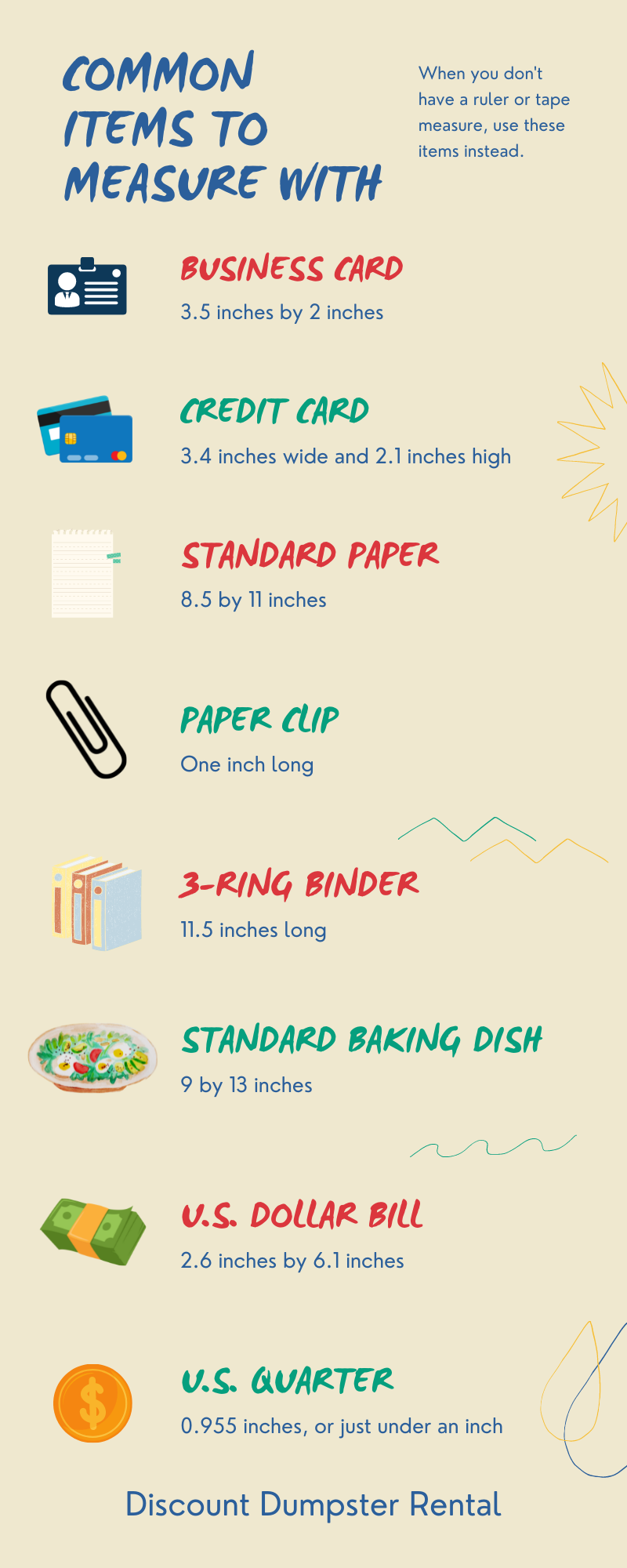
Image Source: discountdumpsterco.com
Why Accurate Foot Measurement Matters
Getting the right shoe size is more than just a number; it’s crucial for comfort, preventing foot problems, and ensuring good posture. Shoes that are too small can cause blisters, bunions, hammertoes, and even affect your gait, leading to knee and back pain. Conversely, shoes that are too large can cause your feet to slide around, leading to blisters and instability. Knowing your precise foot measurements helps you choose shoes that fit snugly but not too tightly, allowing your feet to function naturally. This is especially important when shopping online, where you can’t try shoes on before buying.
Methods for Measuring Your Feet Without a Tape Measure
Let’s explore the best ways to measure your feet when a tape measure isn’t handy.
1. The Paper and Pencil Method
This is perhaps the most classic and straightforward method, requiring only basic supplies.
What You’ll Need:
- A piece of paper (larger than your foot)
- A pencil or pen
- A flat surface
Steps:
- Prepare the Paper: Place the paper on a hard, flat floor. If you’re measuring your feet on carpet, put a hardboard or book underneath the paper to ensure a flat surface.
- Stand on the Paper: Stand on the paper with your heel firmly against a wall. Ensure your weight is evenly distributed on both feet. It’s best to do this later in the day when your feet are slightly swollen.
- Trace Your Foot: Hold the pencil or pen upright, perpendicular to the paper. Carefully trace the outline of your foot. Pay attention to the widest part of your foot and the tip of your longest toe. Try to keep the pencil as close to your foot as possible without pressing into it.
- Mark Key Points: Make a clear mark at the very tip of your longest toe and at the back of your heel. Also, make marks at the widest points of your foot (usually the ball of your foot).
- Remove Your Foot and Measure: Step off the paper. Using a ruler, measure the distance between the heel mark and the toe mark. This is your foot’s length. Then, measure the distance between the marks at the widest points. This is your foot’s width.
- Repeat for the Other Foot: It’s common for feet to be slightly different sizes. Repeat the process for your other foot. Use the measurements from the larger foot for shoe shopping.
Tips for Accuracy:
- Wear the type of socks you typically wear with the shoes you’re measuring for.
- Ensure your heel is pressed firmly against the wall when tracing.
- Have someone else help you trace for better accuracy, especially for the heel and toe marks.
2. The Ruler and String (or Shoelace) Method
If you don’t have a large enough piece of paper, you can adapt the previous method using string.
What You’ll Need:
- A piece of string, yarn, or a shoelace
- A ruler
- A pencil or pen
- A flat surface
Steps:
- Prepare: Stand with your heel against a wall on a flat surface.
- Wrap the String: Carefully wrap the string around the widest part of your foot (the ball of your foot). Mark where the string overlaps with a pencil or simply pinch it.
- Measure the String: Lay the string flat and measure the marked length with your ruler. This gives you your foot’s circumference at the widest point.
- Measure Length: For length, place your heel against the wall and mark the longest point of your foot on the floor with your pencil. Then, measure this distance on the floor using the string, and then measure the string with the ruler. Alternatively, you can use the paper and pencil method just for the length measurement.
- Compare and Use: Use these measurements in conjunction with a shoe size chart.
3. The Bookmark Method
This is a quick way to get a rough length measurement.
What You’ll Need:
- A bookmark or any stiff, straight edge (like a stiff piece of card)
- A flat surface
- A ruler
Steps:
- Position: Place your heel against a wall.
- Mark Length: Place the bookmark or stiff edge on the floor against your longest toe, making sure it’s straight and perpendicular to your foot.
- Measure the Bookmark: Remove the bookmark and measure the distance from the edge that touched your toe to the edge that touched your heel using a ruler.
This method is best for length and is less precise for width.
4. The Wall Marking Method
Similar to the paper method, but directly on the wall or floor.
What You’ll Need:
- A wall with a baseboard or a sturdy corner
- A pencil or pen
- A ruler
Steps:
- Position: Stand with your heel firmly against the wall or the corner.
- Mark the Toe: Reach down with a pencil and make a mark on the floor (or directly on the wall if it’s a flush baseboard) at the tip of your longest toe.
- Measure the Mark: Step away and use your ruler to measure the distance from the wall to the mark you made. This is your foot’s length.
This is good for length, but you’ll need another method for width.
5. Using Your Existing Shoes
Your current shoes can offer clues about your foot size.
What You’ll Need:
- A pair of well-fitting shoes of the same type you intend to buy.
- A ruler or a piece of paper and pencil.
Steps:
- Inspect Current Shoes: Look at the size label inside your current shoes. If these shoes fit perfectly, the size indicated might be a good starting point.
- Trace the Insole: If possible, remove the insole from a well-fitting shoe. Place it on a piece of paper and trace around it. Measure the length and width of the traced insole with a ruler. This gives you a good indication of the internal dimensions of a well-fitting shoe.
- Shoe Insertion Test: Place your foot inside one of your current, well-fitting shoes. If you can, trace the outline of your foot inside the shoe with a pencil. Then, carefully slide the shoe onto a piece of paper and trace the inside with your pencil to get the shoe’s internal outline. Comparing the two outlines can help.
Important Note: Shoe sizes can vary significantly between brands and even between different styles within the same brand. Relying solely on existing shoes might not be entirely accurate, especially if you’re buying from a new brand.
6. Phone Apps for Foot Measurement
Technology offers convenient solutions for foot measurement.
What You’ll Need:
- A smartphone with a camera
- A well-lit space
- A standard-sized object for scale (like a credit card or a piece of paper with a known dimension).
How it Works:
Many apps use your phone’s camera to scan your foot. You typically place your foot on a flat surface and follow the app’s instructions to capture an image. The app then uses a reference object (like a credit card placed beside your foot) to scale the image and calculate your foot’s length and width.
Popular Apps (Examples – check app stores for current options):
- MySizeID: This app claims to accurately measure your feet and provide size recommendations for various clothing and shoe brands.
- Superfeet Fit Finder: While often used in-store, some versions might offer at-home measurement guides.
- Various Shoe Retailer Apps: Many online shoe stores have integrated foot-scanning tools within their apps.
Tips for App Usage:
- Ensure the app uses a known object for scale.
- Place your foot on a contrasting, flat surface.
- Follow the on-screen instructions carefully for optimal accuracy.
7. The Credit Card Method (for Quick Length Check)
This method is a handy trick if you have a credit card handy and need a quick length estimate.
What You’ll Need:
- A credit card (or any card of similar size, approximately 8.5 cm x 5.4 cm)
- A ruler or the edge of your phone
Steps:
- Position: Stand with your heel against a wall.
- Place the Card: Place the credit card on the floor with its long edge touching the wall, perpendicular to your foot.
- Mark the Toe: Mark the point on the floor where the tip of your longest toe touches the card.
- Measure Card to Toe: Step away and measure the distance from the edge of the credit card (that touched the wall) to your toe mark. This is a rough estimate of your foot length. You’ll need to compare this measurement to a shoe size chart, understanding that this is a less precise method.
8. Using a Ruler Directly (for Smaller Feet or Children)
While not ideal for adult feet due to the length, a ruler can be used for shorter measurements or for children.
What You’ll Need:
- A ruler (preferably 12 inches or 30 cm)
- Paper and pencil (optional, but recommended)
Steps:
- Position: Place your foot on a piece of paper with your heel against a wall.
- Measure Length: Place the ruler on the paper from the heel mark to the toe mark. Read the measurement.
- Measure Width: Place the ruler across the widest part of your foot and measure.
This is essentially a direct application of the paper and pencil method, just with the ruler itself acting as the measuring tool on the paper.
Converting Measurements to Shoe Size
Once you have your foot’s length and width, you need to convert these measurements into a shoe size. This is where a shoe size chart becomes indispensable.
Understanding Shoe Size Charts
Shoe sizes are not standardized globally. There are different systems:
- US Sizing: Common in North America.
- UK Sizing: Used in the United Kingdom.
- EU Sizing (European): Widely used across Europe.
- CM (Centimeters) / Mondopoint: Often considered the most accurate as it’s based on actual foot length in millimeters or centimeters.
How to Use a Shoe Size Chart:
- Find a Reputable Chart: Look for charts from well-known shoe brands or retailers. You can often find them on their websites.
- Measure Your Feet: Use one of the methods described above. Always use the measurement from your larger foot.
- Match Your Length: Locate your foot’s length on the chart. Most charts will have columns for different sizing systems.
- Consider Width: Some charts also provide width measurements. If your foot is wider or narrower than average, look for “wide” (W) or “narrow” (N) sizing options. Many people find that a shoe that is the correct length but too narrow causes discomfort.
- Account for Socks: Remember to factor in the thickness of the socks you’ll be wearing.
Sample Shoe Size Chart (Illustrative – Always Check Specific Brand Charts)
| CM (Mondopoint) | US Men | US Women | UK Men | UK Women | EU Men | EU Women |
|---|---|---|---|---|---|---|
| 23 | 5 | 6.5 | 4.5 | 4 | 37 | 37.5 |
| 23.5 | 5.5 | 7 | 5 | 4.5 | 38 | 38 |
| 24 | 6 | 7.5 | 5.5 | 5 | 38.5 | 38.5 |
| 24.5 | 6.5 | 8 | 6 | 5.5 | 39 | 39 |
| 25 | 7 | 8.5 | 6.5 | 6 | 40 | 40 |
| 25.5 | 7.5 | 9 | 7 | 6.5 | 40.5 | 40.5 |
| 26 | 8 | 9.5 | 7.5 | 7 | 41 | 41 |
| 26.5 | 8.5 | 10 | 8 | 7.5 | 42 | 42 |
| 27 | 9 | 10.5 | 8.5 | 8 | 42.5 | 42.5 |
| 27.5 | 9.5 | 11 | 9 | 8.5 | 43 | 43 |
| 28 | 10 | 11.5 | 9.5 | 9 | 44 | 44 |
| 28.5 | 10.5 | 12 | 10 | 9.5 | 44.5 | 44.5 |
| 29 | 11 | 12.5 | 10.5 | 10 | 45 | 45 |
Note: This chart is a general guide. Always refer to the specific sizing guide of the shoe brand you are purchasing from.
Final Checks and Considerations
- Measure Both Feet: As mentioned, feet are rarely the exact same size. Always use the measurement of your larger foot.
- Measure Later in the Day: Feet tend to swell throughout the day, especially after activity. Measuring in the afternoon or evening provides a more accurate representation of your foot size when it’s at its largest.
- Wear Appropriate Socks: If you typically wear thick socks with certain shoes (like hiking boots), wear those socks when measuring. For everyday shoes, thin to medium socks are fine.
- Check for Width: Don’t just focus on length. If your feet are wide, you’ll need to look for wide-fitting shoes. Some methods, like the paper and pencil method, will give you a width measurement.
- Consider Shoe Type: Different types of shoes fit differently. Running shoes might need a bit more room in the toe box than formal shoes.
- Online Reviews: When buying online, check customer reviews for feedback on the shoe’s fit and whether it runs true to size, small, or large.
Frequently Asked Questions (FAQ)
Q1: How do I know which foot is larger?
A: Measure both feet using any of the methods described. Compare the length and width measurements. The foot with the larger measurements is your dominant foot, and you should use those measurements for shoe shopping.
Q2: Can I use my child’s shoe size chart for myself?
A: No, children’s and adult shoe sizes are different. Always use an adult shoe size chart.
Q3: What if my foot length and width don’t match a specific size on the chart?
A: If your measurements fall between two sizes, it’s generally recommended to go up to the next larger size. You can also consider brands that offer half sizes or varying widths.
Q4: Is it better to measure length or width first?
A: Both are important. Length is usually the primary factor, but width is crucial for comfort. If a shoe is too narrow, even if it’s the correct length, it can be very uncomfortable and cause foot problems.
Q5: Why are my feet different sizes?
A: It’s very common for people to have one foot that is slightly larger or wider than the other due to natural variations in bone structure and muscle development.
By employing these simple yet effective techniques, you can confidently measure your feet without a tape measure and ensure you select footwear that provides optimal comfort and support. Happy shoe shopping!